“If I get a fever on my trip, who do I contact?” “I can’t tell whether this is serious enough for an ambulance.” Getting sick or hurt while traveling is stressful, especially for visitors from overseas who don’t speak the language or know the area. And if you are getting around by car, there is one more worry: “I feel unwell, but what do I do about the rental car?”
This article collects what to prepare for if you feel ill or get injured while traveling in Okinawa, based mainly on official hotlines and guidance. It does not cover medical judgment or treatment. Its purpose is simply to help you check, before you leave, who to contact and what to confirm in advance. For accidents, breakdowns and dangerous marine life, we already have detailed articles, so we link to them rather than repeat them.
Know First: 119 and Three Places to Ask for Help
If it may be life-threatening, call 119 without hesitation
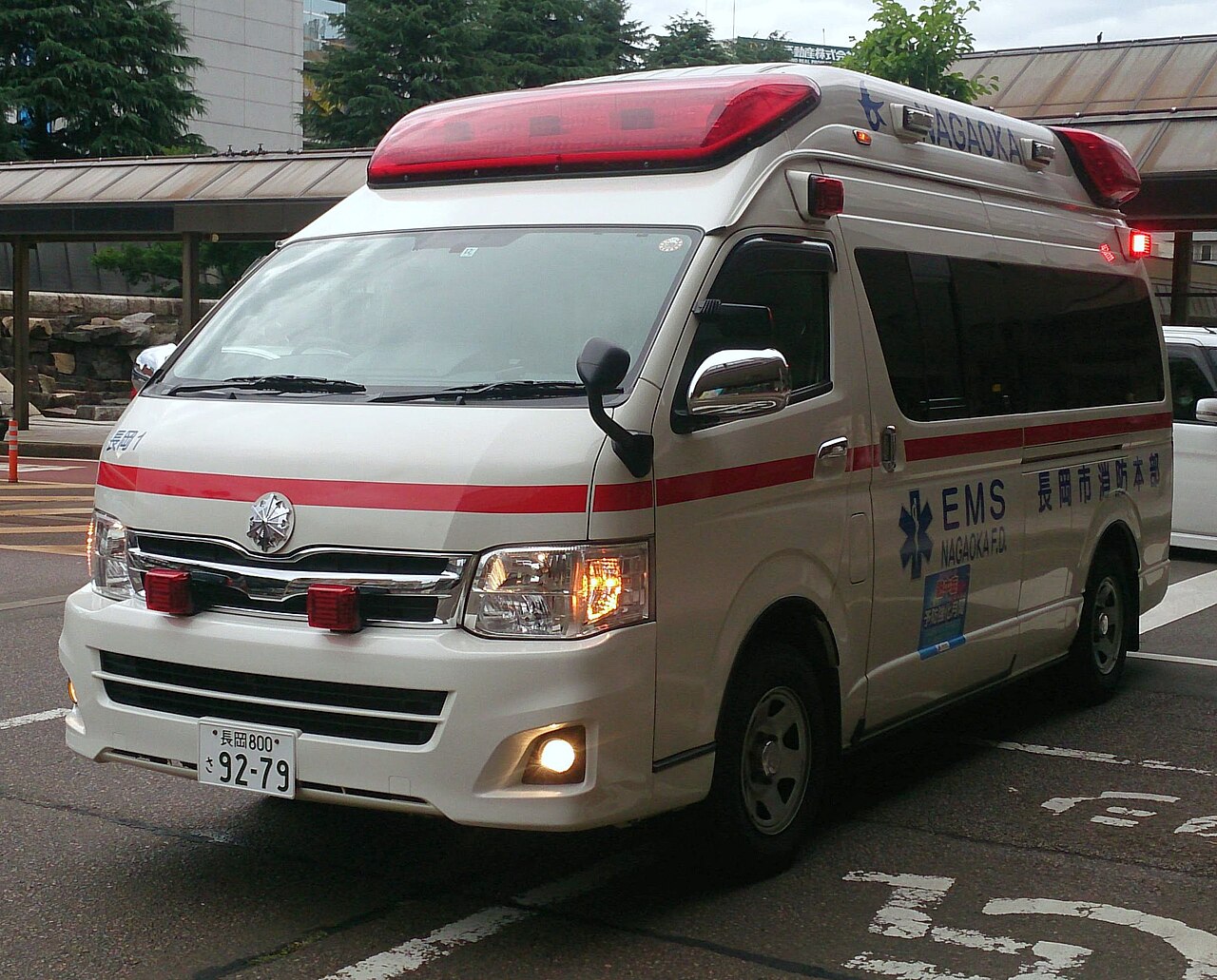
The emergency number for ambulances and fire in Japan is 119. If someone is unconscious, struggling to breathe, bleeding heavily, or in too much pain to move, call 119 without hesitation if you think it could be life-threatening. Even if your Japanese is limited, you can start by saying “Ambulance, please” and then give your location. Our article on what to do after an accident or breakdown has emergency phrases in Japanese with romanization, and tips on describing where you are.
The Japan National Tourism Organization (JNTO) guide “Guide for when you are feeling ill” explains that an ambulance takes you to an emergency hospital and that you cannot choose which hospital. It also suggests asking a nearby Japanese speaker to call for you with the phrase “Kyūkyūsha o yonde kudasai” (Please call an ambulance).
Not sure whether to call an ambulance? “Okinawa #7119”
When you cannot decide whether to call an ambulance or go to a hospital yourself, Okinawa Prefecture runs an emergency consultation line, “Okinawa #7119.” According to the prefecture’s official page (updated June 12, 2026), you can dial “#7119” from a mobile or landline, 24 hours a day, 365 days a year. If your phone cannot dial numbers starting with #, such as an internet phone, call 098-866-7119. The consultation itself is free, but you pay the call charges.
The prefecture’s page lists 23 supported languages, including English, Chinese and Korean. We could not confirm on the prefecture’s page which languages are available at which times, so if Japanese is difficult, also keep the tourist-specific hotlines below in mind. For sudden illness or injury in children, the prefecture also lists a “Children’s Medical Consultation Line (#8000)” for holidays and nights.
The tourist phone consultation and the JNTO hotline
Okinawa Prefecture’s tourism division provides a phone consultation for foreign tourists who suddenly become ill or injured. According to the prefecture’s official page, it is operated by the “Okinawa Medical Interpreter Support Center,” which asks about your symptoms, gives advice, and directs you to medical institutions that can serve patients in your language. Tourists, their companions, and staff at their accommodation can use it. The number is 0570-050-235 (24 hours a day, 365 days a year), with 18 languages listed, including English, Chinese and Korean. We could not find any fee information on the prefecture’s page, so please check the official page if you are concerned about call charges.
The other option is the JNTO “Japan Visitor Hotline” (050-3816-2787; +81-50-3816-2787 from overseas), available 24 hours a day, 365 days a year in English, Chinese and Korean. According to JNTO, however, it does not provide three-way interpretation or make reservations on your behalf.
| Ambulance / fire (119) | For life-threatening situations. 24 hours, free of charge |
|---|---|
| Okinawa #7119 | When unsure about calling an ambulance. #7119 (098-866-7119 for internet phones, etc.), 24/7, consultation is free |
| Phone consultation for foreign tourists (Okinawa Prefecture) | 0570-050-235. 24/7, 18 languages. Guidance to medical institutions with foreign-language support, etc. |
| Japan Visitor Hotline (JNTO) | 050-3816-2787. 24/7, English, Chinese, Korean. No three-way interpretation or booking on your behalf |
Finding a Medical Institution with Foreign-Language Support
Use JNTO’s “Guide for when you are feeling ill”
JNTO’s website has a medical guide for visitors, available in Japanese, English, Korean, Traditional Chinese and Simplified Chinese. It has a search tool that lets you specify your location or region, your language and the medical department, to find institutions with foreign-language support. It also includes a table that suggests which department to see for which symptoms.
The guide notes that it gives basic information only, that you should contact the facility before visiting to confirm hours and languages, and that some facilities may be unable to treat you or may not support your language. Search results are sorted by straight-line distance, not by actual travel distance, so keep that in mind.
Okinawa Prefecture’s list of institutions that accept foreign patients
The prefecture’s official page (updated October 22, 2026) provides an Okinawa excerpt (PDF) of the list “Medical institutions that accept foreign patients.” It also gathers information on services for tourists and on JNTO’s guidance. The page says the list is being updated and that, once updated, it is expected to be published in multiple languages on JNTO’s site. Please check the prefecture’s page for the latest status.
At the hospital, and how payment works
According to the JNTO guide, a visit typically involves asking at reception for an estimate of costs, filling in a patient information sheet, being examined, and paying. Large hospitals generally accept credit cards, while clinics often accept cash only. If your travel insurance includes cashless medical service, you may not need to pay at the counter, so check the conditions with your insurer beforehand. If you do not understand the results or the explanation of your medicine, do not hesitate to ask again.
Using Pharmacies and Drugstores
When you feel you don’t need to see a doctor
The JNTO guide lists pharmacies and drugstores as an option if you feel you do not need to see a doctor. It says a pharmacist or registered sales clerk can advise you, and it links to an English page for looking up over-the-counter medicines. Note that some medicines can only be sold when a pharmacist is present.
This article cannot judge how serious a symptom is or whether a medicine suits you. At the counter, it is safest to use notes or a translation app to tell the staff about any other medicines you take, existing conditions, and allergies.
Things worth preparing before you travel
If you have a chronic condition or take regular medicine, ask your own doctor or insurer about what to do during the trip before you leave. Saving the names of your medicines, your condition and your allergies on your phone in English (or Japanese) lets you show them at a counter. On a driving trip, it also helps to buy anything you need before heading far from town.
Preparing for Heat, Sun and Dangerous Marine Life
Check heat stroke alerts and the “heat index”
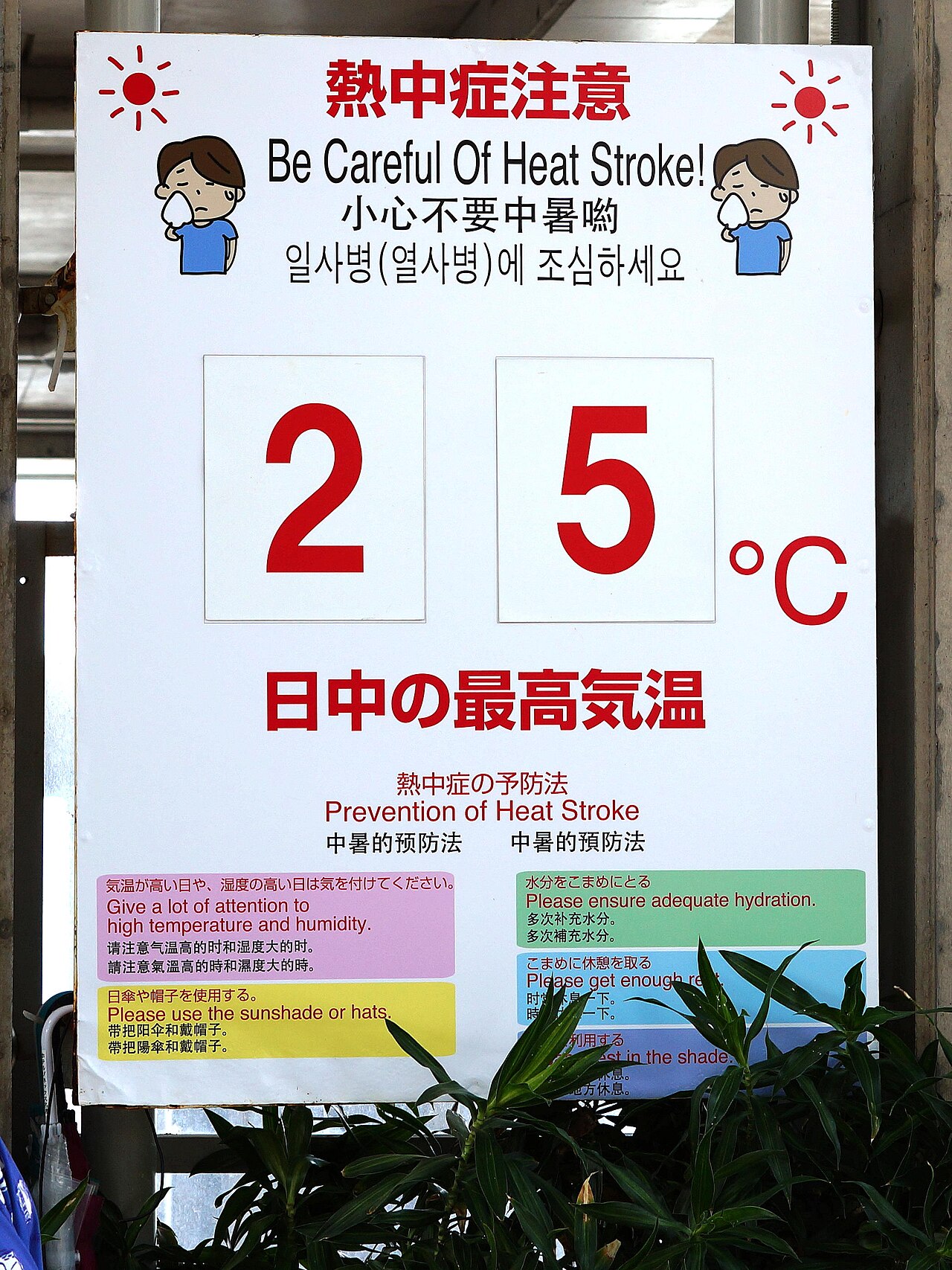
Japan’s Ministry of the Environment publishes the “Wet Bulb Globe Temperature (WBGT),” a heat index that takes humidity and sunlight into account, not just air temperature. When the heat index is forecast to be high, the Ministry of the Environment and the Japan Meteorological Agency issue a “Heat Stroke Warning Alert,” and in more dangerous cases the Ministry of the Environment issues a “Special Heat Stroke Alert.” The Ministry’s “Heat Illness Prevention Information” site is available in English, Simplified and Traditional Chinese, and Korean as well as Japanese. Alerts and heat index values can also be received by email or through the Ministry’s official LINE account.
The 2026 operating period ran from April 22 to October 21, according to the site, and the site says the service is planned to resume in late April next year. On days when an alert is issued, do not pack your schedule; build in time to rest indoors. The site advises staying in cool, air-conditioned places and taking breaks, with water and salt replenishment.
Sunburn and heat inside the car
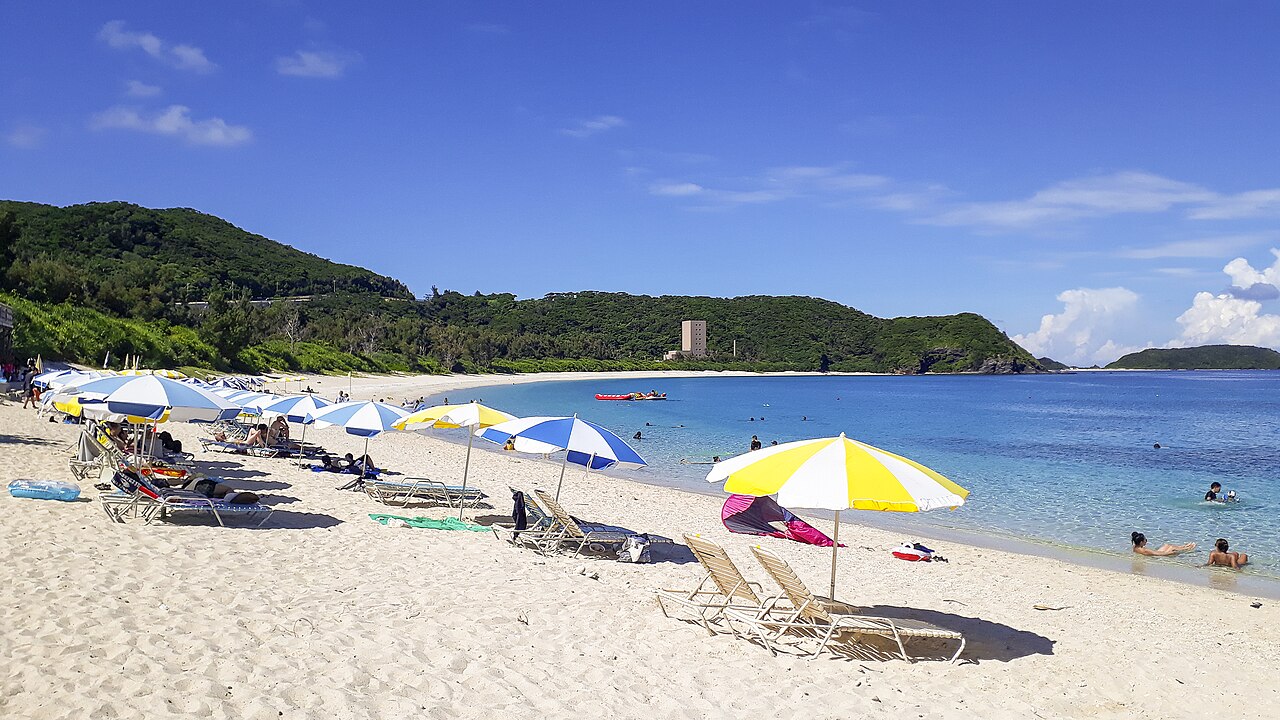
Okinawa’s sun can be strong even in autumn. Besides sunscreen, use a hat or rash guard and drink fluids often. At beaches and sightseeing spots, resting in the shade as you move around is the safer way. The inside of a parked car gets hot quickly, so never leave small children or pets in the car. For seasonal tips, see our article on weather by month and driving, and for beach-by-beach rules, our article on beaches within an hour of Naha.
Habu box jellyfish and other sea creatures: see our linked article
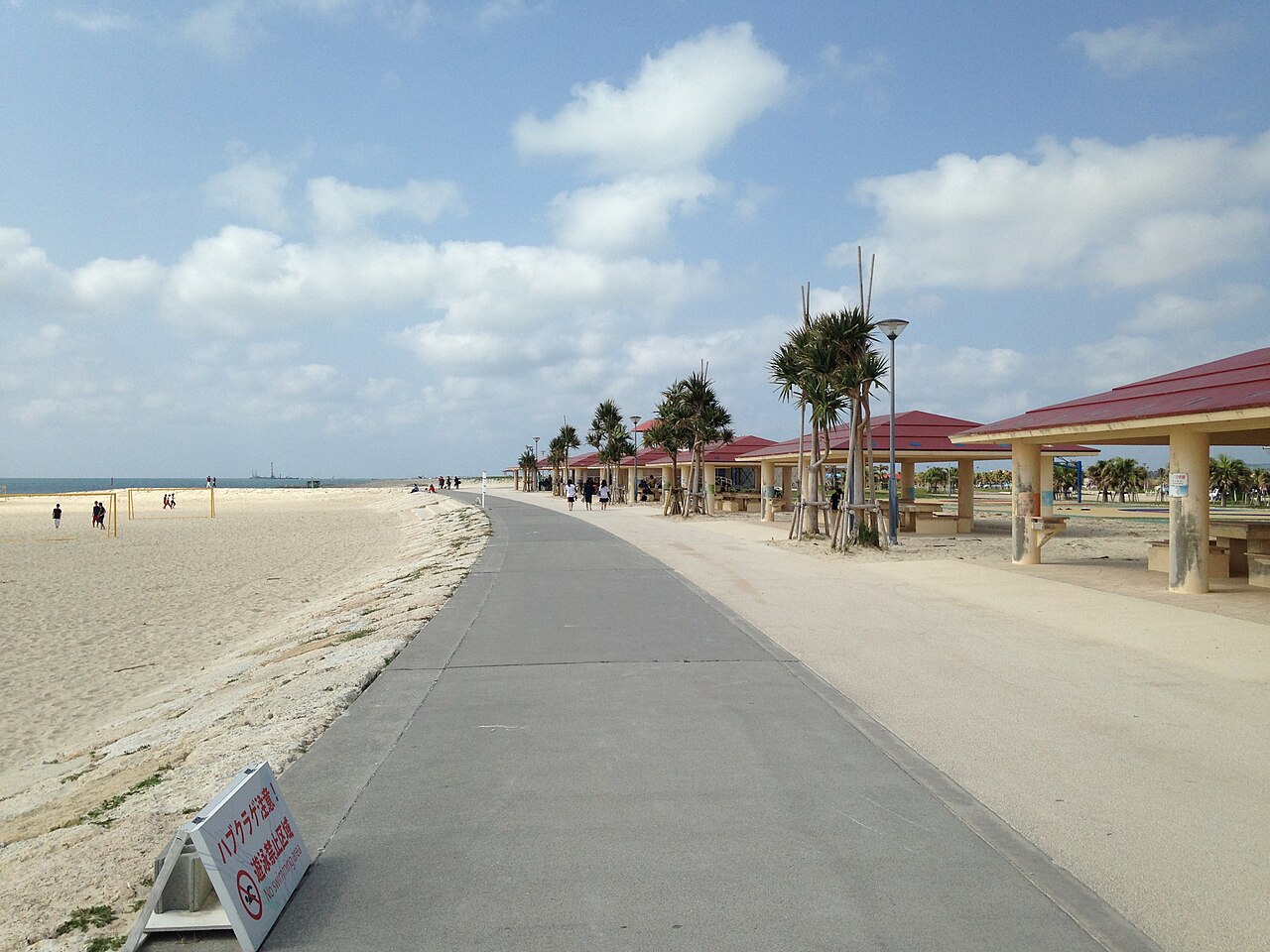
The habu box jellyfish is especially well known in Okinawan waters. Okinawa Prefecture advises swimming inside the protective nets where they are installed and, if stung, getting out of the water right away, pouring vinegar on the tentacles without rubbing, removing them, cooling the area, and seeing a medical institution. For details and which beaches have nets, see our article on beaches near Naha (habu jellyfish precautions). If symptoms suddenly worsen, such as difficulty breathing or confusion, call 119 without hesitation.
If You Feel Unwell While Driving
First, stop in a safe place
If you start to feel sick, dizzy or sleepy while driving, do not keep going. Move to a place where you can stop safely, such as a convenience store or roadside station parking lot where you will not block other vehicles. For what to do if you must stop on an expressway, see our accident and breakdown article. If you are too unwell to move, or a passenger needs help, call 119 and tell them your location.
Do not drive when you are unwell
Japan’s Road Traffic Act prohibits driving in a condition where you may be unable to drive normally due to fatigue, illness, the effects of drugs and so on (Article 66, according to police explanations). Do not drive when you are unwell. If you have a fever, strong fatigue or dizziness, or if you have taken a medicine that may cause drowsiness, ask a pharmacist whether it is all right to drive.
If a passenger takes over driving, that person must also hold a license valid for driving in Japan and have completed the check-in as a driver with UMUI Rent a Car. See our article on driver’s licenses by country and region for valid license types. If nobody can drive, taking a taxi or bus instead of pushing on is also an option.
If returning the car is difficult, contact the store
You may also find that you cannot return the car by the agreed time because of illness. UMUI Rent a Car’s rental agreement states that the car is to be returned to the designated location by the end of the rental period, that violations may lead to compensation for damages, and that NOC (Non-Operation Charge) may apply. It also states that when the rental period is extended, the other conditions stay the same and the fee for the extra period is charged. As soon as you know you cannot return on time, contact the store early and follow their instructions. Individual cases depend on the situation, so please ask the store about anything not covered in the agreement.
| UMUI Rent a Car | TEL 050-1783-5687 (as listed on the official site). For contact outside business hours, it is a good idea to check when you book or pick up the car |
|---|---|
| Naha Airport Store | 8:00-20:00, open every day (free shuttle from the airport) |
| Omoromachi Store | 9:00-18:00 |
Travel Insurance and a Pre-Departure Checklist
Check what your travel insurance covers
The JNTO guide explains how visitors can buy insurance and notes that insurers may arrange interpretation, medical institutions and cashless treatment. It also warns that leaving medical bills unpaid may affect future entry into Japan. Before you leave, check what your overseas travel insurance covers, and save your insurer’s emergency contact on your phone. The guide also says that perinatal care may not be covered by travel insurance, so pregnant travelers should read their policy carefully.
Rental car coverage versus travel insurance
UMUI Rent a Car’s base rate includes car insurance, deductible coverage and NOC coverage (except for some bookings made through certain booking sites). However, this is a system for accidents involving the rental car. Whether it extends to medical costs for sudden illness or injuries unrelated to an accident, check on the coverage page, and cover any gaps with travel insurance. Details are in our coverage and NOC article.
Pre-departure checklist
- Save 119, Okinawa #7119 and the foreign-tourist phone consultation (0570-050-235) on your phone
- Check your travel insurance coverage and your insurer’s emergency contact
- Prepare a copy of your passport and notes on regular medicines and allergies
- Bookmark JNTO’s medical guide and the Ministry of the Environment’s heat illness prevention site
- Keep UMUI Rent a Car’s contact details where you can always find them
It is best if nothing happens while you travel. Still, simply knowing who to call makes a big difference if something does. UMUI Rent a Car offers a free shuttle from Naha Airport, and our booking site is available in Japanese, English, Korean and Traditional Chinese. If you have any concerns, feel free to contact us even before booking.
* Information in this article is current as of October 2026. Phone numbers, hours, languages and systems may change, so please check the latest official guidance from Okinawa Prefecture, JNTO, the Ministry of the Environment and UMUI Rent a Car. This article is not medical diagnosis or treatment advice.
Photo credits: Wikimedia Commons (CC BY-SA 4.0). Photographers are credited in each caption. Featured image: Guillaume 1995 / CC BY-SA 4.0