“Can I rent a car in Okinawa with just my U.S. driver’s license?” It’s one of the questions we hear most from American travelers, and from U.S. military personnel and their families living on base. The short answer is no: a U.S. license by itself isn’t enough to drive in Japan. Visitors need an International Driving Permit (IDP), and U.S. military personnel need their U.S. Forces Japan driving permit (SOFA). If your documents aren’t in order, we can’t hand over the keys on the day, so it pays to get this sorted before you fly.
This article covers how U.S. visitors can get and use an IDP, which documents military members and their families need under SOFA, how long you can drive in Japan, and how Japanese traffic rules differ from what you’re used to back home. We’ve included only what we could confirm on official websites. Please read it before you book.
First, figure out which category you’re in
A U.S. license alone won’t get you on the road
Only three kinds of license are valid for driving in Japan: a Japanese driver’s license, an International Driving Permit issued under the 1949 Geneva Convention, or a foreign license plus an official Japanese translation. The translation option applies to just six countries and regions (Switzerland, Germany, France, Belgium, Monaco and Taiwan), and the United States isn’t one of them. (For the full list, see our blog article “Visiting Japan? Which Driver’s License You Need to Rent a Car (by Country and Region)”.)
In other words, a license issued by a U.S. state can’t be used on its own in Japan. That’s true no matter which state it comes from or what the card looks like.
Visitors and U.S. military personnel bring different documents
For American customers, UMUI Rent a Car accepts one of the following sets of documents.
| Visitors | An International Driving Permit (in the format issued under the Geneva Convention) + your passport (with a stamp showing your date of entry into Japan). Please bring your U.S. driver’s license as well |
|---|---|
| U.S. military-affiliated customers | A U.S. Forces Japan individual vehicle operator permit (SOFA) + your U.S. military ID |
The rest of this article is split into those two paths. If you’re a service member who holds a SOFA permit and you’re renting a car off base for a trip, you don’t need to get a separate IDP.
For visitors: getting your International Driving Permit (IDP)
Only AAA and AATA can issue one in the U.S.
According to USA.gov, the U.S. Department of State authorizes just two organizations to issue IDPs: AAA (the American Automobile Association) and AATA (the American Automobile Touring Alliance). You can apply to AAA online, in person or by mail, and to AATA online.
USA.gov also warns that many websites claiming to issue international driver’s licenses or IDPs are fraudulent and may try to take your money or personal information. Apply only through the official websites of those two organizations. AAA issues IDPs under the 1949 Convention on Road Traffic (the Geneva Convention), and the Geneva Convention format is the only one that’s valid in Japan.
What you need, what it costs and how long it lasts
Here’s what AAA’s official page says (as far as we could confirm in October 2026).
| Who can apply | Anyone 18 or older with a valid U.S. (or U.S. territory) driver’s license |
|---|---|
| Fee | $20 per permit application (per AAA’s official page) |
| What to submit | A signed application, two identical 2″ x 2″ passport-type photos (signed on the back), and your U.S. driver’s license. For mail-in applications, include a photocopy of both sides of your license |
| Validity | One year. The permit must take effect within six months of your application date |
| Good to know | Not valid for driving in the U.S. It’s meant to be used together with your valid U.S. license |
For mail-in applications, AAA’s page says payment must be a check or money order drawn on a U.S. bank and made out to AAA. No cash by mail. We couldn’t confirm AATA’s fee or processing times on its official site, so we haven’t listed them here. Please check AATA’s website before you apply.
You can’t get one after you land, so do it before you leave
An IDP is issued by the country that issued your license. That means a U.S.-based IDP can’t be made once you’re in Japan. Get your IDP in the United States, before you leave. Whether you can walk out of an AAA office with one the same day, and how long mail-in or online orders take, depends on your local office and how you apply, so it’s smart to check as soon as your travel dates are set.
Also keep in mind that an IDP is valid for one year, but it has to take effect within six months of the day you apply. If your trip is a few months out, choose a start date that matches your travel dates.
How long you can drive in Japan, and what to bring to the counter
One year from issue, and one year from entering Japan
According to Japanese police guidance, you can drive on an IDP for up to one year from the date the IDP was issued and up to one year from the date you entered Japan. Whichever of those two dates comes first is when your driving period ends. For a trip of a few days or a few weeks, you usually just need to make sure your IDP hasn’t expired.
If you plan to live in Japan for a while, look into switching to a Japanese license. An IDP only lets you keep driving until one year after you entered the country.
What to bring when you pick up your car
Here are the documents listed in UMUI Rent a Car’s guidance. Every driver needs their own set, and we check the originals at the counter. We can’t accept photocopies or photos. Because an IDP is issued on the basis of your U.S. license and is meant to be carried with it, please be sure to bring your U.S. license too.
| Visitors | Your International Driving Permit (original) and passport (with a stamp showing your date of entry into Japan). Please also bring the U.S. driver’s license (original) you use with it |
|---|---|
| U.S. military-affiliated customers | U.S. Forces Japan individual vehicle operator permit (SOFA) and U.S. military ID |
Your passport needs a stamp showing the date you entered Japan. It’s also worth checking the front of your IDP to confirm it’s the 1949 Geneva Convention format.
Everyone who will drive needs the right documents
If a family member or friend plans to share the driving, each of them needs their own valid documents. Anyone without the proper documents can’t take a turn behind the wheel. When you book, check how many people will drive and make sure every one of them has an IDP in hand.
For military members and families: your SOFA driving permit
The documents UMUI Rent a Car accepts
As explained on the International Driving Licenses page of UMUI Rent a Car’s website, U.S. military-affiliated customers can drive with two documents: a U.S. Forces Japan individual vehicle operator permit (SOFA) and a U.S. military ID. In this case, you don’t need an IDP.
SOFA stands for the Status of Forces Agreement between the United States and Japan. The Aichi Prefectural Police’s official Q&A also explains that licenses issued to U.S. forces personnel can be used for driving in Japan under that agreement.
Family members: please check with us before you book
UMUI Rent a Car’s page lists two documents: the U.S. Forces Japan individual vehicle operator permit (SOFA) and a U.S. military ID. It doesn’t spell out which kinds of ID family members may hold, or whether a family member’s permit is accepted. If a family member will be driving, please contact UMUI Rent a Car before you book and tell us which documents they have.
For the permit itself, ask the office on your installation
Issuing and renewing a SOFA driving permit is handled by the responsible office on your installation. Procedures differ by installation and unit, so we don’t cover them in this article. Before you leave, just make sure your permit hasn’t expired.
Driving in Japan vs. the U.S.: what’s different
Drive on the left, with the steering wheel on the right
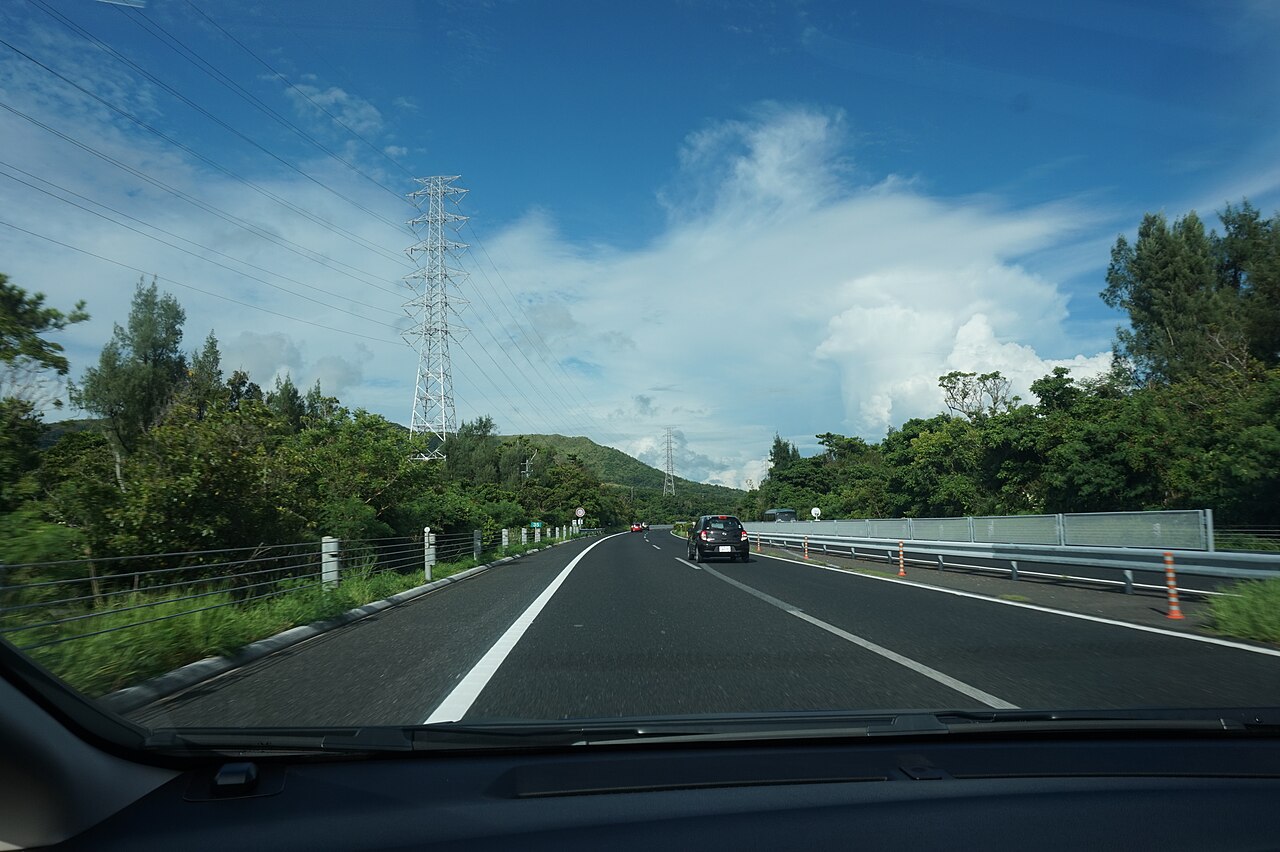
In Japan you drive on the left, and the driver’s seat is on the right side of the car. JAF (the Japan Automobile Federation) says in its English guide that vehicles and bicycles keep to the left side of the road. When you turn right, you cross the oncoming lane; when you turn left, you go into the near lane. Be careful not to drift into the oncoming lane out of habit after you finish a turn. When you pull out of a parking lot or a narrow side street, it helps to remind yourself “keep left” before you start moving.
The turn-signal and wiper levers are often on the opposite sides from a typical American car. Try them once before you set off, and you won’t be startled when the wipers come on instead of the blinker.
Stop on red: no right or left turn
In most U.S. states you can turn right on red after stopping, but Japan doesn’t have that rule. In Japan you can’t turn right or left on a red light. JAF’s guidance also says that on red you must not go past the stopping point.
When a green arrow is lit beside the signal, you may go in the direction of the arrow. Don’t follow the car ahead into a turn if there’s no arrow. Pedestrians have priority, and JAF’s guidance states that drivers must yield to pedestrians.
Stop signs, speed limits and railroad crossings
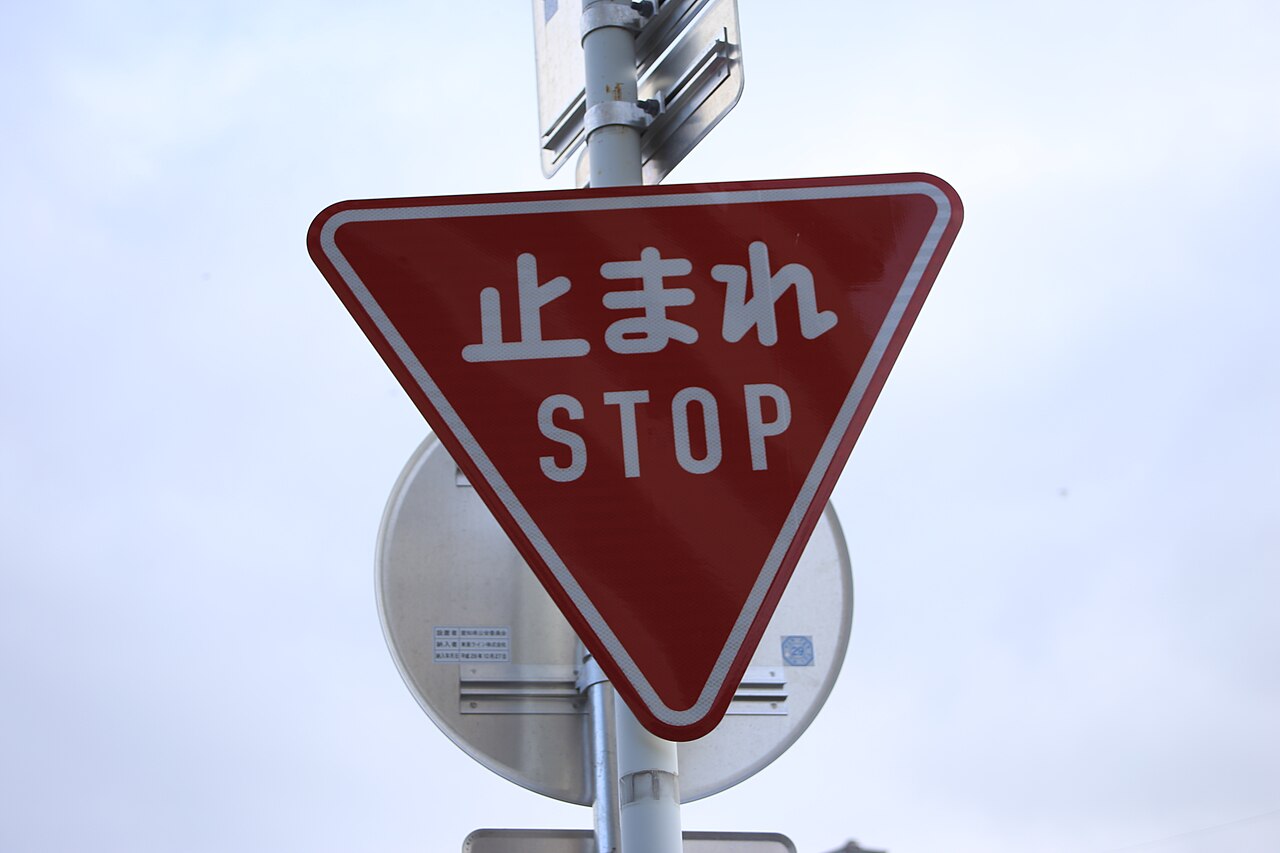
You must come to a full stop at the red inverted-triangle “Tomare” sign. Slowing down and rolling through doesn’t count as stopping. You also have to stop before a railroad crossing and check that it’s safe before you cross.
Speeds are in km/h. According to JAF, when no sign or road marking says otherwise, the limit for a standard passenger car is 60 km/h on ordinary roads and 100 km/h on expressways (about 37 mph and 62 mph). That’s only the default for when nothing is posted. The numbers on signs change from road to road, so always go by the signs. Rental car speedometers are in km/h as well.
Drinking, phones, seat belts and child seats
Driving after drinking alcohol is prohibited in Japan, and the penalties can reach not only the driver but also the person who lent the car and passengers. Please stick to a simple rule: if you drink, you don’t drive. UMUI Rent a Car’s rental terms state that we can’t rent a car to anyone who appears to have been drinking.
JAF’s guidance says you must not use a cell phone or be distracted by the car navigation system while driving. Set your destination in your map app before you leave and mount your phone in a holder. Seat belts are required for the driver and every passenger, including those in the back seat. Children younger than six must ride in a child seat. If you’re traveling with kids, please reserve a child seat option when you book.
We’ve only covered the points that tend to trip up American drivers here. For bus lanes and other Okinawa-specific tips, see our blog article “Driving in Japan for the First Time: Okinawa Traffic Rules and Safety Tips”.
If your documents aren’t ready, and booking prep
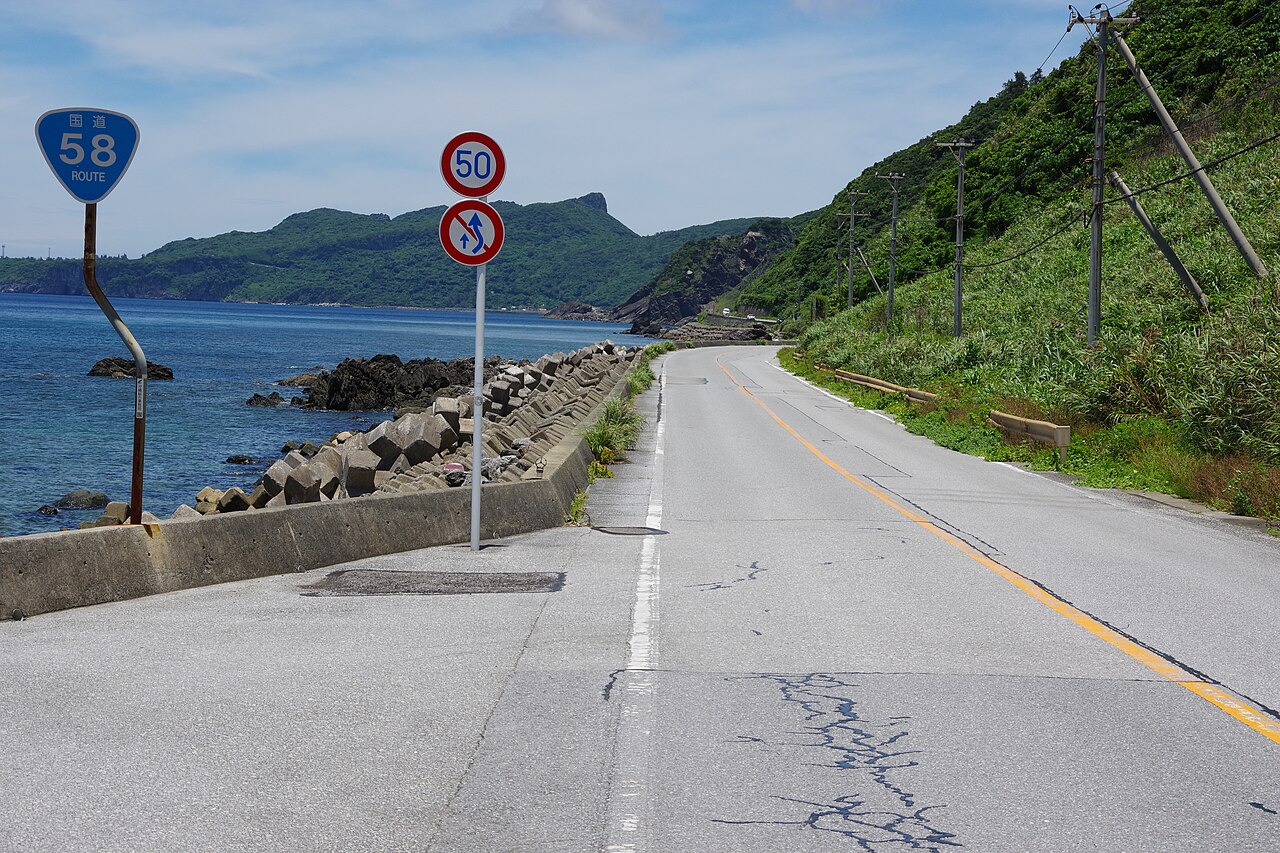
When you’d be driving unlicensed
Driving with documents that don’t meet the requirements counts as driving without a license in Japan. If you’re in an accident, you may also be unable to receive insurance or coverage, so please check that none of the following applies to you.
- Your IDP isn’t in the 1949 Geneva Convention format
- Your IDP has expired (one year from issue)
- More than one year has passed since you entered Japan
- You have an IDP but didn’t bring the original of your U.S. license
- You have a U.S. license but no IDP (a U.S. license can’t be used in Japan even with a translation attached)
If you can’t get your documents in time
If you couldn’t get an IDP before your trip, you can’t make one after you arrive in Japan. Ask a travel companion who is qualified to drive, or rework your plans around airport buses, taxis, sightseeing tours and rental company shuttles. UMUI Rent a Car’s Naha Airport branch offers a free shuttle between the airport and the branch.
What you can do before you book
UMUI Rent a Car’s booking site is available in Japanese, English, Korean and Traditional Chinese. When you book, check how many people will drive and whether all of them have their documents ready (an IDP plus a U.S. license, or SOFA plus a military ID). Completing online check-in ahead of time makes things smoother at the counter.
The Naha Airport branch is open from 8:00 to 20:00, every day of the year, and the Omoromachi branch from 9:00 to 18:00. Cars are returned to the branch where you picked them up. After you return a car at the Naha Airport branch, there’s a free shuttle to the airport.
Frequently asked questions
Is a photocopy or a photo on my phone okay for my IDP?
No. You need the original, both when you drive and at the rental counter. It’s fine to keep a copy in case you lose the original, but a copy alone won’t let you drive.
Can I use an AAA IDP in the United States, too?
No. AAA’s official page says it isn’t valid for driving in the U.S. and is meant to be used together with your valid U.S. license.
Can I get an IDP with a license from a U.S. territory such as Guam?
AAA’s official page says an applicant must hold a valid U.S. (or territorial) driver’s license. Please check with your local AAA office to find out whether your particular license qualifies.
Once your documents are in order, your trip to Okinawa becomes much freer. There are many places you can reach only by car, such as seaside drives and the Churaumi Aquarium in the north. If anything about preparing your documents is unclear, please feel free to contact UMUI Rent a Car, even before you book.
* The information in this article is as of October 2026. Systems and fees may change, so please check the latest information on the official websites of the U.S. Department of State, USA.gov, AAA and AATA, Japan’s National Police Agency and JAF, and UMUI Rent a Car.
Photo credits: Wikimedia Commons (CC BY-SA 4.0). The photographer is listed in each photo’s caption.