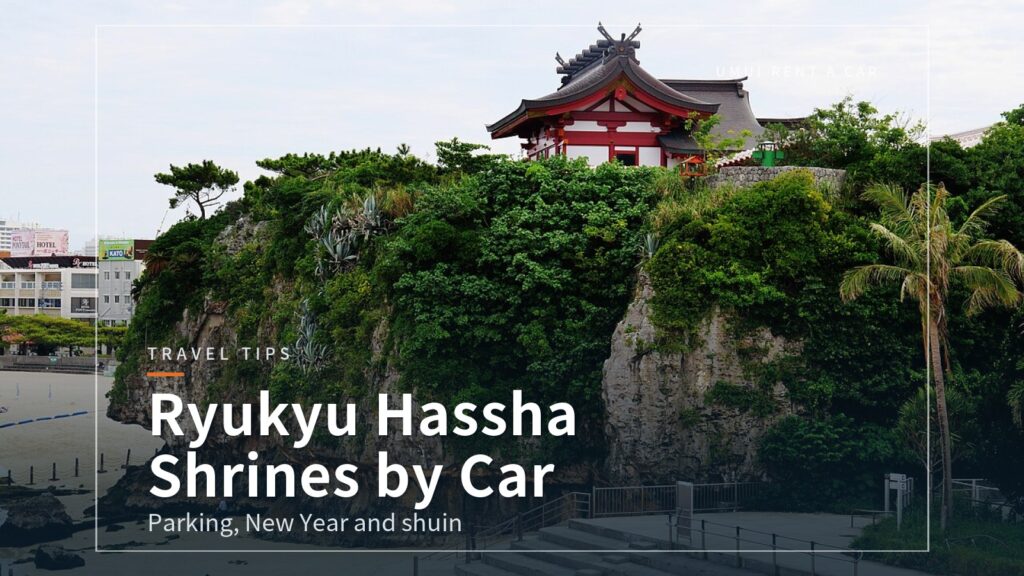
Want to visit a shrine or two in Okinawa but have no idea which ones are worth the stop, or how to fit them into a drive? In the days of the Ryukyu Kingdom, eight shrines received special treatment from the royal government. They are known as the Ryukyu Hassha, or “Eight Ryukyu Shrines”: Naminoue-gu, Oki-no-gu, Shikina-gu, Futenma-gu, Sueyoshi-gu, Asato Hachiman-gu, Ameku-gu and Kin-gu.
This article summarizes the eight shrines using what we could confirm on each shrine’s official website, the Okinawa Prefecture Shrine Agency, the Naha City Tourist Association and the Agency for Cultural Affairs. From locations, parking and visiting hours to the Futenma-gu cave, New Year crowds and traffic closures, shrine etiquette, shuin (temple and shrine stamps) and a sample route by rental car, everything is written from the driver’s point of view. Where we could not confirm something from an official source, we have left it out and say so.
What Are the Ryukyu Hassha? Getting the Big Picture
Eight shrines given special status by the royal government
The Futenma-gu website describes the Ryukyu Hassha as shrines that received special treatment from the royal government under the “Ryukyu Hassha (official shrine) system” in the Ryukyu Kingdom. According to the Naminoue-gu website, when the Hassha system was established, Naminoue-gu was ranked first and revered as “the foremost shrine of the realm.”
Six of the eight are in Naha (Naminoue-gu, Oki-no-gu, Shikina-gu, Sueyoshi-gu, Asato Hachiman-gu and Ameku-gu), one is in Ginowan (Futenma-gu) and one is in Kin Town (Kin-gu). The Naha shrines are close enough to visit in a single day by car, so they are easy to add to a trip.
Most of the shrines enshrine Kumano deities
Among the shrines whose enshrined deities we could confirm on official sites, Naminoue-gu, Shikina-gu, Sueyoshi-gu and Ameku-gu enshrine Izanami-no-mikoto, Hayatama-no-o-no-mikoto and Kotosaka-no-o-no-mikoto, deities associated with the Kumano Sanzan Gongen. Asato Hachiman-gu, on the other hand, enshrines Emperor Ojin, Tamayori-hime-no-mikoto and Empress Jingu, and belongs to the Hachiman tradition. The Futenma-gu website says it began with the worship of an ancient Ryukyuan deity in a cave, and that Kumano Gongen was later enshrined there as well.
The eight shrines are not all run in the same way
The Okinawa Prefecture Shrine Agency’s list of shrines under the Association of Shinto Shrines (Okinawa) includes Naminoue-gu, Futenma-gu, Shikina-gu, Hachiman-gu (Asato Hachiman-gu), Sueyoshi-gu and Ameku-gu. Oki-no-gu and Kin-gu are not on that list. Oki-no-gu has its own official website, and Kin-gu stands within the grounds of a temple (Kin Kannon-ji). This difference is one reason visiting hours and shuin arrangements are not uniform. Some shrines have no resident priest, so check each shrine’s opening hours for its amulet office before you go to avoid a wasted trip.
The Naha City Tourist Association notes that Ameku-gu, Asato Hachiman-gu and Sueyoshi-gu have no resident priest and may be unattended (as published in February 2020). Shikina-gu is likewise described as having no resident priest.
Shrines in Central Naha: Naminoue-gu, Ameku-gu and Asato Hachiman-gu
Naminoue-gu: Okinawa’s “guardian shrine” on a seaside cliff
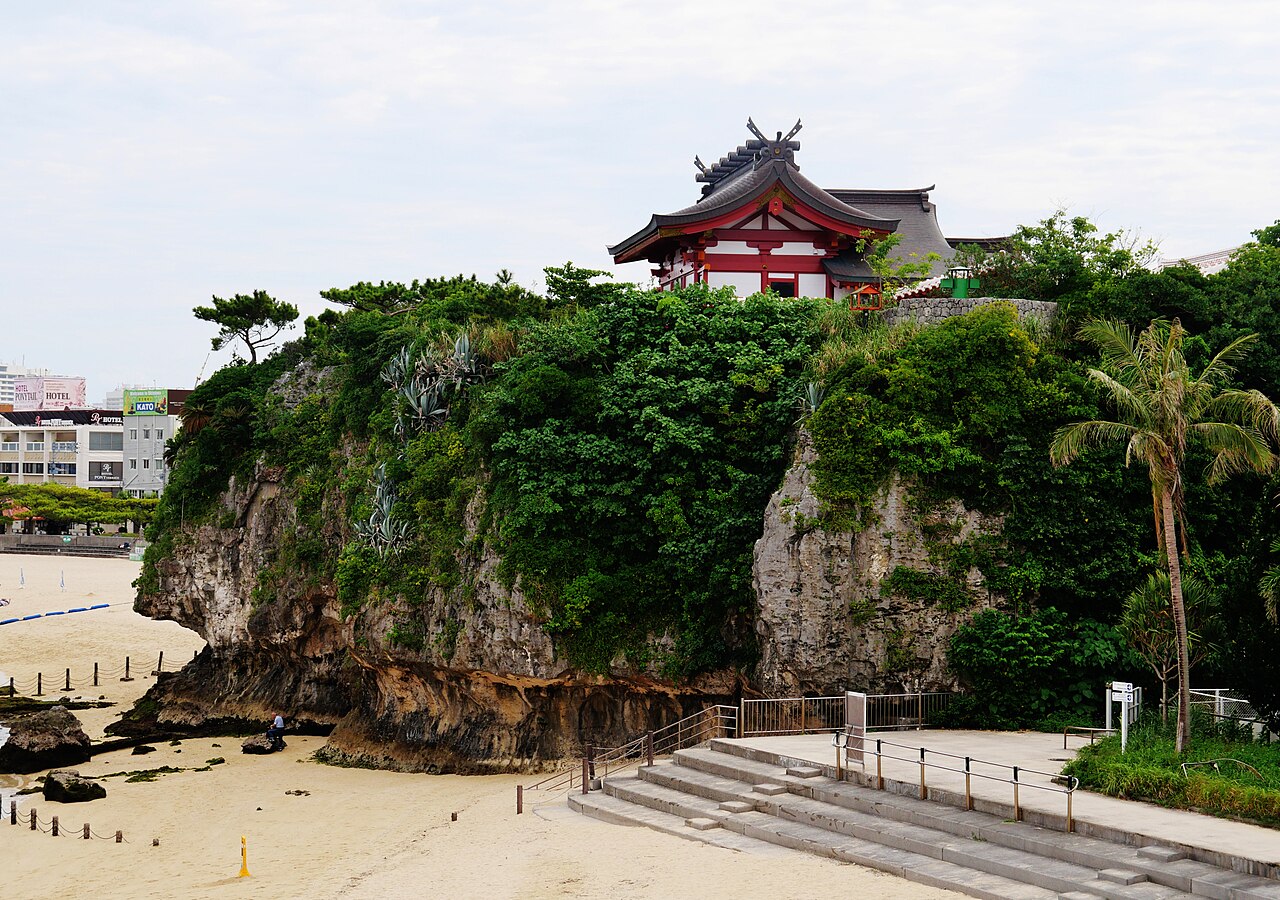
Ranked first among the eight, Naminoue-gu stands on a cliff facing the sea in Naha. According to the history on its official website, its founding date is unknown; it is said to have begun at this cliff edge, where people long ago prayed to the gods beyond the sea for good catches and harvests. Ships entering and leaving Naha Port looked up at the cliff and the shrine to pray for a safe voyage and give thanks for a safe return. It was ranked as a Kanpei Shosha (a minor shrine supported by the national government) in 1890 and is known as the “guardian shrine of Okinawa.”
For parking, how to think about nearby car parks and combining the trip with the Yui Rail monorail, see our Naha sightseeing and parking guide. Here are just the key points.
| Address | 沖縄県那覇市若狭1-25-11 |
|---|---|
| Amulet office / prayer service | Amulet office 9:00-16:45 / prayer service reception 10:00-15:30 (official notice, January 2026) |
| Parking | Free parking available (about 20 spaces). When full, use nearby paid car parks (official website) |
| Access | About 15 min. on foot from Asahibashi Station (Yui Rail). About 10 min. by taxi from Naha Airport (official website) |
Ameku-gu: a shrine in a Tomari neighborhood said to date from the Seika era
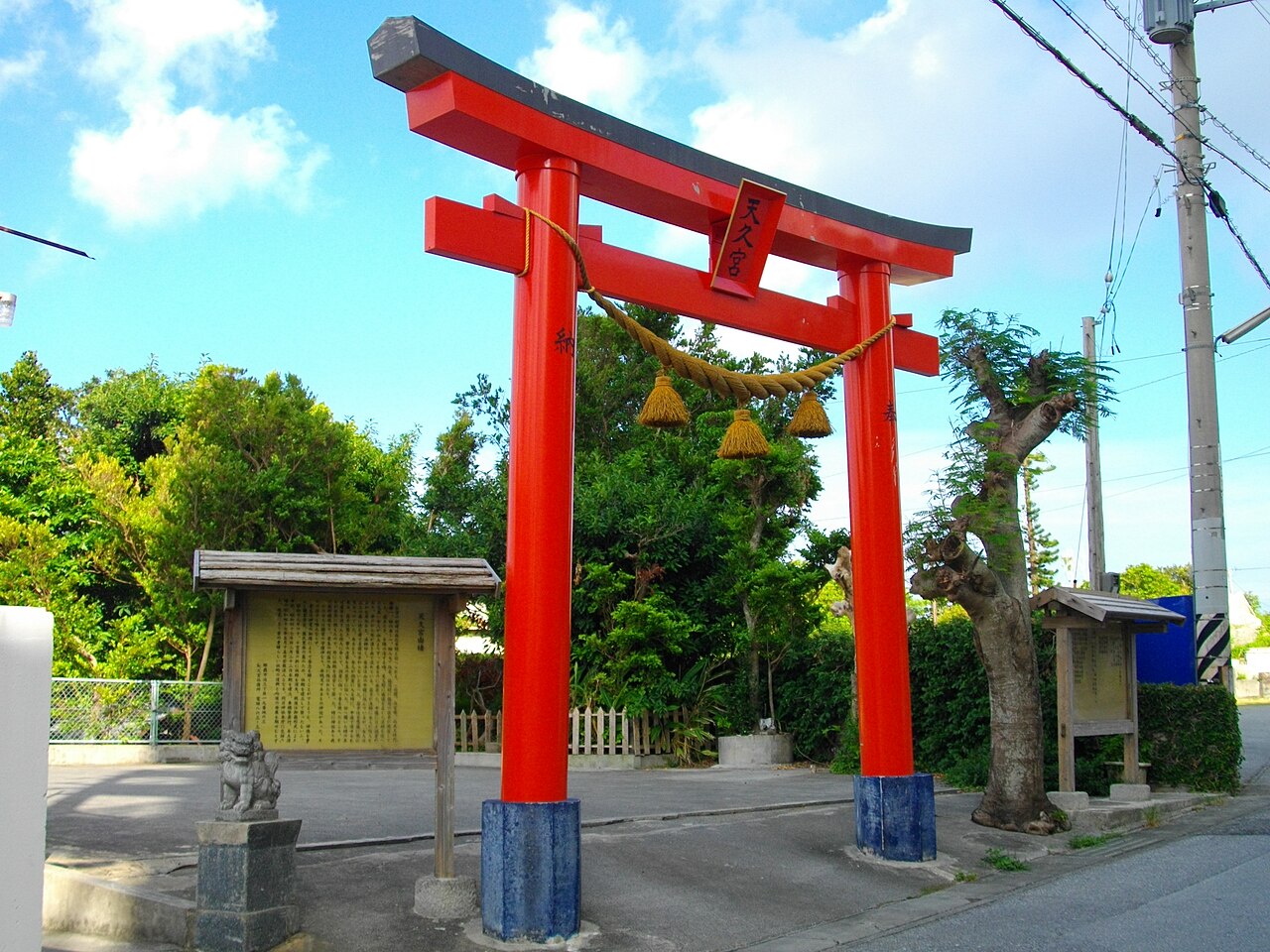
Ameku-gu sits in a residential area of Tomari in Naha. According to the Okinawa Prefecture Shrine Agency’s page, it is said to have been founded in the Seika era (1465-1487), and its origin story tells of an oracle identifying the deity as Kumano Gongen and the national guardian deity as Benzaiten. The shrine buildings burned in an air raid in 1944; after the war it was worshipped in the style of an utaki (sacred grove), and a main hall was built in 1972. The official website states a target of rebuilding the shrine in Reiwa 10 (2028).
The priest is often absent, and we could not confirm on the official site whether there is a car park or how many spaces it has. Realistically, use a nearby coin car park, or combine it with Naminoue-gu for a short visit.
| Address | 沖縄県那覇市泊3-19-3 |
|---|---|
| Phone | 098-863-3405 (official website) |
| Annual festival | 5th day of the 4th lunar month (Shrine Agency page) |
| Parking | Not stated on the official website (could not be confirmed) |
Asato Hachiman-gu: the Hachiman shrine, with different deities from the rest
The official website states that Asato Hachiman-gu was founded in 1466 by King Sho Toku, the seventh king of the First Sho dynasty. The story goes that it was built where he stood an arrow upright on the way to a military expedition to Kikaigashima. After the war, the site was used for a church under US administration for many years, and the shrine building was restored in 1993.
This shrine is notable for giving specific parking instructions on its official website. Park at space “No. 5,” at the far end along the Asato 1-ku Community Hall building. Do not park at the Shintoku-ji temple car park, the nursery school, or any space marked as a contract car park (with a vehicle number written on it). Doing so inconveniences the contract holders, so please read the signs carefully.
| Address | 沖縄県那覇市安里3-19-14 |
|---|---|
| Amulet office | Shuin, ofuda and omamori are available 10:00-15:00 on days it is open (closed on some days; check the calendar on the official website) |
| Phone | 098-863-8716 (official website) |
| Parking | Space “No. 5” at the far end along the Asato 1-ku Community Hall building. The Shintoku-ji car park, nursery school and contract spaces are not allowed (official website) |
Shrines Around Onoyama, Hanta-gawa and Shuri: Oki-no-gu, Shikina-gu and Sueyoshi-gu
Oki-no-gu: a shrine on high ground inside Onoyama Park
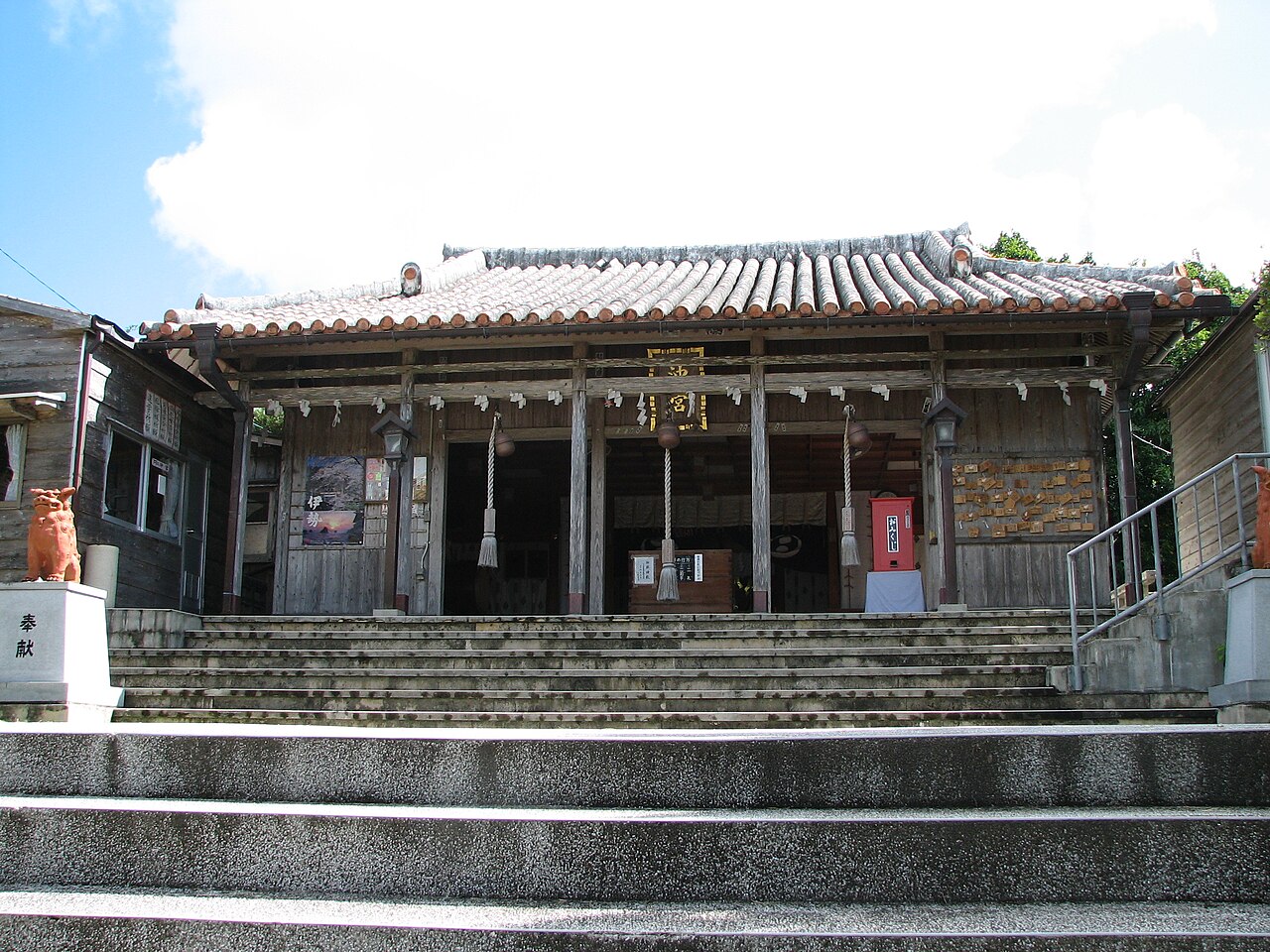
Oki-no-gu stands inside Onoyama Park in Naha. According to the Naha City Tourist Association, it is said to have been founded in 1451, when a king who noticed a strange light over the sea from Shuri Castle had an old tree found and enshrined it as a sacred tree. Envoys from China and Satsuma, and people from distant islands, are said to have come to pray for safe voyages. It was destroyed by fire in World War II and moved several times; in 1975 it was relocated to Tentozan, regarded as a sacred place since ancient times, where it stands today.
The Tourist Association says shuin are available at the shrine office on the left side of the worship hall. The official website and the Tourist Association give different reception hours for the office, so we do not state hours here. If you visit in the afternoon, it is safer to arrive early.
| Address | 沖縄県那覇市奥武山町44 |
|---|---|
| Phone | 098-857-3293 (official website) |
| Shrine office | Hours differ between sources; check by phone or on the official website beforehand |
| Parking | Could not be confirmed (we have not verified the number of spaces or fees at the Onoyama Park car parks from an official source) |
| Access | About 5 min. on foot from Onoyama-koen Station (Yui Rail) (Naha City Tourist Association) |
Shikina-gu: a Hanta-gawa shrine with a cave that opens on certain days
Shikina-gu is in the Hanta-gawa district of Naha. It is a different place from the similarly named World Heritage site Shikina-en (introduced in our World Heritage drive around Naha and the south), so be careful not to set the wrong destination in your navigation.
The history on the official website says the shrine building was originally inside the cave but, because of heavy damp, was moved outside it in 1680. The grounds page says “the cave doors are opened on the 1st and 15th of every month,” so it is normally closed. Prayer requests are accepted from 8:00 to 18:00, and the official website recommends booking by phone. The annual festival is on September 15.
| Address | 沖縄県那覇市繁多川4-1-43 |
|---|---|
| Phone | 098-853-7225 (official website) |
| Prayer reception | 8:00-18:00 (the official website recommends booking by phone) |
| Cave | Opened on the 1st and 15th of each month (official website) |
| Parking | The official website has pages on contract parking and temporary New Year parking. We could not confirm the number of spaces normally available to visitors |
The Naha City Tourist Association says shuin can be hard to get at Shikina-gu. If you want one, call the day before to confirm when the shrine office is open (as published in February 2020).
Sueyoshi-gu: a shrine in Sueyoshi Park’s woods, known for its stone stairway
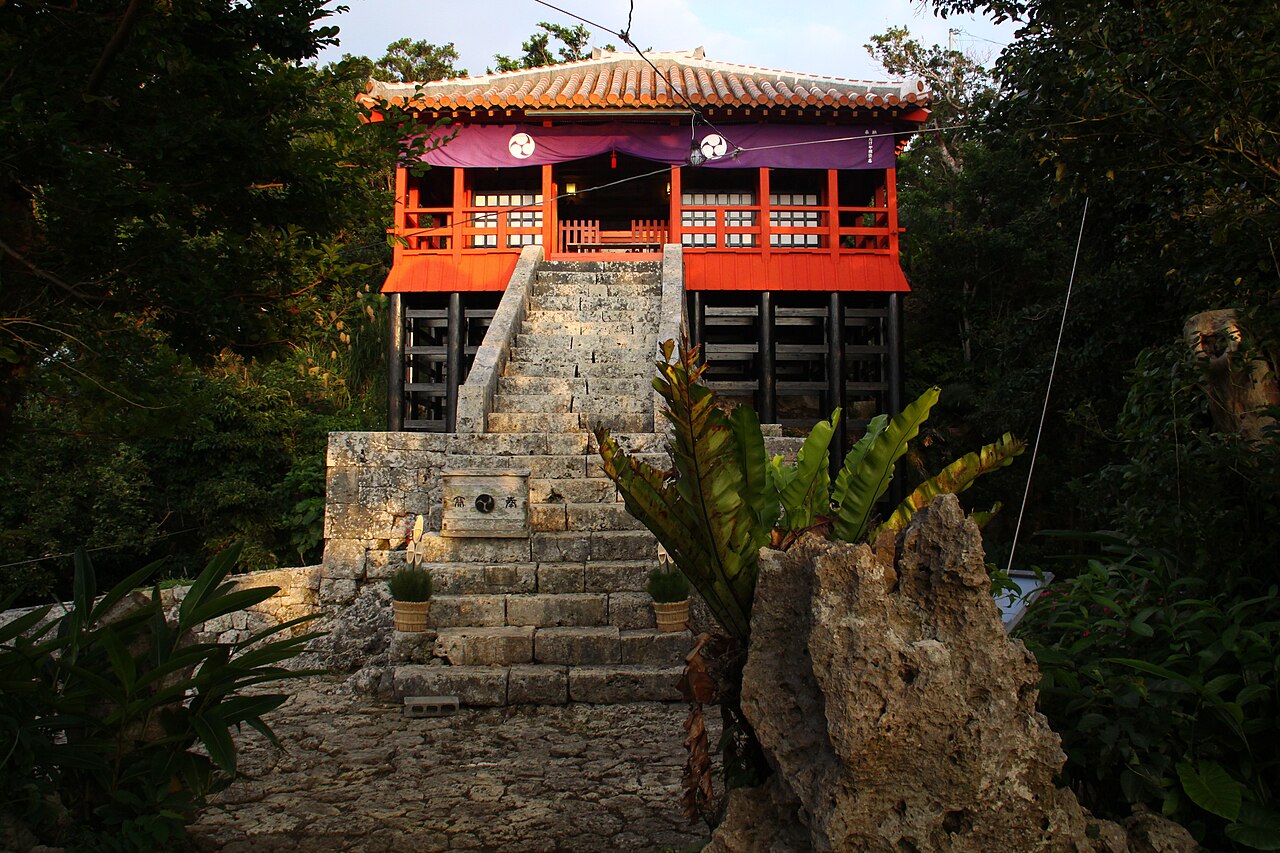
Sueyoshi-gu is inside Sueyoshi Park in Shuri. According to the Shrine Agency’s page, it is said that during the reign of King Sho Taikyu (around 1456), the priest Kakuo of Tenkai-ji temple invited and enshrined Kumano Sanzan Gongen here. The stone stairway linking the worship hall and the main hall, together with the main hall, was designated a National Treasure (old system) in 1936. Around the shrine are subordinate shrines and sacred places called “ibe.” The annual festival is on November 23 at 2:00 p.m.
We could not confirm parking information for Sueyoshi-gu on its official pages. The Shrine Agency page gives the address of the approach entrance as “Daimyo-guchi approach (1-156 Shuri Daimyo-cho, Naha).” Use this address as a guide when setting the entrance in your navigation.
| Address | 沖縄県那覇市首里末吉町1-8(末吉公園内) |
|---|---|
| Approach entrance | Daimyo-guchi approach: 那覇市首里大名町1-156 (Shrine Agency page) |
| Contact | 098-868-3697 (Naminoue-gu office; Shrine Agency page) |
| Parking | Could not be confirmed |
Futenma-gu in Ginowan, and Kin-gu
Futenma-gu: called the largest sacred site in central Okinawa
Futenma-gu is in Futenma, Ginowan. Its official website calls it “the largest sacred site in central Okinawa,” and says it is revered as a god of safe voyages, good catches and bountiful harvests, and also of traffic safety, good relationships, safe childbirth, first shrine visits for babies, business prosperity and academic success. For blessings, we only relay the official explanation as it is.
It has no closing days and has parking. The official FAQ says “the parking entrance is to the right of the torii gate.” We could not confirm the number of spaces on the official site.
| Address | 沖縄県宜野湾市普天間1-27-10 |
|---|---|
| Phone | 098-892-3344 (official website) |
| Closed | None (official FAQ) |
| Amulets | From May 2026: 9:00-17:30 (previously 9:30-18:00) |
| Prayer service | From May 2026: reception 9:00-16:30 (prayers start at 9:30). No reservations (groups and first-visit blessings for babies may reserve) |
| Parking | Available. The entrance is to the right of the torii (number of spaces could not be confirmed) |
The Futenma-gu cave (Okumiya): viewing hours and etiquette
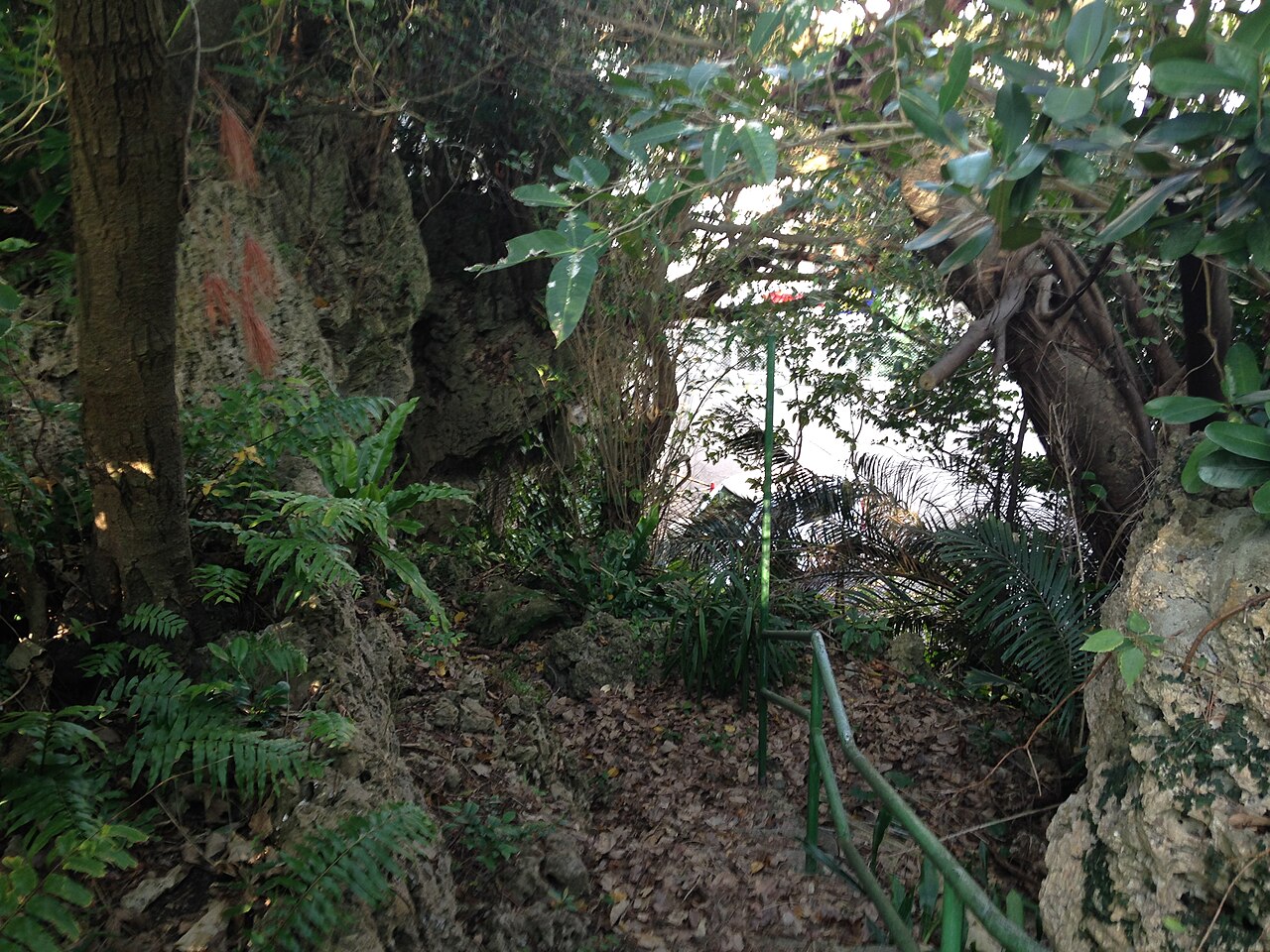
According to the Futenma-gu website, the grounds contain the “Futenma-gu Cave.” It is 280 m long, with two openings and three large open spaces, and was designated a “place of scenic beauty” cultural property of Ginowan City on August 1, 1991. The inside of the cave and the area around the east opening are an archaeological site where many artifacts dating from about 3,000 years ago have been excavated, and fossils of Ryukyu deer and wild boar about 20,000 years old have also been found. The shrine’s founding is also said to have started with the worship of an ancient Ryukyuan deity in the cave.
Visits to the cave are handled at the amulet office. There is no admission fee, and from May 2026 the viewing hours are 9:50-16:30 (previously 10:00-17:00). The website asks visitors to make offerings at the worship hall, not inside the cave. The path is rocky, so wear sturdy shoes.
In 2026, October 24 and 25 are the annual festival, and the official website announced changes to the reception hours for prayers and for visiting the Okumiya (cave). Hours can change on festival days at any time of year, so check the news page on the official website before you go.
Kin-gu: a shrine in a temple cave, the farthest of the eight
Kin-gu is in Kin Town, Kunigami District. On the grounds of Kin Kannon-ji temple is a limestone cave called Nisshu-do. Bunka Isan Online (Agency for Cultural Affairs) lists it as “Kin Limestone Cave (Nisshu-do),” registered as a Registered Monument on February 17, 2026. It is described as a cave that opens within a temple’s grounds and contains a space called the “Great Hall,” about 13 m high.
Tourist information says Kumano Sanzan Gongen is enshrined in this cave. However, we could not confirm from official sources whether Kin-gu has a shrine building today, its visiting hours or fees, or how shuin are handled. If you plan to visit, it is best to ask the Kin Kannon-ji temple office beforehand. If you combine it with the Naha shrines on the same day, expect a long drive and plan accordingly.
New Year Crowds and Traffic Closures
Amulet office hours change over the first three days of the year
Amulet office hours change at New Year. For Reiwa 8 (2026), the Naminoue-gu website listed December 31 as 9:00-17:00 and January 1-3 as 7:00-22:00. Sueyoshi-gu announced January 1-3 as 7:00-19:00 for the 2024 New Year. The Asato Hachiman-gu website says its amulet office stays open until about 19:00 during the first three days of the year. These change from year to year, so treat them only as a guide.
In some years Naminoue-gu streams live video of crowds in its grounds (this was also announced for the 2026 New Year). You may be able to check the crowds on the video before you leave. In the past, Naminoue-gu also announced that individual prayer services could not be accepted on January 4 because companies from across the prefecture book first prayers that day (notice from 2022).
The police have put traffic closures in place most years
According to past news reports, the Okinawa Prefectural Police have restricted traffic around temples and shrines expected to be crowded at New Year. For example, the Ryukyu Shimpo reported at the end of 2019 that around Naminoue-gu, about 150 m of Prefectural Route 47 (Naminoue-dori) and the area around the shrine would be closed to vehicles from 11:00 p.m. on December 31 to 3:00 a.m. on January 1. Around Futenma-gu, about 150 m from the shrine entrance toward Futenmasan Jinguji temple was closed to vehicles from 11:00 p.m. on December 31 to 5:00 a.m. on January 1.
These are past examples; as of October 2026, we could not confirm the closures planned for the 2027 New Year. Check the Okinawa Prefectural Police announcements and news reports that usually appear in late December. For how to think about annual festivals and traffic closures, see our guide to Okinawa festivals, events and traffic closures.
Mindset for driving to a New Year shrine visit
Tourist information sites say things like “the grounds car park cannot be used during New Year” for Futenma-gu, but we could not confirm this on the official website. The Shikina-gu website has a page about temporary New Year parking. Rather than counting on parking, it is safer to plan around it: avoid the peak times (late at night on New Year’s Day and the first three days), or combine the trip with public transport.
Shrine Etiquette and Shuin
Basic etiquette for visiting
The Futenma-gu website says there is no set dress code but asks visitors to wear clothing that is not disrespectful before the deity. It also asks that pets not be brought. In addition, it says that after a death in the family, although practice varies by region, a period of mourning of 50 days is observed, and visitors are asked to refrain from visiting the shrine during that time.
In general, you bow once in front of the torii, purify your hands and mouth at the water basin, and pay your respects in front of the worship hall. The Shikina-gu website has pages explaining how to use the water basin and how to make a tamagushi offering. At Shikina-gu and Futenma-gu, which have caves, refrain from leaving offerings in the caves or entering on days other than those set. Many of the shrines are next to residential areas or parks, so follow the parking instructions and take care not to disturb neighbors.
What we could confirm officially about shuin
The Asato Hachiman-gu website states that “shuin, ofuda and omamori are available from 10:00 to 15:00 except on closed days.” The Naha City Tourist Association (as of February 2020) says that shuin for Naminoue-gu, Ameku-gu, Asato Hachiman-gu and Sueyoshi-gu can be obtained at Naminoue-gu, that Oki-no-gu’s can be obtained at the shrine office to the left of the worship hall, and that Shikina-gu’s can be hard to get. It gave the price as 300 yen per shuin at the time, but current arrangements may have changed.
We could not find any mention of shuin on the Futenma-gu website, or for Kin-gu. Please confirm whether they are available at the amulet office or by phone. Go during amulet office hours, after checking each shrine’s official information on shuin, to be sure.
Sample Routes by Rental Car
Half-day route: around central Naha
Travel times vary with traffic, so we show only the order and the points that limit your time. As a guide, start with Naminoue-gu to match the amulet office hours.
| 1 | Naminoue-gu (amulet office from 9:00; about 15 min. on foot from Asahibashi Station on the Yui Rail) |
|---|---|
| 2 | Oki-no-gu (inside Onoyama Park; check the shrine office hours beforehand) |
| 3 | Ameku-gu (the priest is often absent; a short visit for worship only) |
| 4 | Asato Hachiman-gu (amulet office 10:00-15:00; parking at space “No. 5”) |
It does not matter whether you visit Oki-no-gu or Naminoue-gu first. The Asato Hachiman-gu amulet office closes at 15:00, so do not leave it for late afternoon. Use a map app to reorder the stops to suit current road conditions.
Full-day route: adding Shikina-gu, Sueyoshi-gu and Futenma-gu
If you have a full day, you can add Shikina-gu and Sueyoshi-gu to the half-day route and finish at Futenma-gu. Shikina-gu accepts prayer requests from 8:00 to 18:00, and its cave opens only on the 1st and 15th of each month, so call ahead if you want to match those days. The Futenma-gu cave has viewing hours of 9:50-16:30 from May 2026, so if you want to see the cave, arrive by early afternoon.
One possible order is: (1) Naminoue-gu and Oki-no-gu in central Naha in the morning, (2) Asato Hachiman-gu around noon, (3) Shikina-gu and Sueyoshi-gu in the afternoon, and (4) Futenma-gu if time allows. On days when you want to put Futenma-gu first, view the cave in the morning and then return to Naha to reach the amulet offices in time.
How to think about adding Kin-gu
Visiting Kin-gu on the same day as the six Naha shrines is a heavy load. It is more realistic to combine it with a trip to the north and stop at Kin Kannon-ji on a different day. Our 2-day northern Okinawa drive can help with planning the north.
Visiting the Ryukyu Hassha shows you a quieter side of Okinawa than the usual tourist sights. The Naha shrines often take many transfers by public transport, but by car you can visit them in a comfortable order. UMUI Rent-a-Car offers a free shuttle from Naha Airport to our shop. Please consider us for your shrine-hopping trip.
* Opening hours, amulet office hours and other information in this article are as of October 2026. They may change, so please check each shrine’s official website or call before you go. Religious content is introduced based on each shrine’s official explanation and is not a guarantee of any effect.
Photo credits: Wikimedia Commons (CC BY 4.0 / CC BY-SA 3.0 / CC BY-SA 4.0 / Public domain). Photographers are credited in each caption. Featured image: Zairon / CC BY 4.0.