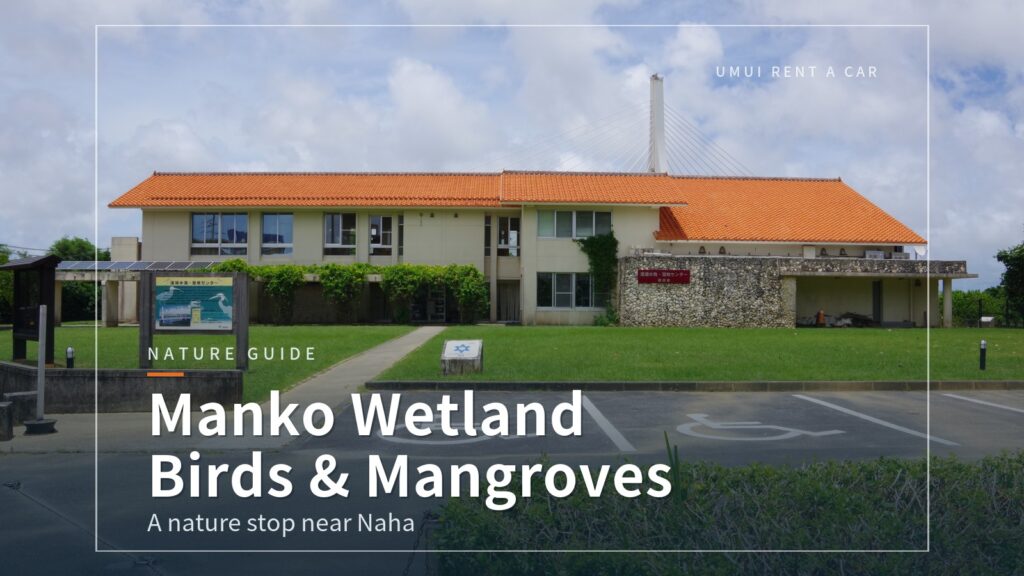
Looking for a quieter side of Okinawa beyond beaches and shopping? Manko, between Naha and Tomigusuku, offers a chance to discover waterbirds and mangroves close to the city. Despite its name, which includes the Japanese word for “lake,” it is an estuarine wetland. The changing tide can transform the view even from the same observation point.
The Manko Waterbird and Wetland Center in Tomigusuku is a useful starting point. This guide explains what to look for and what to check before driving there. Depending on conditions, you might spend your visit watching distant birds or learning about the wetland indoors.
Start with the center’s exhibits
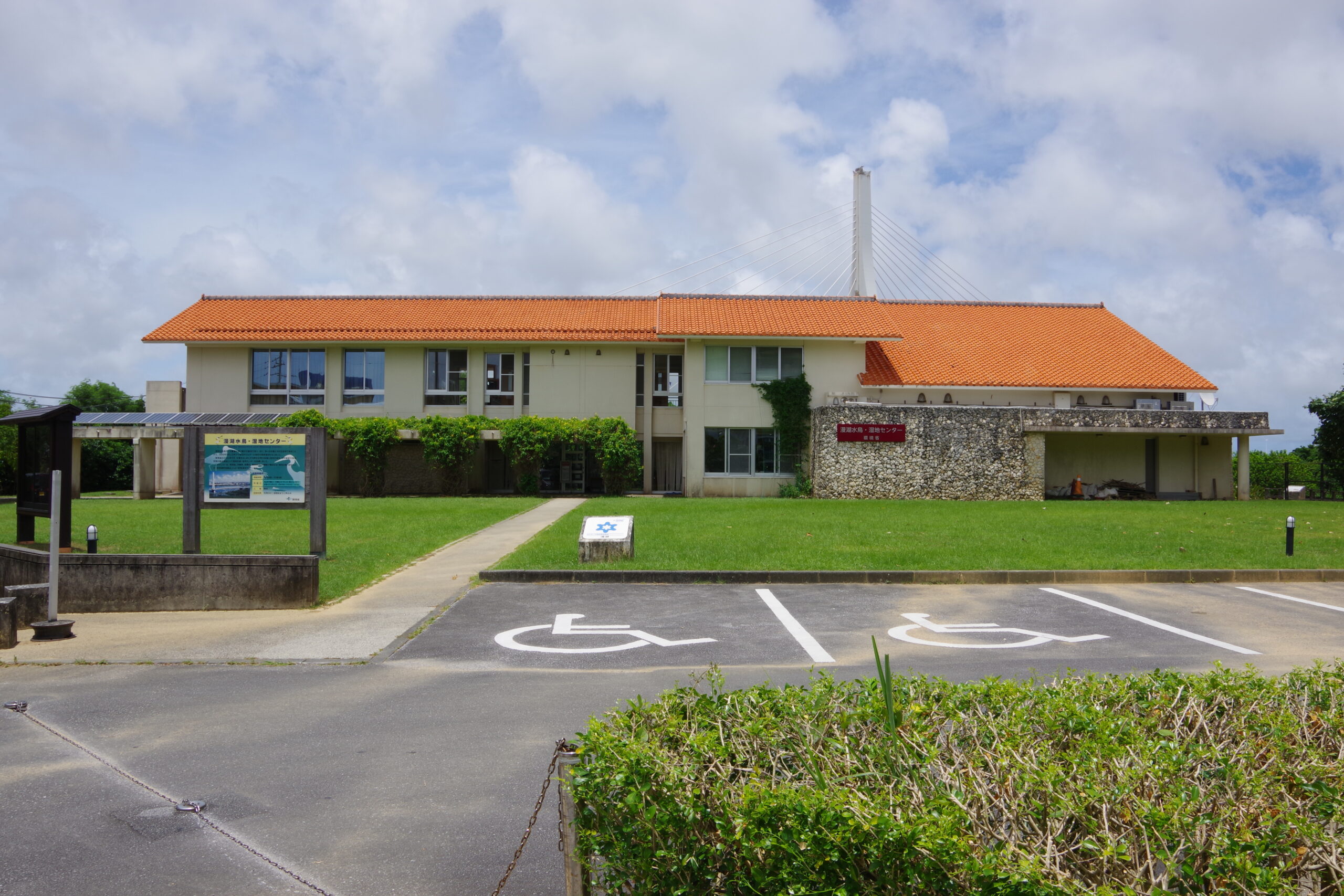
The center helps visitors learn about wildlife and wetland conservation. The Ministry of the Environment describes indoor exhibits, video interpretation and nature observation activities. If you are new to birdwatching, start by learning what lives on the tidal flats rather than trying to memorize bird names.
Before looking for wildlife, notice how the mudflats, river and vegetation fit together. A bird walking across the mud, another resting, or a movement on the water can all be interesting subjects. If the birds are far away, you can focus on the displays and videos instead of spending the whole visit trying to find them.
Admission is free, but check closing days and current visitor information before setting out. Organized observation events have their own dates and registration rules. An ordinary visit does not automatically include staff guidance; contact the center beforehand if you would like assistance.
| Address | 沖縄県豊見城市字豊見城982 |
|---|---|
| Hours | 9:00–17:00 |
| Closed | Mondays (the following day when Monday is a public holiday), June 23, December 29–January 3 |
| Admission | Free |
| Parking | Free parking available |
| Phone | 098-840-5121 |
Think about the season and the tide
The center’s wildlife guide describes roughly November through February as the usual peak season for migratory bird numbers. This makes wetland observation an option for a winter trip to Okinawa. However, the season alone cannot guarantee a particular bird: weather, movements between feeding areas and the tide all influence what you see.
As the tide falls, more mud is exposed and feeding birds may spread across a wide area. Low tide therefore does not always mean close views. The official guide explains that, during a rising tide, some birds move toward the landward side as water covers their feeding areas.
Plan around the season and changing tide, rather than assuming morning is always best. Suitable conditions also depend on the observation point. Read the official wildlife guide before your visit and ask the center about observation options that day.
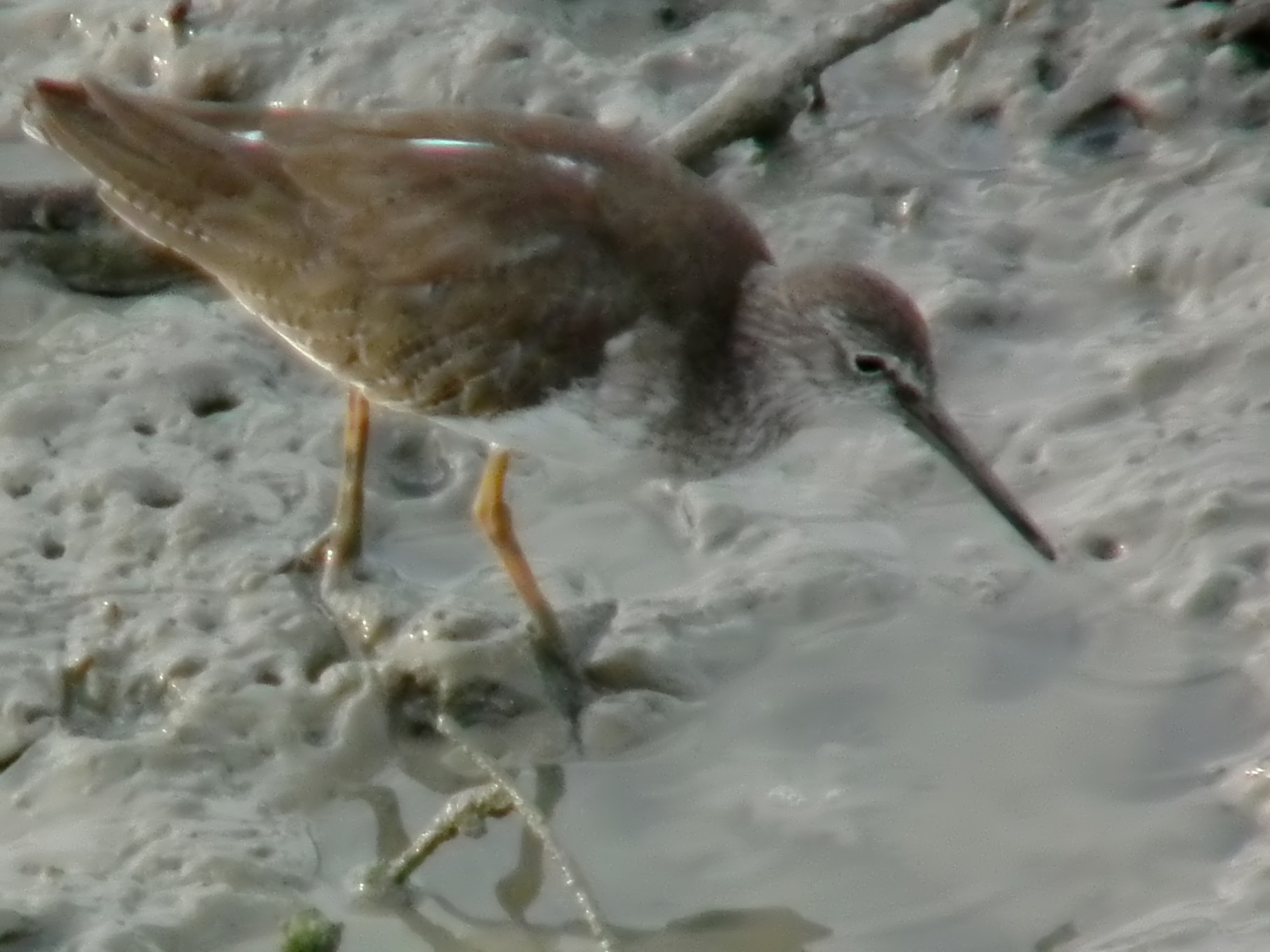
Binoculars can help you watch distant birds without following them. Even without knowing their names, compare bills, legs and walking styles. Quiet observation from a distance is a better way to enjoy natural behavior than approaching for a close photograph.
Look at the mangroves and the smaller life of the mudflats
Mangroves grow on the southern side of Manko. The center identifies mehirugi as the main mangrove plant and explains that mangroves can be observed throughout the year. Notice the relationship between the plants, water and mud rather than treating them simply as a green backdrop: it is a very different landscape from a sandy beach.
Crabs, shellfish and other small animals live in the mudflats and form part of the birds’ food supply. A day with fewer visible birds can still be an opportunity to look at the wider wetland. Holes and traces of water can invite questions about the animals living there, even when they remain out of sight.
Do not chase wildlife or step down onto the mudflats to observe it. Avoid feeding birds or taking plants and animals away. Keep the site as you found it, and pay attention to the path and other visitors while looking at small details.
Check boardwalk access before visiting
The center describes a boardwalk for closer views of the mangroves. However, its website still carries a notice of closure for repairs beginning January 28, 2026. Later observation event announcements describe routes including the boardwalk. These public notices do not establish the exact extent of ordinary visitor access on your chosen date.
If walking the boardwalk is important to you, confirm its current status with the center before setting out. This article does not promise that it is open. Follow construction and access signs, and never enter a closed section.
Even when outdoor access is limited, indoor exhibits and videos offer another way to learn about the wetland. Families with young children and visitors concerned about footing should check the accessible areas before planning their visit. For outdoor time, bring suitable walking shoes and protection from sunshine or rain.
Driving there and planning your return
The official access page lists free parking and says parking reservations are unnecessary. Enter the center’s full name and address in your navigation system, checking that it has not selected a nearby park instead. On arrival, follow the entrance signs and watch for pedestrians after parking.
Groups of ten or more, and visitors requesting staff assistance, need advance coordination and an application. If you wish to join an event or special guided activity, check its own announcement rather than relying only on normal opening hours.
On your car-return day, decide when to head back before settling in to wait for birds. UMUI Rent-a-Car’s Naha Airport branch is at 与根515-4, Tomigusuku. Reset your navigation to the branch when returning and allow time for traffic and your onward journey.
For a cultural stop as well, see our guide to Okinawan crafts and karate in Tomigusuku. At Manko, the experience is not only about finding a certain bird: it is also a chance to understand the changing natural landscape within the city.
Official information checked November 16, 2026. Opening arrangements, boardwalk access and events may change. Ordinary boardwalk access remains unconfirmed; contact the center before visiting.
Photos: Wikimedia Commons. Exterior and featured-image background: Kugel~commonswiki / CC BY-SA 4.0. Redshank: Charles Lam / CC BY-SA 2.0. Featured images are cropped with added text (CC BY-SA 4.0). Photographs do not establish current access conditions.