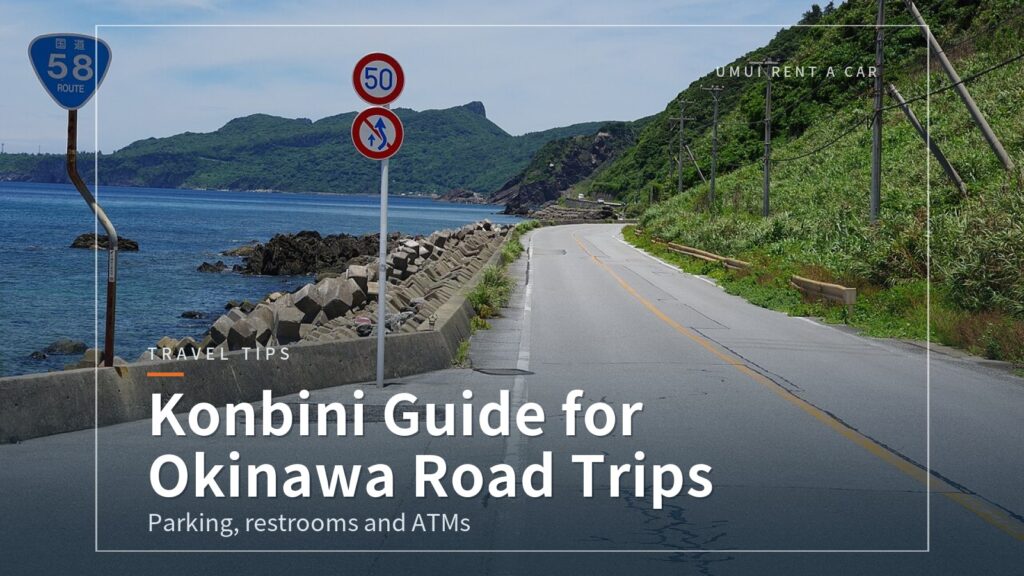
“I need a drink and a restroom break, but can I just pull into a convenience store parking lot?” If you drive around Okinawa, this question comes up sooner or later. Convenience stores (called “konbini”) are a driver’s best friend: drinks, snacks, restrooms and even ATMs in one stop. But used the wrong way, they can cause trouble for the shop and for other customers.
This guide is written especially for visitors from overseas. It covers the main chains in Okinawa, parking etiquette, how to borrow a restroom, ATMs, payment, Wi-Fi, parcel shipping and copying, and how to think about the stretches of the north where stores are far apart. Store numbers, opening hours and services change, so we only include what we could confirm from official sources. Anything we could not confirm is marked “check the official site.”
Okinawa’s Convenience Stores and How to Use Them on a Drive
The main chains you will see
On the main island of Okinawa, the big three are FamilyMart, Lawson and 7-Eleven. FamilyMart and Lawson have had stores in the prefecture for some time, while 7-Eleven opened its first Okinawa stores in 2019 (the timing comes from local news reports). These are signs many visitors already know from the rest of Japan, so they are easy to spot.
| FamilyMart | A major chain with stores in Okinawa. An official release describes products that are normally sold only at Okinawa stores. Use the store locator on the FamilyMart official site to find one. |
|---|---|
| Lawson | A major chain with stores in Okinawa. For the number of stores and Okinawa-only products, please check the latest information on the Lawson official site. |
| 7-Eleven | Opened its first stores in Okinawa in 2019. Its network is still growing, so check the official store locator to see whether there is one near your route. |
We could not confirm store counts for Okinawa on the official pages, so we do not give any numbers here. Rather than worrying about which chain has more stores, it is more practical to search for the nearest convenience store in your map app.
Try the Okinawa-only items when you find them
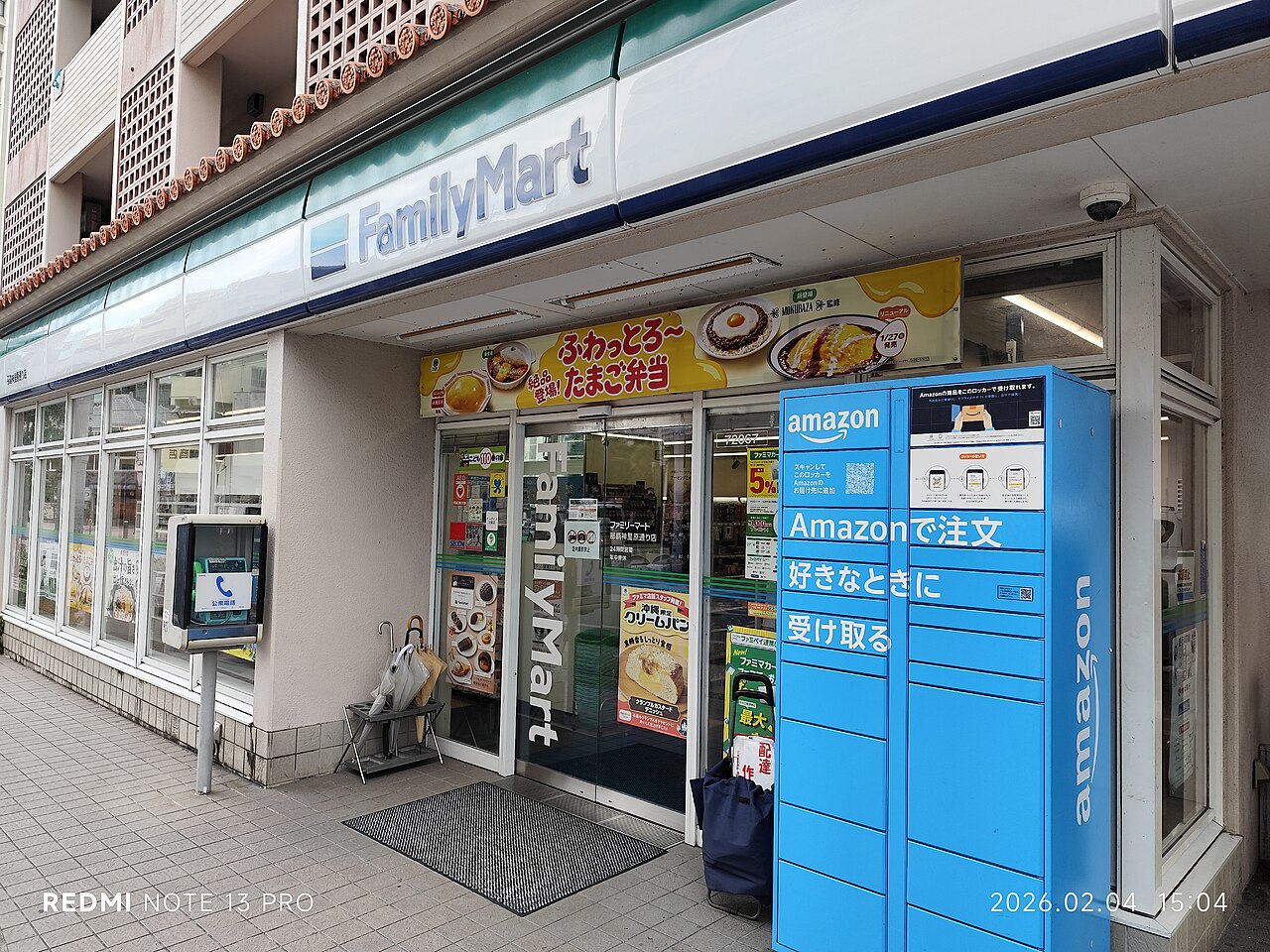
A 2020 FamilyMart news release introduced products that are “normally sold only in Okinawa stores,” such as luncheon meat, a mix for jūshī (Okinawan-style seasoned rice) and chinsukō (a traditional Okinawan cookie). That was a past announcement, though, and what is on the shelves now depends on the store and the season. For Okinawa products from Lawson or 7-Eleven, check their official sites or the shelves in the store.
If you are curious about local flavors, look at the chilled lunch boxes, deli items, rice balls and sweets. Packaging that mentions Okinawan ingredients or says “Okinawa only” makes a nice souvenir of the trip.
Use a konbini for short breaks and restocking
A convenience store is best for things that take 10 to 15 minutes: a drink, a snack, a restroom, an ATM. If you want a longer break with a view, a roadside station (michi-no-eki) is a better choice, with larger parking lots and tourist information. For rest stops on the expressway, see our article on the Okinawa Expressway service and parking areas. This article sticks to what is specific to convenience stores.
Parking Lots: How to Use Them and Good Manners
A convenience store lot is private property
The parking lot of a convenience store is not a public road. It is private property that the shop provides for its customers. That is why you should park only while you are actually using the store, for shopping or the restroom. If a sign says that parking is for customers only, follow it.
The rules for parking and stopping on public roads are explained in our article Parking Basics in Okinawa. Even inside a store’s lot, the shop’s signs and instructions come first.
It is also important not to use the lot as a substitute for your destination’s parking. “I’ll just leave the car while I swim at the beach nearby” or “while I wait in line at a popular café” takes a space away from customers. Stores near tourist spots are especially likely to fill up.
Do not park for a long time
Some stores post signs asking customers not to park for long periods. Avoid long stays, and avoid sleeping in your car there. If you feel sleepy, use a place made for resting, such as a roadside station or an expressway service area.
Waiting briefly while a companion shops is often fine if there is space, but please hold back when the lot is busy. If you are unsure, a quick word to the staff is the safest option.
Tips for entering and leaving
Japan drives on the left, and you enter a store’s lot from the left side as well. When you turn in from the road, check for pedestrians and bicycles and slow down first. Park inside the lines, watching the wheel stops and white markings, whether you go in forward or in reverse. Move slowly so you do not hit the wheel stop hard with your tires.
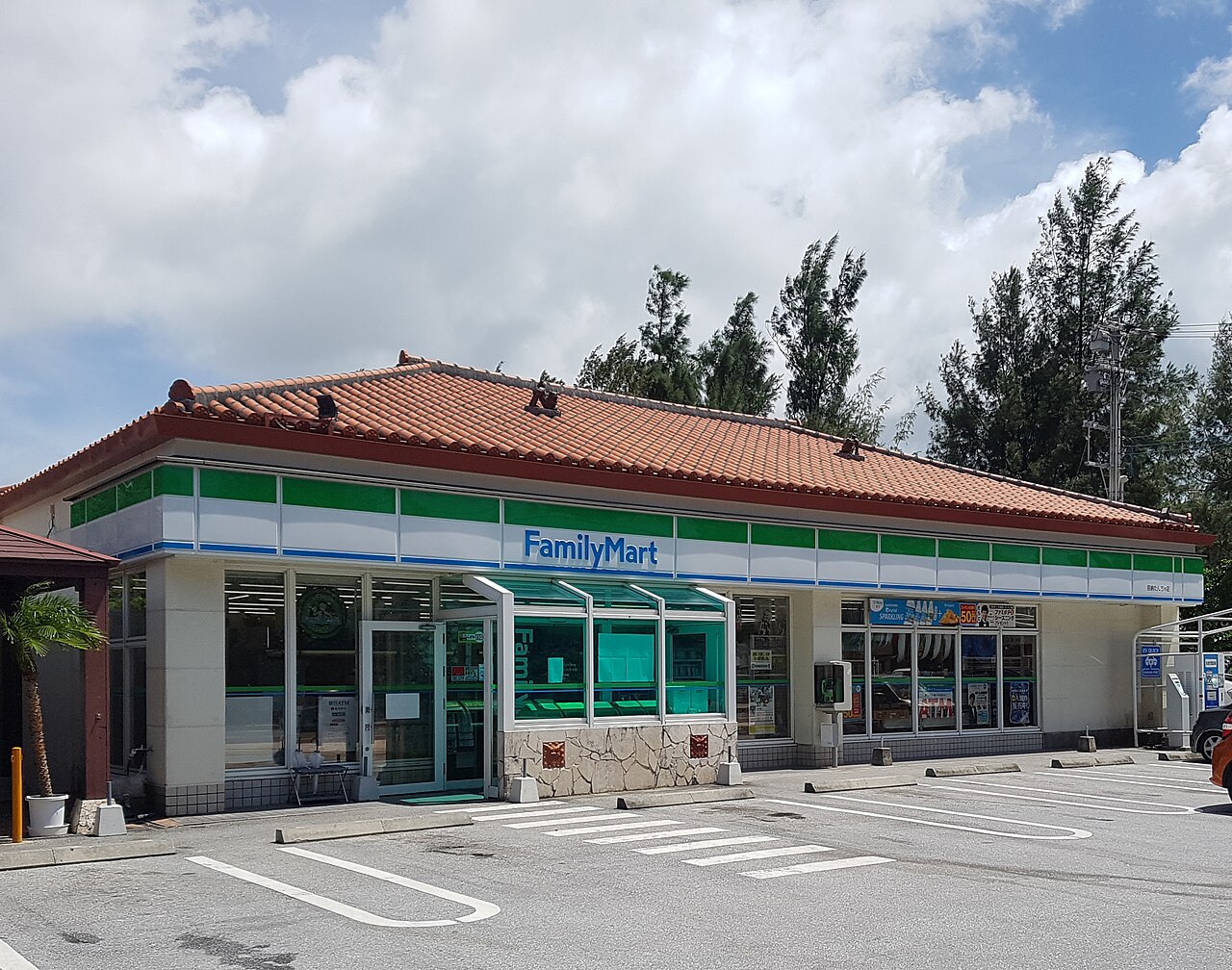
It is good manners to turn off the engine while you are parked. Open and close doors gently so they do not hit the next car or a passerby. For trash, take it with you, or follow the store’s instructions for items you bought there (how the trash cans may be used differs from store to store, so check the signs).
At stores facing a road, take care when you pull out. Look left and right. Turning right when leaving means crossing the oncoming lane, so do not force it. Take your time and exit safely.
How to Borrow a Restroom
The basics: be a customer and say a quick word
Whether a convenience store has a restroom, and whether it is open to customers, is up to each store. In most stores, shoppers can use it, but some stores have none, or do not allow use. That is why saying a quick word to the staff and buying something small, such as a drink is the polite way to borrow one.
You do not need to speak Japanese. Gestures or a translation app on your phone are enough to ask, “May I use the restroom?” Signs for the restroom are sometimes near the register, at the back of the store, or outside, so look around first.
Manners for using it comfortably
Please keep these points in mind when you use a restroom.
- Flush only toilet paper. Japanese toilets can clog if you flush tissues or sanitary products.
- Follow the store’s signs (usage notes or out-of-service notices).
- Do not stay long, and leave it clean for the next person.
- If you have a small child, go together and do not send them alone.
If it is not available, move on calmly
A store’s restroom may be occupied, out of order or being cleaned. In that case, use another convenience store nearby, or the restroom at a roadside station or shopping facility. In the north especially, stores are far apart, so combine them with the roadside station restrooms introduced in our roadside station article. Do not tell yourself you can wait until the next store. Act early.
Money, ATMs and Payment
Check how you can pay at the store
Many convenience stores accept cash as well as credit cards, electronic money and QR code payments, but what works differs by chain and by store. We could not confirm official information on this, so we do not list payment types. Look at the signs around the register, or ask the staff, “Can I use a card?”
To be safe, carry a little Japanese yen in cash. Especially at tourist spots and in quiet areas, some stores take cash only, and card payments can fail when the system has trouble.
ATMs that accept overseas cards
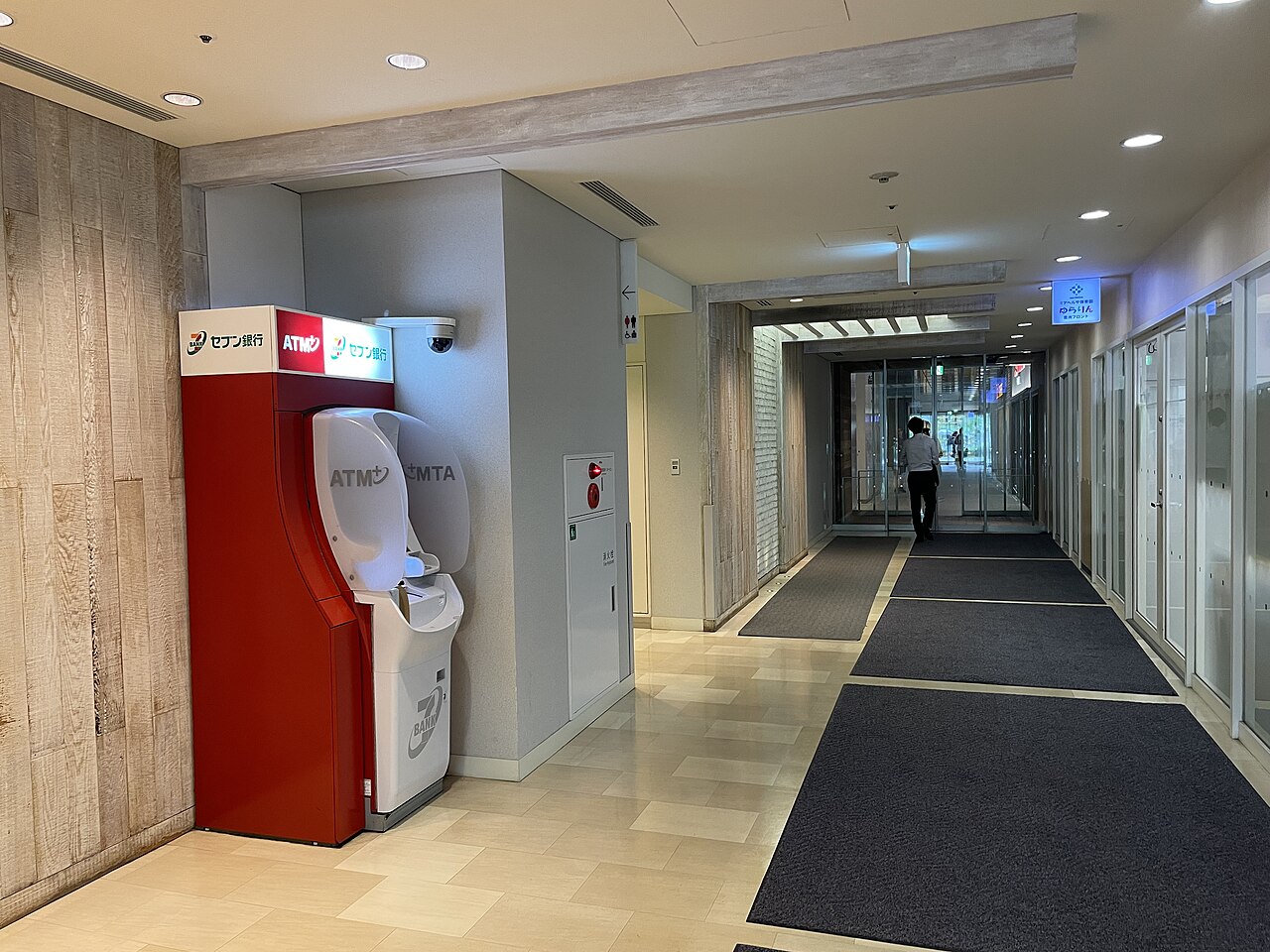
The cards and services accepted differ by ATM operator. The table below summarizes what we could confirm from official sources.
| Seven Bank ATMs (mainly inside 7-Eleven stores) | According to the official page, overseas-issued Visa (including PLUS), Mastercard (including Maestro and Cirrus), UnionPay, American Express, JCB, Discover and Diners Club cards are supported. However, it states that even cards with the same mark may not work. The limit per withdrawal is 100,000 yen (30,000 yen for magnetic-stripe cards). The screen can be switched to several languages, including English, Chinese (Simplified and Traditional) and Korean. Fees differ by card brand; check the official page for amounts. |
|---|---|
| e-net ATMs (mainly inside FamilyMart stores) | A FamilyMart announcement from April 2016 said that overseas-issued Visa, Visa Electron, PLUS, Mastercard, Cirrus, Maestro and JCB cards can be used for yen withdrawals and balance inquiries (UnionPay has been supported since February 2016). Because this is a past announcement, check the official site for current support. |
| Lawson Bank ATMs (mainly inside Lawson stores) | We could not confirm official information on overseas card support. Please check the Lawson Bank official site. |
Sources: Seven Bank (overseas-issued cards), FamilyMart (April 26, 2016; Japanese).
What to check before you withdraw
If you plan to use an overseas card, check before you leave home whether your card works, with both your card issuer and the ATM operator’s official page. Fees and exchange rates are set by both your card company and the ATM side, so looking them up in advance can save you money. If the screen asks you to choose between yen and your home currency, check your card issuer’s guidance on which is better.
If your PIN is rejected, do not keep trying; contact your card issuer. Avoid ATMs in quiet places at night, and stay aware of your surroundings while you use one.
Wi-Fi, Parcel Shipping and Copying
Do not count on Wi-Fi; bring your own connection
There used to be convenience store chains offering free Wi-Fi, but services have changed. For example, FamilyMart’s free Wi-Fi “Famima_Wi-Fi” was reported to have ended at the end of July 2022. Whether each chain’s Wi-Fi is available now, and on what terms, should be checked on the official site or on signs in the store.
That is why we recommend that you do not rely on convenience store Wi-Fi: prepare your own connection, such as a SIM card, eSIM or pocket Wi-Fi, and save maps for offline use before you set out. Signal can be weak in some places.
Shipping parcels
You can also send parcels from a convenience store. A 2019 official announcement from Yamato Transport introduced a method for sending items from 7-Eleven and FamilyMart by completing the procedure on a smartphone and using a QR code (cool-delivery service is not included). However, what is handled and the pickup times differ by store. We could not confirm Lawson’s handling from official information this time.
If you want to send souvenirs to the airport or home on your last day, check the conditions at the store carefully. Leave yourself time and finish by the day before you return the car.
Copying and printing
Convenience stores have multifunction copiers for copying, scanning and printing. In 2017, 7-Eleven announced English-language guidance, saying that English screens are available for copying, photo printing and more. The current screen languages and prices should be checked on each store’s machine. It is handy when you need to print rental car documents or a hotel booking confirmation.
How to Think About the North, Where Stores Are Sparse
Store density is different in the north
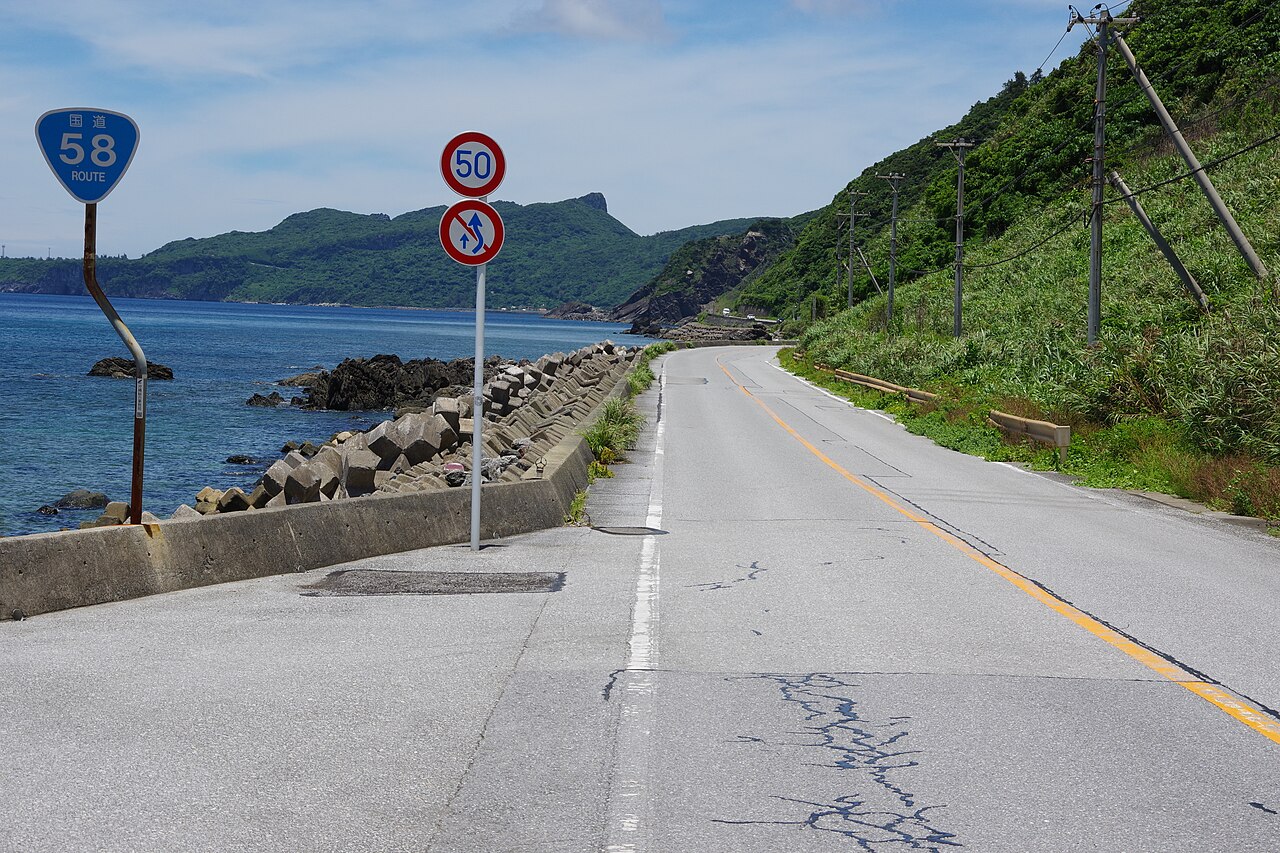
In Naha and the central area, you can find a convenience store within a few minutes of driving. In the north, including the Yanbaru area beyond Nago, there are stretches where stores are far apart. If you drive on thinking “I’ll just buy it at the next store,” you may run out of drinks or struggle to find a restroom.
On days you head north, the basic rule is to refuel, buy drinks and use the restroom before you leave places with many stores, such as Nago. How gas stations work and how to refuel differs by station, so it helps to check ahead.
Combine convenience stores with roadside stations and service areas
In the north, it works well to combine convenience stores, roadside stations and the restrooms at tourist facilities. A roadside station offers restrooms and information, which makes it a good landmark for breaks. If you use the expressway, the service areas on the Okinawa Expressway are also an option. Note that opening hours differ by facility, and some close in the evening.
If you are crossing to an outlying island such as Minna Island, you cannot shop as casually as at a convenience store there. Prepare towels, drinks and snacks near the port before you cross.
Check store locations on the map before you set out
If you look in your map app in advance to see what convenience stores are along your route, it is easier to plan. Opening hours, and whether a store is open 24 hours, differ from store to store, so be especially careful when driving at night. If your fuel is low, refuel early.
Staying hydrated is also important, especially in the hot season. Drink often before you get thirsty, and keep plenty of drinks in the car.
Okinawa’s convenience stores are reliable both for a quick break and for trip preparation. Use the parking lot and restroom with the mindset of “being allowed to use the shop,” briefly and politely. And on days you head north, finish your preparations while stores are still plentiful. UMUI Rent a Car is a short free shuttle ride from Naha Airport, and our booking site is available in Japanese, English, Korean and Traditional Chinese. If anything about planning your Okinawa drive is unclear, feel free to contact us, even before you book.
* The information in this article is as of October 2026. Store counts, opening hours, services, ATM card support and fees may change, so please check the latest information on each company’s official site.
Photo credits: Wikimedia Commons (CC0 / CC BY 4.0 / CC BY-SA 3.0 / CC BY-SA 4.0). The photographer is listed in each photo’s caption. Featured image: Kugel / CC BY-SA 4.0