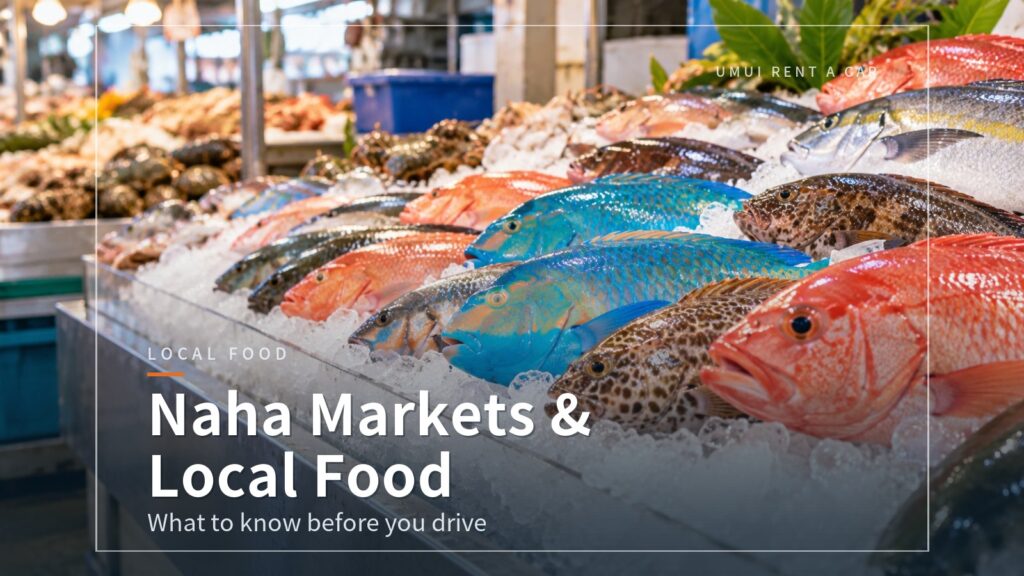
You want to look around a local market in Okinawa and try Okinawa soba and taco rice, but are you wondering whether you will be able to park a rental car near a market, or whether it is OK to put fresh fish in the car?
This article covers three places from a driver’s point of view: Daiichi Makishi Public Market in Naha, Tomari Iyumachi at Tomari Fishing Port, and Michi-no-Eki Itoman in the south. It also explains four classic local dishes and snacks (Okinawa soba, taco rice, sata andagi and umibudo sea grapes) in general terms. We do not rank restaurants or name “recommended” shops. For the facilities, we wrote only what we could confirm on official websites and municipal pages, and where we could not confirm a number, we ask you to check the official source.
Before You Add Markets and Local Food to Your Drive
The Three Places and Why We Chose Them
We limited the markets and direct-sales spots to places where opening hours and parking could be confirmed from official information: Daiichi Makishi Public Market, run by Naha City; Tomari Iyumachi, inside the grounds of Tomari Fishing Port (operated by the Okinawa Fresh Fish Wholesale Cooperative); and Michi-no-Eki Itoman in Itoman City. Restaurants differ so much in opening days and taste that we do not introduce individual ones. If a particular restaurant catches your eye, check its hours for your day on its own official page.
How Easy Each Place Is to Reach by Car
The three places could hardly be more different when it comes to driving. Here is the short version first.
| Makishi Public Market | No dedicated parking. Use a nearby pay parking lot or the Yui Rail monorail. |
|---|---|
| Tomari Iyumachi | Free parking is mentioned on the official website. Getting there early in the morning is easier. |
| Michi-no-Eki Itoman | Parking is free according to Itoman City’s tourism guide. A good stop on a drive through the south. |
A simple way to think about it: for the market in the city center, you park first and then walk. For the fishing port and the roadside station, you drive there and shop right away.
A Sample Way to Organize the Day
Fresh fish is said to be better stocked in the morning, so it works well to visit Tomari Iyumachi early, then go to the market and lunch in central Naha, and head south to Itoman in the afternoon. This is only an example. Rearrange it to fit your schedule and your flight time.
A Market in Central Naha: Daiichi Makishi Public Market
Naha’s Kitchen, Where You Can Try “Mochiage”
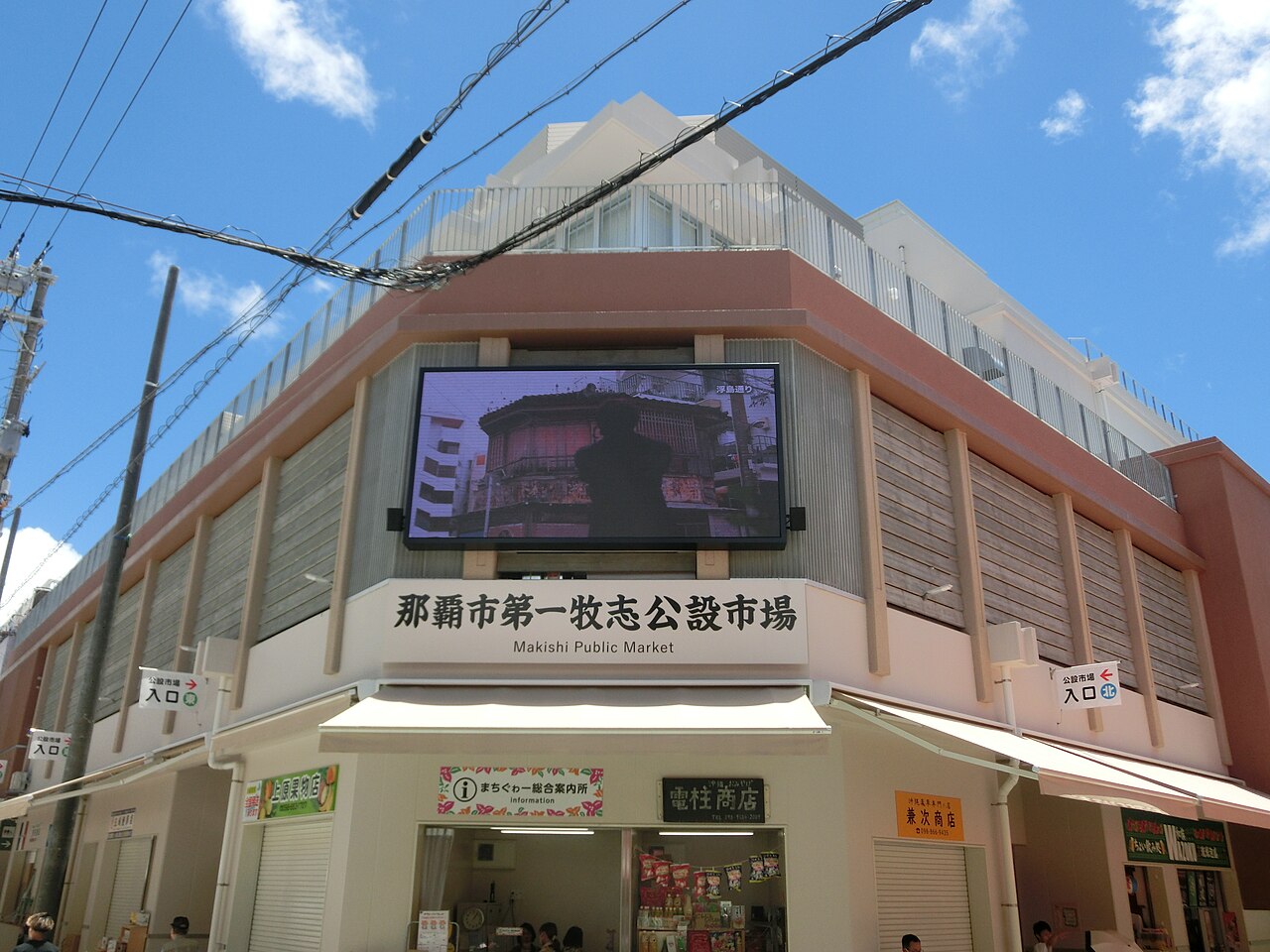
This public market run by Naha City is close to Kokusai-dori. It opened in 1950 and was rebuilt in March 2023. It is known for a way of enjoying it called “mochiage”: you choose seafood or meat on the first floor, have it cooked, and eat it in the dining area on the second floor. How a dish is prepared differs from shop to shop, so if you are unsure, asking the staff is the quickest way.
Just looking at the Okinawan ingredients is fun, but the aisles are crowded and big bags are hard to carry. We suggest leaving your luggage in the car before you go in.
If You Come by Car: There Is No Dedicated Parking
The most important point is that Makishi Public Market has no dedicated parking. Naha City’s official page also lists parking as “none.” If you come by car, you either use a nearby pay parking lot or take the Yui Rail. Private lots change in price and capacity, and are sometimes full, so we do not give any numbers here.
For how to think about driving in central Naha, including the Sunday pedestrian zone on Kokusai-dori and the rush-hour bus lanes, see our blog’s Naha Sightseeing and Parking Guide. Reading it before you visit the market will save you from a last-minute scramble to find a space.
| Address | 沖縄県那覇市松尾2-10-1 |
|---|---|
| Hours | 8:00-22:00 (varies by shop). Last order for cooking “mochiage” ingredients (meat and fresh fish) on the 1st floor is 19:45; last order at the 2nd-floor dining area is 20:00 |
| Closed | 4th Sunday of every month (except December), January 1-3, and the Obon holidays (16th and 17th days of the 7th month of the lunar calendar). Some shops have additional days off |
| Parking | None (use a nearby pay parking lot) |
| Access | About 9 minutes on foot from Makishi Station on the Yui Rail, or about 10 minutes from Miebashi Station |
Hours differ by shop. If you go in the evening, check the hours of the shop you have in mind first so you do not arrive to a closed door.
A Market in Central Naha: Tomari Iyumachi
A Wholesale Fish Market Inside a Fishing Port
Tomari Iyumachi is a market located in the grounds of Tomari Fishing Port in Naha. According to the facility overview on its official website, it was newly built in May 2005 and is home to wholesalers of marine products, including a tuna specialist from the Okinawa Prefecture Fisheries Federation market and a mozuku seaweed specialist. A glass-walled fish-processing room is also attached, and the site says that, if the timing is right, you may be able to watch tuna being cut up.
“Iyu” means fish in the Okinawan language. Each shop sells seafood landed that day, so it is easier to think of it as a place to choose and buy fish rather than a place that cooks it for you, as Makishi Public Market does.
Tips for the Best Time to Go
The official website explains that each shop sells seafood landed that day and that some shops close when they sell out, so coming early in the morning is best. Remember the basic rule: if you want to see the fish, go in the morning. Hours are listed as 6:00-18:00 on the official website, but there may be less on the shelves as closing time approaches.
Free parking is mentioned on the official website, so this market is easy to reach by car. However, the website does not give the number of spaces or their location, so follow the on-site signs. It is inside a fishing port, so trucks and vehicles at work come and go. Whether you are on foot or driving, look around carefully and move slowly.
What to Do with the Fish You Buy
On a trip, you can end up carrying raw fish around for a long time. If your accommodation has no cooking facilities, decide before you buy where you will eat it that day, so nothing goes to waste. If you take it with you, see the chilling tips in a later section.
| Address | 沖縄県那覇市港町1-1-18 |
|---|---|
| Hours | 6:00-18:00 (official website). May vary by shop |
| Closed | Open all year (direct-sales shop information from the Okinawa Prefectural Federation of Fisheries Cooperative Associations). Please check the official source for individual shops’ days off |
| Parking | Yes (free; stated on the official website) |
| Phone | 098-868-1096 |
A Roadside Station in the South: Michi-no-Eki Itoman
Vegetables, Fish and Souvenirs in One Place
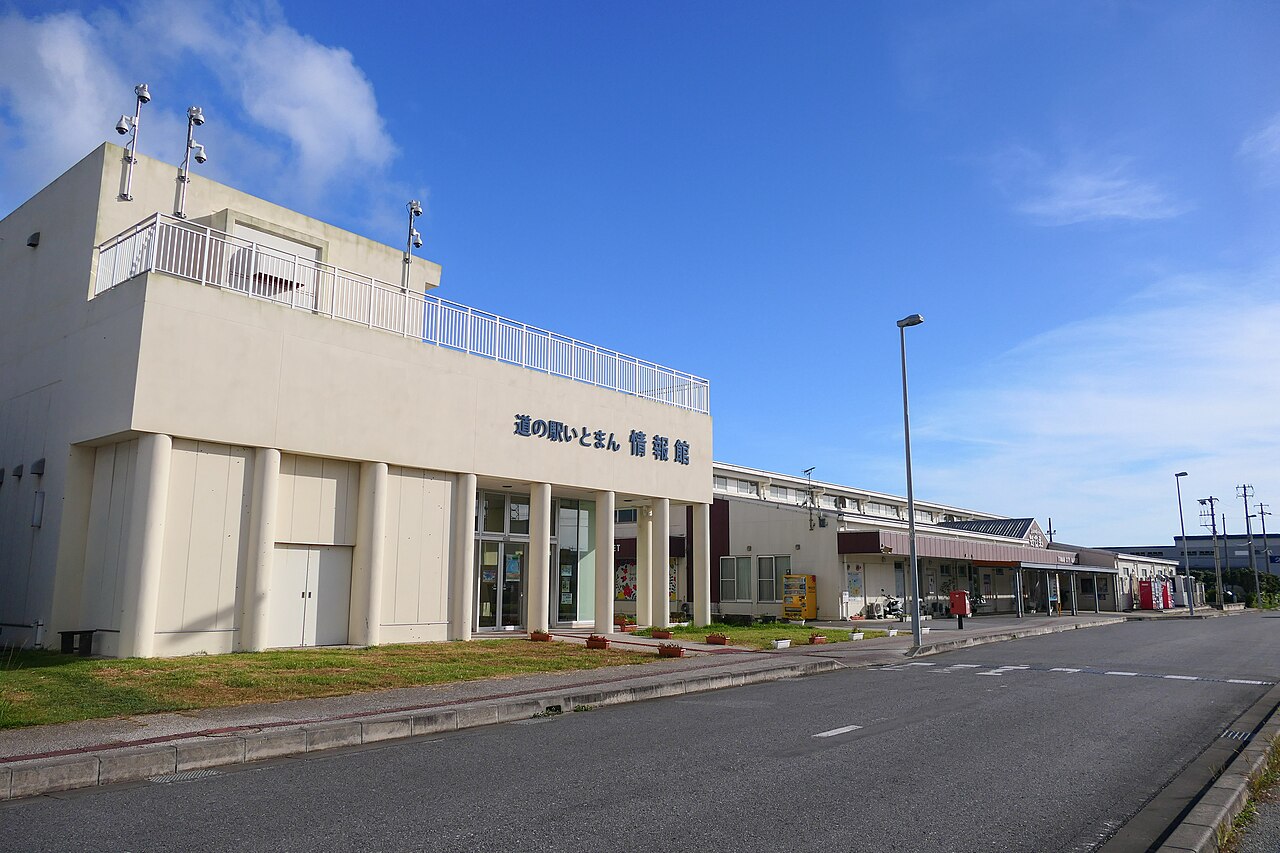
According to the Itoman City tourism guide, Michi-no-Eki Itoman is the 7th roadside station in Okinawa Prefecture and one of the largest in the prefecture. The guide says the site includes the Itoman City Product Center, with Itoman souvenirs, Okinawan sweets and crafts; Farmers Market Itoman, described as the first direct-sales market of JA Okinawa; and the Itoman Fisheries Cooperative’s fish center.
You can see local vegetables, fruit and landed seafood all at once, so it is an easy stop on a drive through the south if you like the atmosphere of a market. We also mention roadside stations in general in our blog’s article on roadside stations on Okinawa’s main island.
Check Hours and Parking Capacity with the Official Source First
The opening hours and the number of parking spaces at Michi-no-Eki Itoman differed depending on the source, so we have not listed them here. Itoman City’s tourism guide lists parking as “available (free).” If you plan to stop in the late afternoon, check the latest opening hours in an official guide before you set out. Hours may also differ from facility to facility.
| Address | 沖縄県糸満市西崎町4-19-1 |
|---|---|
| Hours | Varies by facility and shop. Because sources disagree on times, please check the latest with the official source |
| Closed | Please check with the official source |
| Parking | Yes (free, per Itoman City’s tourism guide). The number of spaces differs by source, so we do not list it |
| Phone | 098-987-1277 (listed by several sources as the information building; some sources give 9:00-18:00) |
Stopping Before You Return the Car: Leave Plenty of Time
The south is close to Naha Airport, and many travelers stop here on the last day of their trip. It is handy for buying souvenirs in one go, but shopping takes longer than you expect. On the day of your flight, work backward and count shopping time, refueling and the car return together.
Getting to Know Okinawa’s Local Food
Okinawa Soba
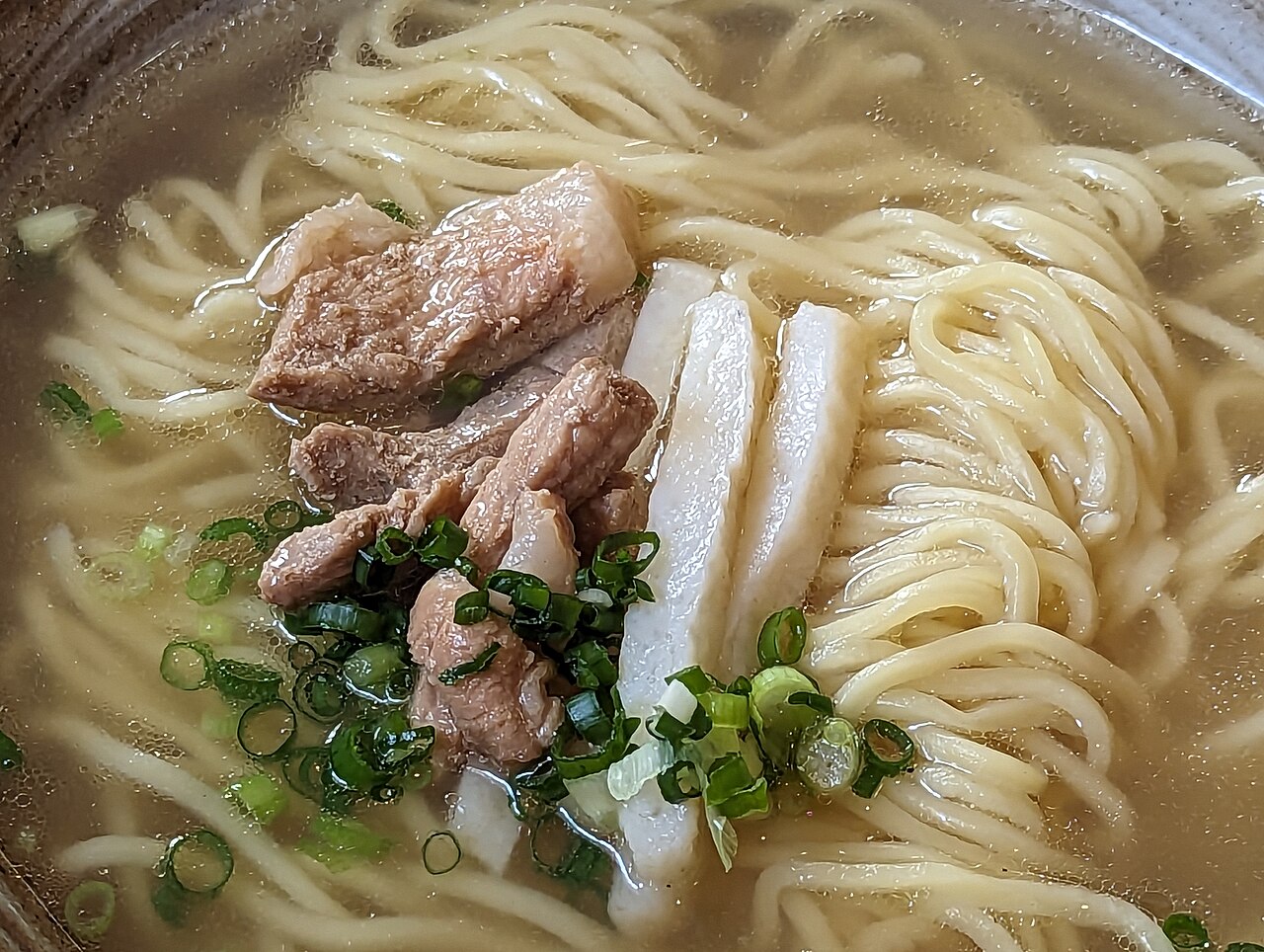
Okinawa soba is a noodle dish made with wheat-flour noodles, not buckwheat flour. The noodles are said to be made from wheat flour with salt and kansui (alkaline water) or lye, and they range in look from close to udon to close to ramen, depending on the shop. Common toppings include pork belly, soki (spare ribs), fish cake and green onion.
The broth is generally based on bonito or pork. Noodle thickness, broth flavor and toppings differ from shop to shop, so even a simple “Okinawa soba” is fun to compare. Many people add pickled ginger or koregusu (island chili peppers steeped in awamori) to season it their own way.
Taco Rice
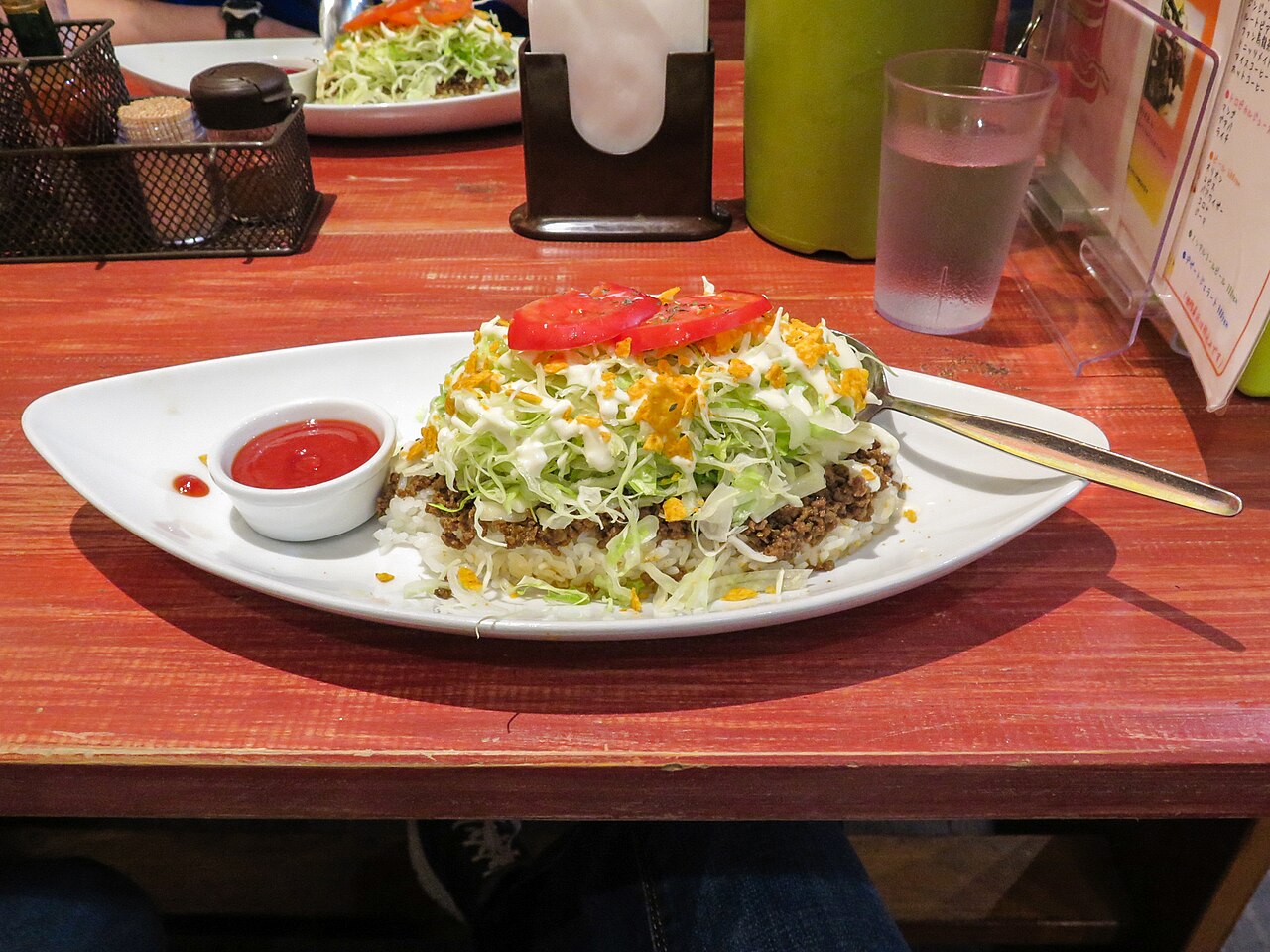
Taco rice is a dish of seasoned ground meat, shredded lettuce, tomato, cheese and so on, served on top of rice. It is said to have been created in 1984 in Kin Town in central Okinawa’s main island, and has since spread to Okinawan home tables and school lunches (several sources describe its origin, but we could not confirm an official position). Some restaurants let you choose how spicy the sauce is.
The portions are generous, so choose a small size if you want something light. It is also an easy lunch during a drive.
Sata Andagi
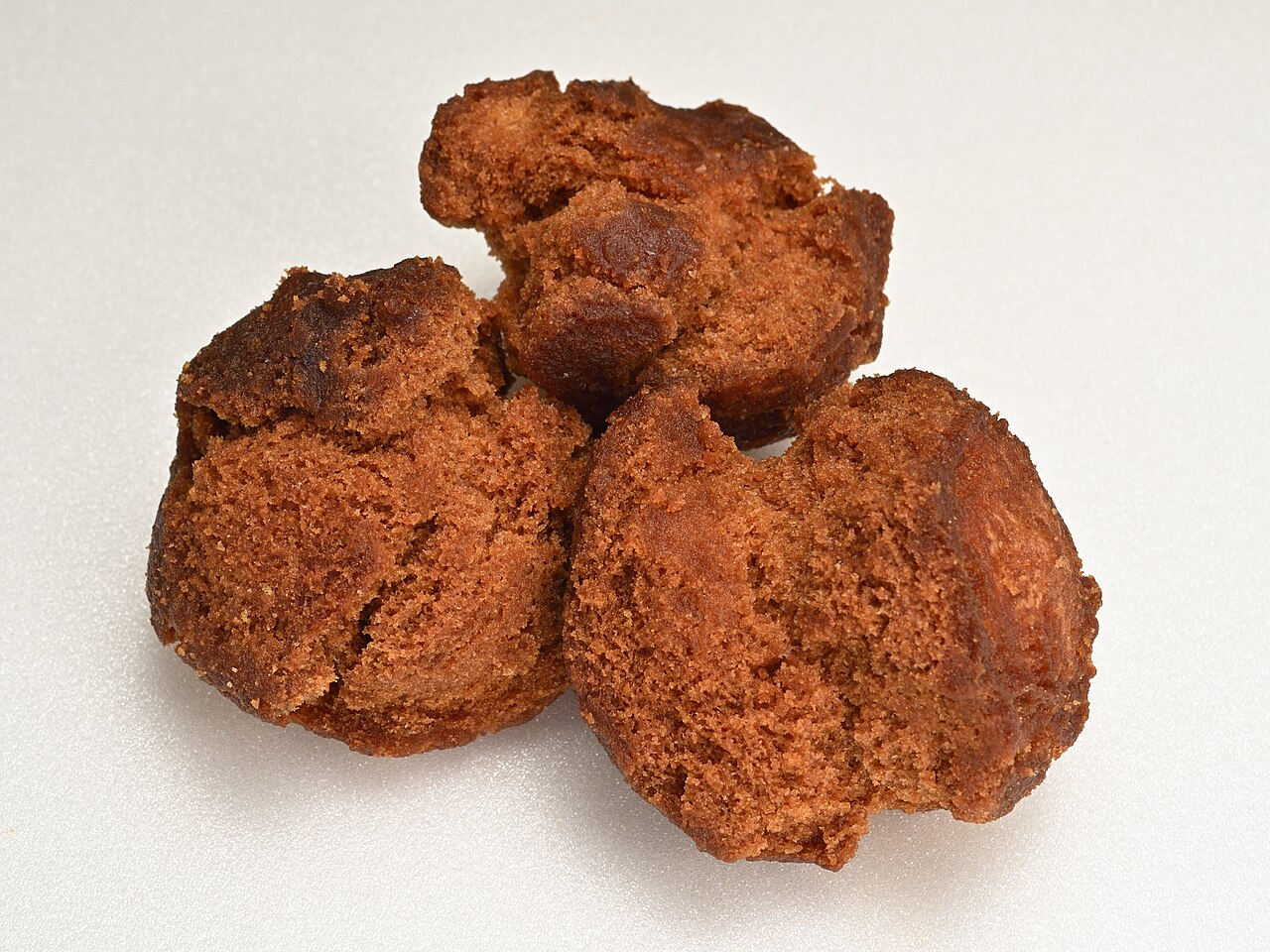
Sata andagi is an Okinawan fried sweet made by rolling a dough of flour, sugar and egg into balls and deep-frying them. “Sata” means sugar, “anda” means oil and “agi” means fried, so the name tells you it is a sweet made from sugar and oil. A crack typically opens on the surface, and people sometimes say the crack looks like a smile.
Besides plain, there are flavors such as brown sugar and purple sweet potato. They are often sold at shops, markets and roadside stations, and are a good size for a snack on the road. When you eat them in the car, the oil gets on your hands, so wet wipes are handy.
Umibudo (Sea Grapes)
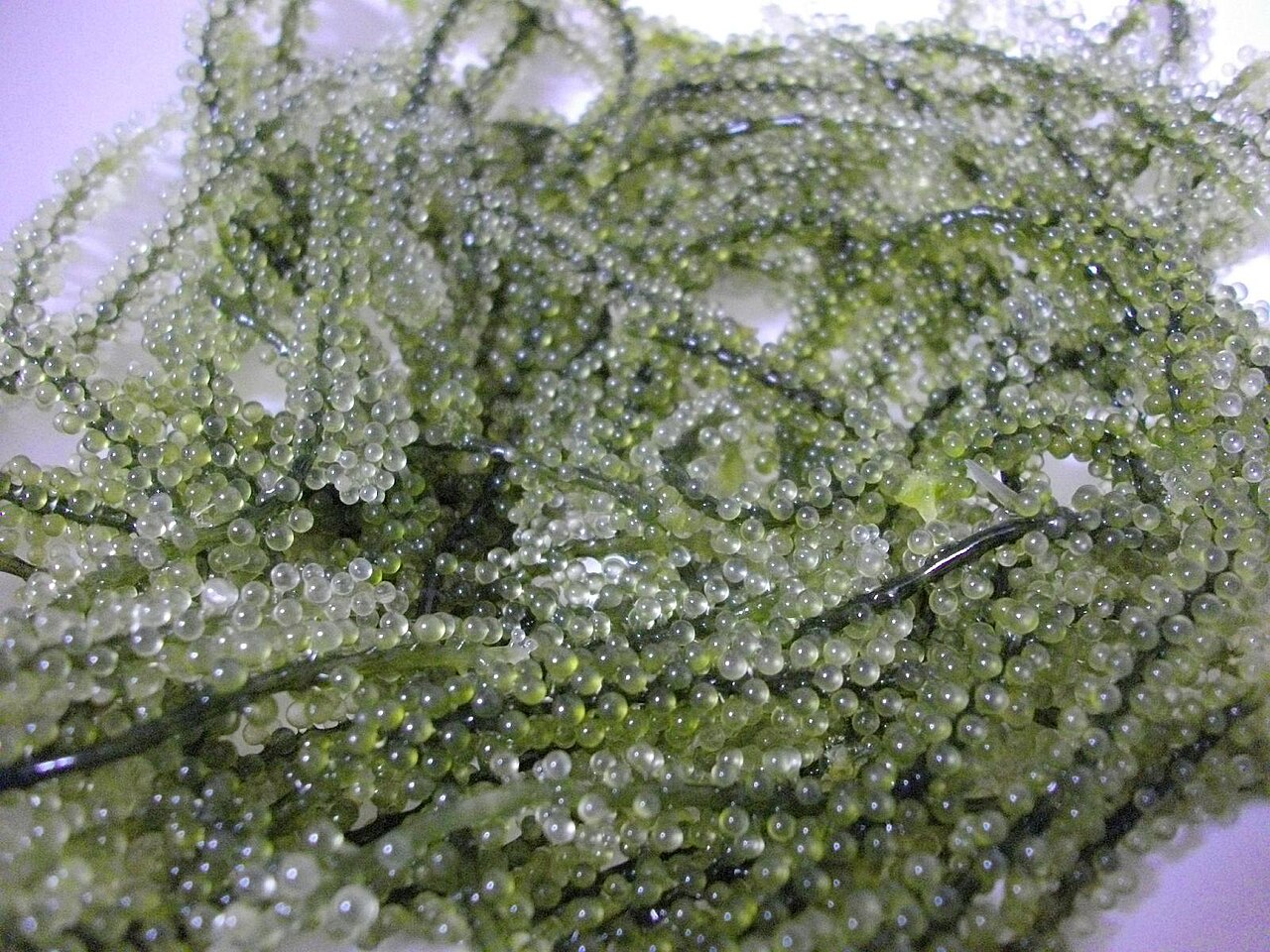
Umibudo is a seaweed whose tiny beads cluster like a bunch of grapes, and it is known for its popping texture. It is sometimes called “green caviar.” An Okinawa Prefecture document says it is good dipped in vinegar or a wasabi-style dressing when you eat it.
What to watch for when you take it home is how you store it. The Okinawa Prefecture document says to keep it out of the refrigerator, in a cool place away from direct sunlight. It is said that the beads shrink easily if they get too cold. When you buy it at a shop, ask the staff how to store it and how long it keeps.
What to Watch Out for on a Market and Food Drive
Drinking and Driving Is Prohibited
Markets and eateries have alcohol on display, and many people know how good awamori or beer can be. But drinking and driving is prohibited in Japan. The people punished are not only the driver. People who lend the car, people who offer the drinks, and passengers who ride knowing the driver has been drinking can also be held responsible. For the specific penalties, see our blog’s article on driving rules for first-time visitors.
The rule is simple. If you drink, don’t drive; if you drive, don’t drink. On a day you want to enjoy alcohol, plan not to drive, and the driver should not drink at all. UMUI Rent a Car’s rental agreement says we cannot conclude a rental contract with anyone who appears to have been drinking. Our coverage page also states that damage from drunk driving is not covered. Even if you buy alcohol at a market, if you are the driver, wait until you reach your accommodation to drink.
Carrying Fresh Food and Keeping It Cool in the Car
Many days in Okinawa are hot all year round, and a parked car gets very hot inside. Avoid leaving raw seafood or other perishable food in the car. Buying it last on your stops, and bringing an insulated bag and ice packs, will help. If you are not sure whether a food can be taken with you, the staff at the shop can tell you. Choosing packaging that does not leak is also good manners, so the car does not keep food smells or stains.
Allow Plenty of Time
Markets are crowded, and finding parking and shopping both take longer than you expect. On the day of your flight, work backward from your return time and decide how long to shop. After you return the car at UMUI Rent a Car’s Naha Airport branch, we take you to the airport by free shuttle bus. Counting the return procedure and the shuttle time will give you peace of mind.
Frequently Asked Questions
Can I drive to Daiichi Makishi Public Market?
The market has no dedicated parking. You can look for a nearby pay parking lot, or go by Yui Rail. Please also use the Naha Sightseeing and Parking Guide, including how congested the roads can be.
Can I put things I bought at a market straight into the rental car?
For perishable food, take chilling measures and carry it for as short a time as you can. Rules about smells and stains may be set in the rental agreement and elsewhere. If you are concerned, please ask us before you rent.
How much can I see in one day if I’m there for the food?
Tomari Iyumachi, Daiichi Makishi Public Market and Michi-no-Eki Itoman are all within reach of Naha Airport, but counting parking and shopping time, seeing all three at a relaxed pace in one day is a bit tight. If you are short on time, we suggest narrowing it to two places.
If you visit markets and roadside stations, you will meet an everyday side of Okinawa that is a little different from the tourist spots. Enjoy a relaxed drive as you eat and buy whatever catches your eye. UMUI Rent a Car brings you to our branch by free shuttle from Naha Airport. Please consider us for your market and food trip.
* Business hours and other information in this article are as of October 2026. They are subject to change, so please check each facility’s official website before you go. Items for which sources disagree are not listed. Descriptions of local food are general characteristics and differ from shop to shop.
Photo credits: Wikimedia Commons (CC0 / CC BY 2.0 / Public domain). The photographer is credited in each photo’s caption.