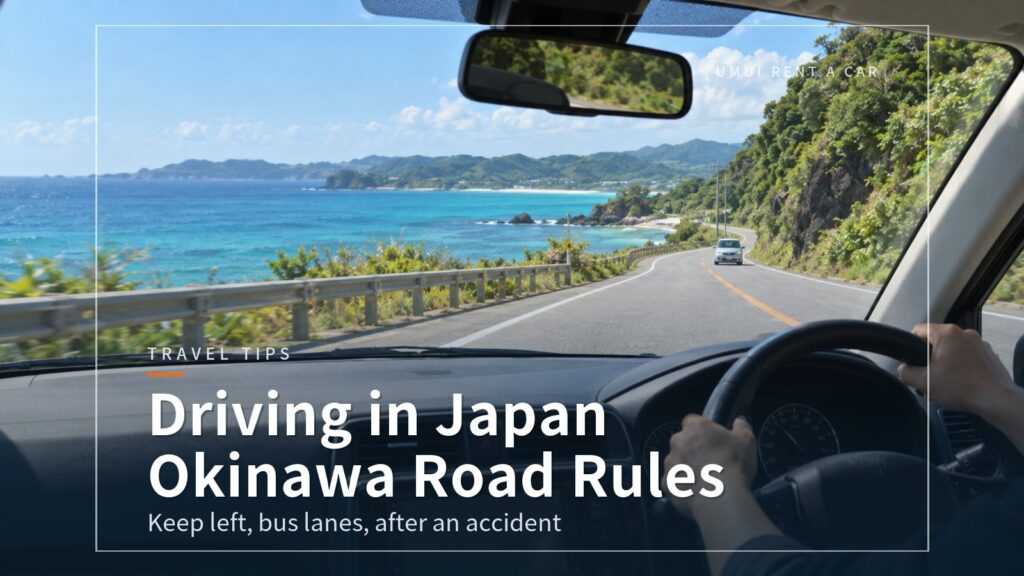
“How different are Japan’s roads from the ones back home?” It is one of the first things many visitors wonder about before they take the wheel of a rental car in Okinawa for the first time. Japan drives on the left, with the driver’s seat on the right side of the car, and road signs and signals can mean slightly different things from country to country. It feels nerve-racking at first, but if you know the basic rules before you go, driving in Okinawa becomes far more relaxing.
This article is written for first-time drivers in Japan. Using only what can be confirmed from official sources such as the National Police Agency, JAF (Japan Automobile Federation) and the Okinawa Prefectural Police, it covers Japan’s traffic rules and the points that matter specifically in Okinawa. You will find the strictest rules (drunk driving and mobile phones), things that often puzzle visitors in Okinawa (bus lanes, “wa” license plates), and what to do if you have an accident or breakdown. Please read it through before you set off.
Japan’s Basic Rules and Okinawa’s Roads
Getting Used to Left-Hand Traffic and a Right-Hand Drive Car
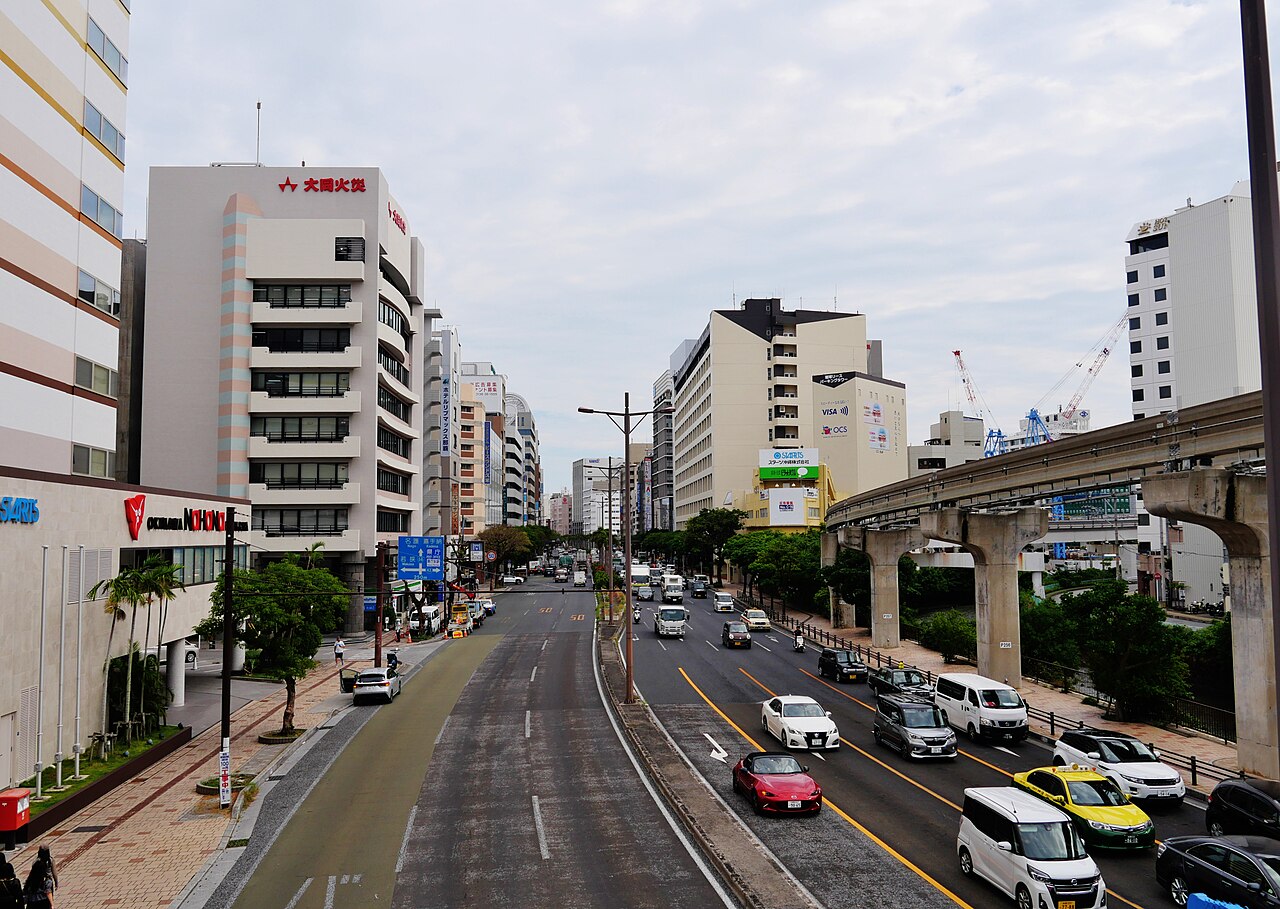
JAF’s English guide states that drivers and cyclists must keep to the left, while pedestrians should keep to the right side of the road. Japan drives on the left, and the driver’s seat is on the right. If you come from a country that drives on the right, be especially careful in these situations.
- Turning at intersections: a left turn goes into the nearest lane, while a right turn crosses the oncoming lane. Take care not to end up in the oncoming lane after completing the turn.
- Leaving a parking lot or a narrow side road: before you pull out, say “keep left” out loud to yourself. It helps prevent driving on the wrong side.
- Lever positions: the turn-signal lever and the wiper lever are on opposite sides in some countries. If the wipers come on when you meant to signal, don’t panic. It is a good idea to try the levers once before you start driving.
The National Police Agency’s leaflet for foreign drivers also warns you to watch for cars in the oncoming lane when turning right. Until you get used to it, ask your passengers to help you look ahead and check intersections.
Speed Limits: The Number on the Sign Comes First
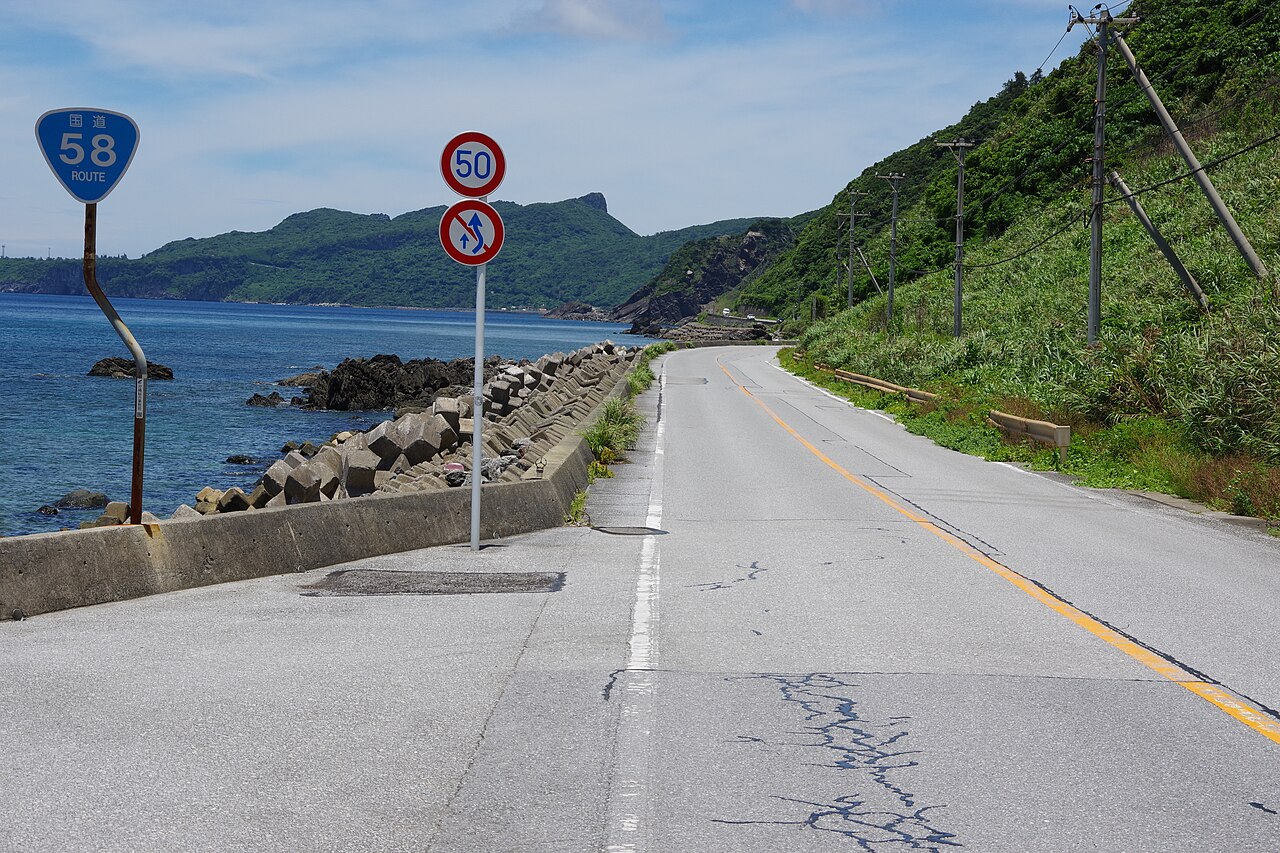
Speeds in Japan are in km/h (kilometers per hour), and the limit is set by signs or road markings. According to JAF, where there is no sign or marking, drivers of regular-sized automobiles must obey 60 km/h on ordinary roads and 100 km/h on expressways. However, that applies only when nothing is posted. The number on the signs along Okinawa’s roads changes often from section to section, so always follow the sign first.
| Roads with a sign | The number on the sign or road surface is the speed limit (km/h) |
|---|---|
| Ordinary roads with no sign | 60 km/h for regular automobiles (JAF) |
| Expressways with no sign | 100 km/h for regular automobiles (JAF) |
Prepare Your License and Documents Before You Come
To drive in Japan you need either an International Driving Permit under the 1949 Geneva Convention, or a license from Switzerland, Germany, France, Belgium, Monaco or Taiwan together with a Japanese translation. An International Driving Permit is valid for one year from the day you enter Japan, or until the permit itself expires, whichever comes first. Without the right documents, we cannot rent you a car on the day. You can find UMUI Rent a Car’s guidance on the International Driving Permit page. We also list what to prepare for each country and region in our blog article “Visiting Japan? Which Driver’s License You Need to Rent a Car (by Country and Region).”
Stop Signs, Railroad Crossings, Signals and Pedestrians
You Must Stop at a “Tomare” (Stop) Sign
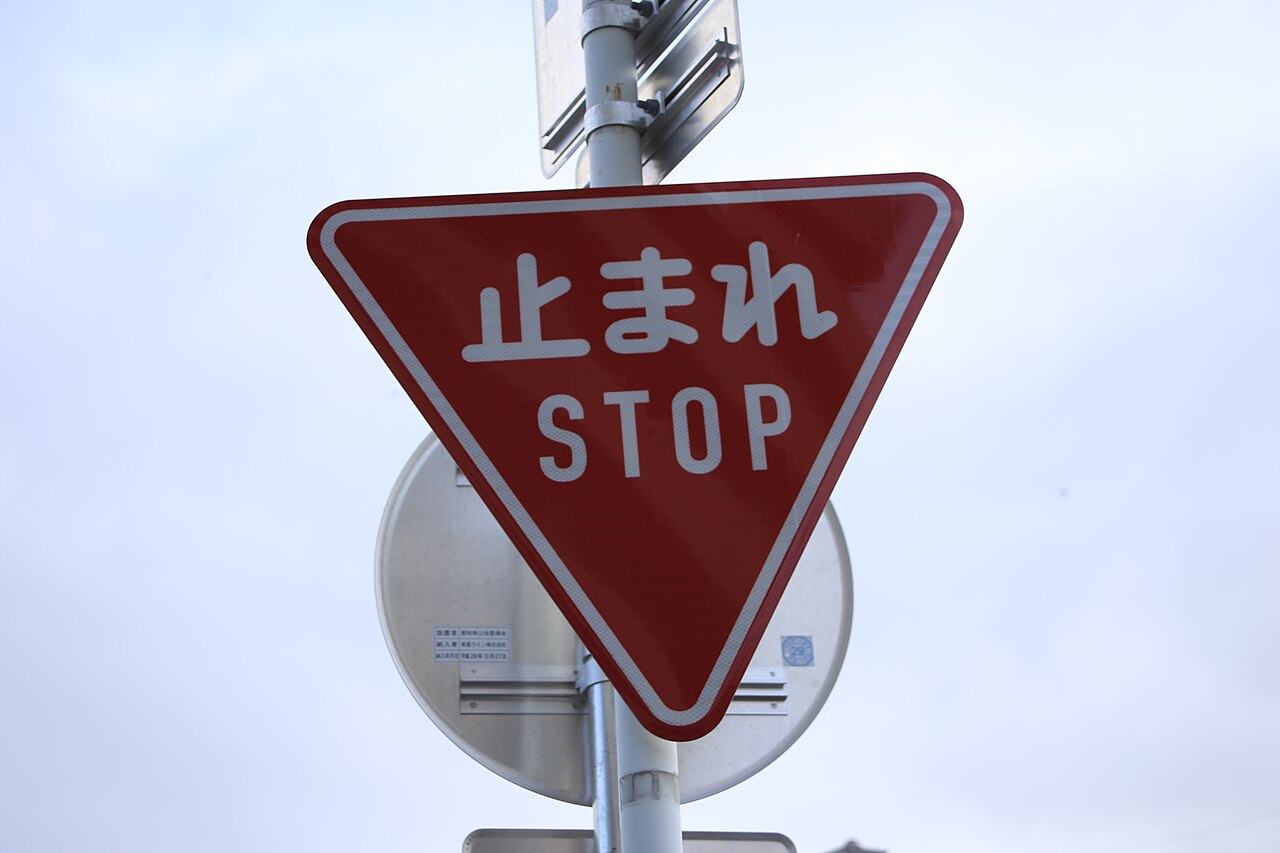
The red inverted-triangle “Tomare” (stop) sign is one of the most common signs on Japanese roads. The National Police Agency leaflet tells drivers to stop the vehicle temporarily wherever this sign is posted. If there is a white stop line on the road, stop completely before the line, then check left and right for safety before you move on.
Rolling slowly while you look both ways does not count as stopping. Even at a poorly visible intersection in a residential area, your wheels must stop wherever there is a sign. Some recent signs show the English word STOP next to the Japanese “Tomare.”
Stop and Check Before a Railroad Crossing
Under the Road Traffic Act, you must stop just before a railroad crossing (before the stop line, if there is one) and check that it is safe before you cross. You must not enter the crossing while the barrier is down or coming down, or while the alarm is sounding.
Okinawa Island has no conventional railway like the JR lines, and the Yui Rail runs on an elevated track, so most visitors will rarely meet a railroad crossing. If you continue your trip to other parts of Japan, though, it is useful to remember “always stop once before a crossing.”
Stop at a Red Light, and No Turning on Red
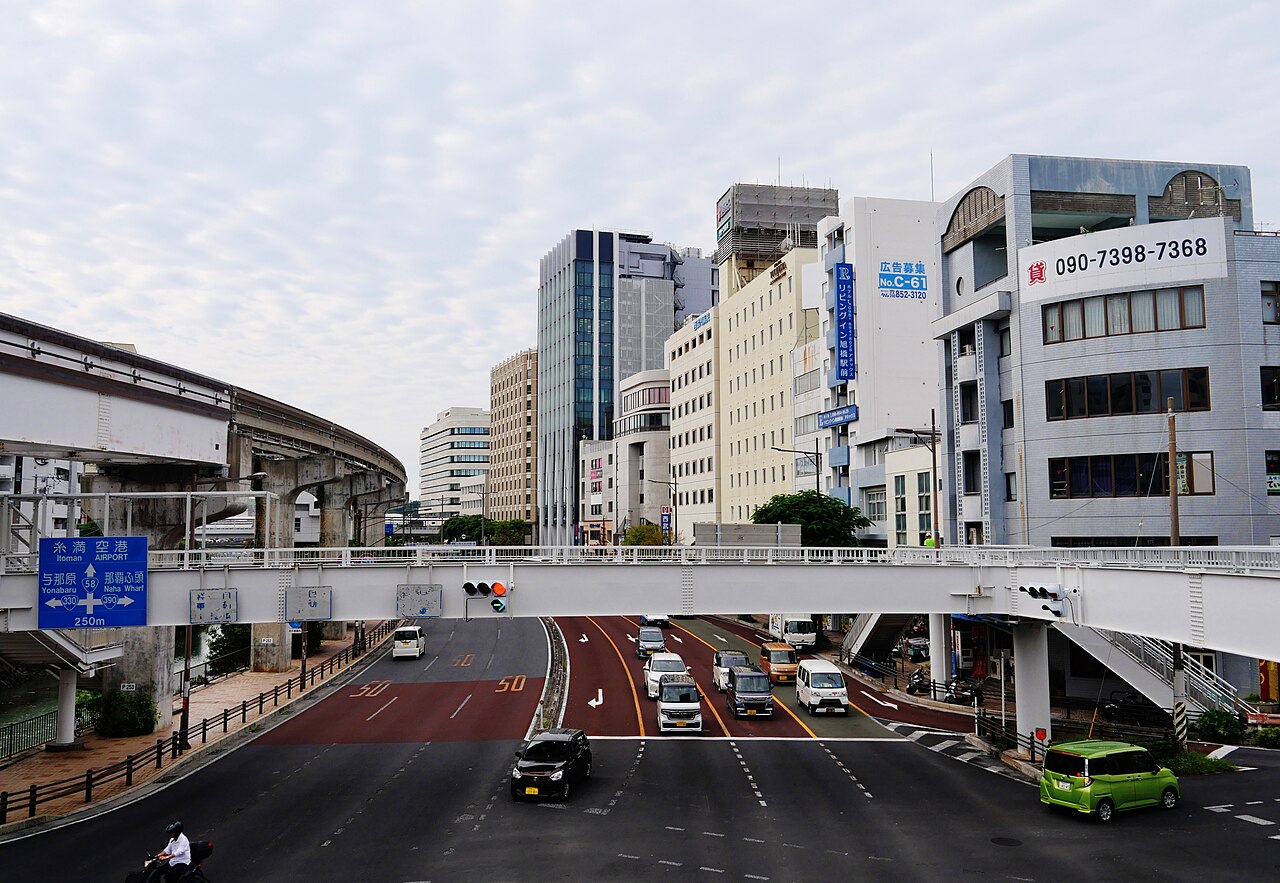
Japan’s signals work like those in many countries: green means go, yellow means stop if you can do so at the stopping point, and red means stop. JAF also states that you may not proceed past the stopping position on a red light. The important point is that you may not turn right or left while the light is red. In some countries and regions you may turn right (or left) on red if it is safe, but there is no such rule in Japan.
When a green arrow is lit beside the signal, you may proceed in the direction of the arrow. Do not turn just because the car in front of you does when no arrow is lit. Where a “designated direction only” sign is posted, you may go only in the directions shown by the arrows.
Pedestrians Come First: Stop at Crosswalks
JAF’s guide states plainly that drivers must yield to pedestrians. Under Article 38 of the Road Traffic Act, when you approach a crosswalk you must slow down so that you can stop before it, unless it is clear that no pedestrian is about to cross. When a pedestrian is trying to cross, stop in front of the crosswalk and wait until they have finished.
This applies to crosswalks without signals as well. Pedestrians often begin crossing at such places in Japan. Slow down early, especially in places with many tourists or children.
Rules You Must Follow: Alcohol, Mobile Phones and Seat Belts
Drunk Driving: Not Only the Driver Is Punished
In Japan, driving after drinking alcohol is prohibited. And the penalties do not fall on the driver alone. The penalties below are based on materials published by the Yamanashi Prefectural Police.
| Driver: driving under the influence (drunk) | Up to 5 years of imprisonment (kōkin-kei) or a fine of up to 1,000,000 yen. License revocation |
|---|---|
| Driver: driving with alcohol on the breath or in the body | Up to 3 years of imprisonment or a fine of up to 500,000 yen. License revocation or suspension |
| Person who provided the car | If the driver was drunk: up to 5 years of imprisonment or a fine of up to 1,000,000 yen. If alcohol was in the driver’s body: up to 3 years of imprisonment or a fine of up to 500,000 yen |
| Person who served alcohol / passenger | If the driver was drunk: up to 3 years of imprisonment or a fine of up to 500,000 yen. If alcohol was in the driver’s body: up to 2 years of imprisonment or a fine of up to 300,000 yen |
A passenger is covered when they got into the car knowing that the driver had been drinking. You cannot say, “I wasn’t driving, so it has nothing to do with me.” Note that the punishment formerly called chōeki (imprisonment with labor) was replaced by kōkin-kei (imprisonment) in the 2025 revision of the Penal Code. Older documents may still say chōeki.
If you plan to enjoy a drink with dinner on your trip, the surest approach is to decide that you will not drive that day, or that whoever drives will not drink at all. Don’t think “just a little is fine.” If you drink, don’t drive. If you drive, don’t drink.
For rental cars, too, the consequences are serious. UMUI Rent a Car’s rental agreement states that we cannot conclude a rental contract with anyone who appears to have been drinking. Our compensation page also states clearly that damage caused by drunk driving or drug use is excluded from insurance and compensation.
No Mobile Phones or Smartphones While Driving
JAF’s guide says that while driving, you must not use a cell phone or be distracted by the car navigation system. Talking on the phone or staring at the screen is a violation. According to materials published by the Okinawa Prefectural Police, using a mobile phone while driving (holding it) is punishable by up to 6 months of imprisonment (now called kōkin-kei) or a fine of up to 100,000 yen. If talking or looking at the screen creates a danger to traffic, the penalty is up to 1 year of imprisonment (likewise kōkin-kei) or a fine of up to 300,000 yen.
If you use a map app, enter your destination before you leave and fix the phone in a holder. If you need to operate it while driving, stop in a safe place first. The National Police Agency leaflet also tells drivers not to wear headphones while driving.
Seat Belts and Child Seats
According to JAF, not only the driver but all passengers in the vehicle must wear seat belts. That includes the back seat. The National Police Agency leaflet also asks all occupants to wear seat belts.
When you drive with a child under 6 years old, a child seat is required (JAF’s guide; Article 71-3 of the Road Traffic Act). UMUI Rent a Car’s rental agreement says we cannot conclude a rental contract if you plan to carry a child under 6 without using a child seat. The renter is also responsible for installing the child seat properly. If you are traveling with children, please add the child-seat option when you make your reservation.
What Is Special About Driving in Okinawa
Bus Lanes on National Route 58 and Elsewhere: Closed to Ordinary Cars at Certain Times
In urban Naha, there are “bus-only lanes” that only buses and certain other vehicles may use during the morning and evening. According to the guide map published by the Okinawa Prefectural Police (valid from May 2, 2025), the rules are as follows.
| Hours in effect | Morning 7:30-9:00 / Evening 17:30-19:00 |
|---|---|
| Days not in effect | Saturdays, Sundays, public holidays, January 2 and 3, and when buses are not running |
| Vehicles that use the bus lane | Buses, taxis and motorcycles (they must use the bus lane) / permitted vehicles (they may use it) |
| Ordinary vehicles (rental cars, etc.) | May not use the bus lane (drive in the lanes other than the bus lane) |
| Inquiries | Okinawa Prefectural Police Headquarters, Traffic Regulation Division: 098-862-0110 (ext. 5172) |
On the guide map, the roads under regulation are centered on National Route 58, including sections in Naha, Urasoe and Ginowan. Always confirm the position and hours of a bus lane from the road signs and markings. The rules may change, so please check the latest information with the Okinawa Prefectural Police.
Plan for Congestion in Naha’s Mornings and Evenings
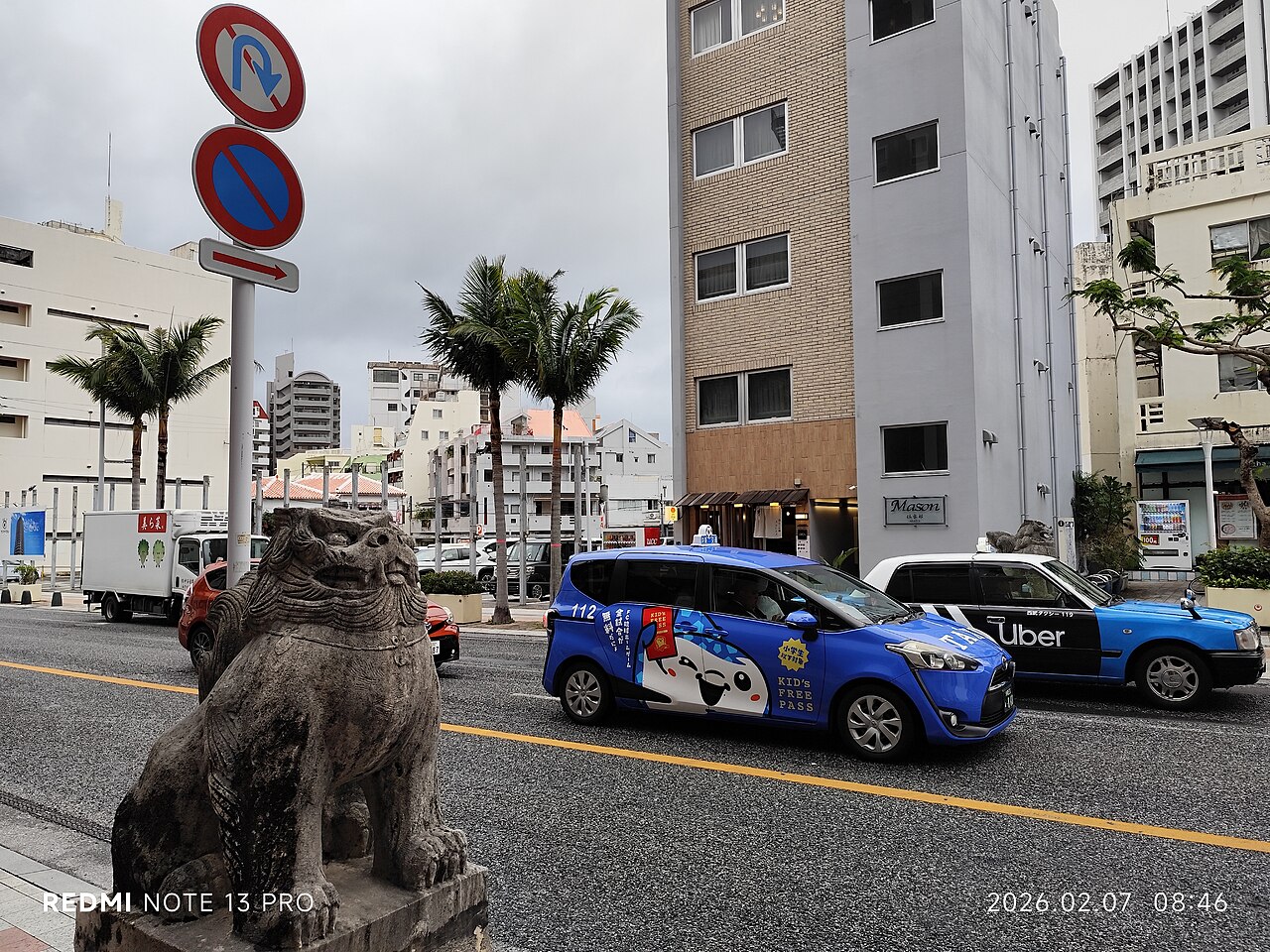
Okinawa has no railway other than the monorail (Yui Rail), and many people depend on cars, so the main roads in and around Naha are said to carry heavy traffic during commuting hours. The sections of National Route 58 where bus lanes apply in the morning and evening also call for extra care at those hours. When heading to the airport or a sightseeing spot, leave with time to spare and plan around the morning and evening peaks to reduce stress.
Naha also has many no-U-turn and no-parking signs. If you park illegally, the renter must report to the police station, pay the fine and so on, and bear the costs of towing and other measures (UMUI Rent a Car’s rental agreement). At sightseeing spots, always use a parking lot.
“Wa” License Plates and the “Y” Plates of US Forces Vehicles
Rental cars use the hiragana character “wa” (or “re”) on their license plates, so other drivers can tell that a car is a rental. Even if a car comes up behind you, there is no need to rush or speed up. Drive safely at your own pace, and let the car pass at a place where you can pull over.
In Okinawa you may see vehicles whose plates include an alphabet letter. “Y” is said to be used for privately owned vehicles of US forces personnel in Japan. On public roads in Japan, these vehicles follow Japanese traffic rules too. There is no need to be especially wary when you see one, but keep your usual distance, and if there is an accident, contact the police immediately no matter who the other party is.
Rain, Night Driving and Animals in Yanbaru
It can start raining suddenly in Okinawa. When the road is wet, tires slip more easily and it takes longer for the brakes to stop the car. In the rain, leave more distance than usual and avoid hard braking and sudden steering. White lines and manhole covers can be especially slippery.
On roads in the north and along the coast, some stretches have few streetlights at night. When driving on unfamiliar roads in the dark, turn on your lights early and watch for pedestrians and cyclists. For what we do in typhoons and other severe weather, see UMUI Rent a Car’s typhoon response page.
Yanbaru, in the north of Okinawa Island, is home to unique wildlife, including the Okinawa rail (Yanbaru kuina). According to the Ryukyu Shimpo, as of April 20, 2024, the Ministry of the Environment’s Yanbaru Wildlife Conservation Center had recorded 10 traffic accidents involving the Okinawa rail: 7 on Prefectural Route 70 (Kunigami-Higashi Line), 2 on Prefectural Route 2 in Kunigami Village, and 1 on National Route 58. The bird’s breeding season begins around May, and it is said to appear on roads more often at that time.
National and local authorities have designated May as “STOP! Roadkill Month” and are strengthening countermeasures. On the mountain roads of the north, especially in Kunigami, Higashi and Ogimi villages, obey the speed limit and drive at a speed at which you could stop if an animal came out from beyond a curve or from roadside grass. If you see an animal, do not try to take a photo. Pass slowly, or stop only where it is safe.
If You Have an Accident or Breakdown
Secure Safety First, Then Call 110 or 119
If you have an accident, or feel something is wrong with the car, stop driving immediately and move the car to a safe place. The National Police Agency leaflet tells you to call the police (dial 110) in case of an accident or trouble, and an ambulance (dial 119) if anyone is injured. UMUI Rent a Car’s rental agreement also says that if an accident occurs you must stop driving and take the measures required by law, regardless of how minor the accident is.
Even for a single-vehicle accident with no other party, or a small scrape, always contact the police. UMUI’s compensation page states that, regardless of the size of the accident or whether another party is involved, you must contact the police and our company immediately after an accident, a requirement under Article 72 of the Road Traffic Act.
Contacting UMUI Rent a Car and Obtaining a Police Accident Report
After contacting the police, also contact UMUI Rent a Car and follow our instructions. The rental agreement requires you to report an accident to us immediately, to have repairs done at a factory we designate, and to obtain our consent in advance before settling with the other party. In the case of a breakdown as well, stop driving when you notice an abnormality and contact us.
| UMUI Rent a Car contact | 050-1783-5687 (reception 8:00-20:00, open every day of the year) |
|---|---|
| Contact outside business hours | Not stated on the official website. It is safest to confirm how to reach us when you book or pick up the car |
| Police / Ambulance | Police: 110 / Ambulance and fire: 119 |
| Coverage details | Coverage page and Rental agreement |
Our coverage guidance asks you to obtain a police accident report if an accident occurs. UMUI’s base rate includes the cost of car insurance, deductible coverage and NOC coverage (except for some bookings made through external booking sites). However, as compensation for the period when the car cannot be used because of repairs or cleaning, the Non-Operation Charge (NOC) is 20,000 yen if you return the car under its own power, or 50,000 yen (plus towing cost) if it cannot be driven, and this is borne by the customer. The NOC coverage system covers this customer-borne amount and the towing cost. Please be sure to check the details on the coverage page.
Main Cases Excluded from Coverage
Our coverage page states that the following cases are not covered by insurance or compensation.
- Accidents caused by violations of the Road Traffic Act or other laws, drunk driving or drug use, or dangerous driving
- Driving by a person without a license, driving by an undeclared person, or lending the car to someone else
- Negotiating a settlement without our consent, or failing to cooperate in resolving the accident
- Damage from tire punctures or damage, lost wheel caps, lost keys, incorrect fueling, or driving off the road
Most of these are things that can be avoided by driving by the rules. Have your license documents in order, let only registered drivers drive, don’t drink, and follow the traffic rules. That is what protects you best on your trip.
Before You Set Off with UMUI Rent a Car
What to Do at Pick-Up
UMUI Rent a Car’s Naha Airport branch offers a free shuttle from the airport and is open 8:00-20:00, every day of the year. The Omoromachi branch is open 9:00-18:00. At pick-up, you check the condition of the car. The rental agreement also says that the renter or driver must confirm that inspection and maintenance have been carried out and that the exterior and accessories of the car have no problems.
Once you are in the driver’s seat, check the following before you leave.
- Adjust the seat, mirrors and seat belt
- Operate the turn-signal, wiper and light levers to check them
- Enter your destination in the navigation system while parked
- Check that the child seat is installed correctly
Take the First 30 Minutes Slowly
Right after you leave the airport, you are dealing with unfamiliar left-hand traffic along with unfamiliar road signs and plenty of traffic, so it is an easy time to feel flustered. Take a deep breath, obey the speed limit, and drive calmly with the help of the voice guidance from the navigation system. Even if the car behind you seems impatient, there is no need to speed up. Letting it pass at a place where you can pull over gives you room to relax.
Return at the Branch
You return the car at the branch you booked. After you return it at the Naha Airport branch, we take you to the airport by free shuttle. If the fuel tank is not full, you pay a fuel charge in accordance with the rental agreement. If you may be late for the return time, or you are worried about road conditions, please contact us early. Allowing extra time helps you stay calm to the end.
Frequently Asked Questions
Can I drive even if I can’t read Japanese road signs?
Many signs show their meaning through pictures and symbols. The National Police Agency publishes a document on traffic lights and road signs in English. Before you set off, it is a good idea to look over signs such as “Stop,” “No parking” and “No U-turn.” If you meet a sign you don’t understand, stop in a safe place and check with a map app or your passenger.
Is there anything I should know when using an expressway?
According to JAF, where no sign is posted on an expressway, the limit for regular automobiles is 100 km/h. Signs may set a lower limit or a minimum speed. If you are unsure about how to pay tolls or similar matters, please ask our staff at pick-up.
What should I do if I feel nervous about driving?
If you feel nervous, don’t push yourself. Take a break in a safe place. Until you are used to it, it helps to keep the first day’s distance short, avoid the morning and evening rush, and arrive at your destination while it is still light. If there is anything you would like to ask in advance, please feel free to contact UMUI Rent a Car even before booking.
Japan’s traffic rules are not hard once you have the basics. Keep these five in mind: “drive on the left,” “stop at a stop sign,” “give priority to pedestrians,” “don’t drive after drinking,” and “don’t use your phone while driving,” and driving in Okinawa becomes far more comfortable. Once you know the rules, enjoy a relaxed drive under the blue sea and sky. UMUI Rent a Car, with a booking site in Japanese, English, Korean and Traditional Chinese, looks forward to welcoming first-time drivers.
* The information in this article is as of October 2026. Traffic rules, penalties and bus-lane hours may change, so please check the latest information with the National Police Agency, JAF, the Okinawa Prefectural Police and the official UMUI Rent a Car website.
Photo credits: Wikimedia Commons (CC0 / CC BY 4.0 / CC BY-SA 4.0). The photographer is named in each photo’s caption.