“Can I drive a rental car in Okinawa with my Taiwanese driver’s license? Do I need an International Driving Permit?” Travelers from Taiwan ask us this all the time. The short answer: what you need in Japan is not an International Driving Permit, but your Taiwanese license plus a Japanese translation of it (日文譯本).
This article walks through what the translation is, how to apply for it at a Motor Vehicles Office (監理站) in Taiwan, whether you can still get one after arriving in Japan, and what to bring on the day you pick up your car. It also covers how Japanese traffic rules differ from Taiwan’s, starting with driving on the left. Use it as a pre-trip checklist.
The short answer: a Taiwanese license plus a Japanese translation
Bring the original license and the original translation
According to Japan’s National Police Agency, Taiwan is one of the countries and regions, along with Switzerland, Germany, France, Belgium and Monaco, whose license holders can drive in Japan without an International Driving Permit if they carry a Japanese translation. If you hold a Taiwanese license and plan to drive in Okinawa, carry these three items.
| 1 | Your Taiwanese driver’s license (original) |
|---|---|
| 2 | The Japanese translation (日文譯本, original) |
| 3 | Your passport |
The translation alone, or a copy of your license alone, is not enough. The translation is used together with your license, so carry both whenever you drive.
A Taiwanese International Driving Permit is not valid in Japan
Taiwanese Motor Vehicles Offices do issue International Driving Permits, but a Taiwanese permit cannot be used in Japan. Getting one “just in case” will not let you drive here. For driving in Japan, what Taiwanese travelers need to prepare is the Japanese translation.
Many travelers from Taiwan are confused on this point. For what travelers from other countries and regions need, see our blog guide “Which Driver’s License You Need, by Country and Region.”
You can drive for one year from your entry into Japan
You may drive for one year from the day you enter (land in) Japan, or until your license expires, whichever is shorter. For a trip of a few days to a week, in practice you only need to check that your Taiwanese license has not expired.
The flip side is that an expired license cannot be used to obtain a translation, and you cannot drive in Japan with it. Check the expiry date before you leave.
What is the Japanese translation (日文譯本)?
What it contains and what it looks like
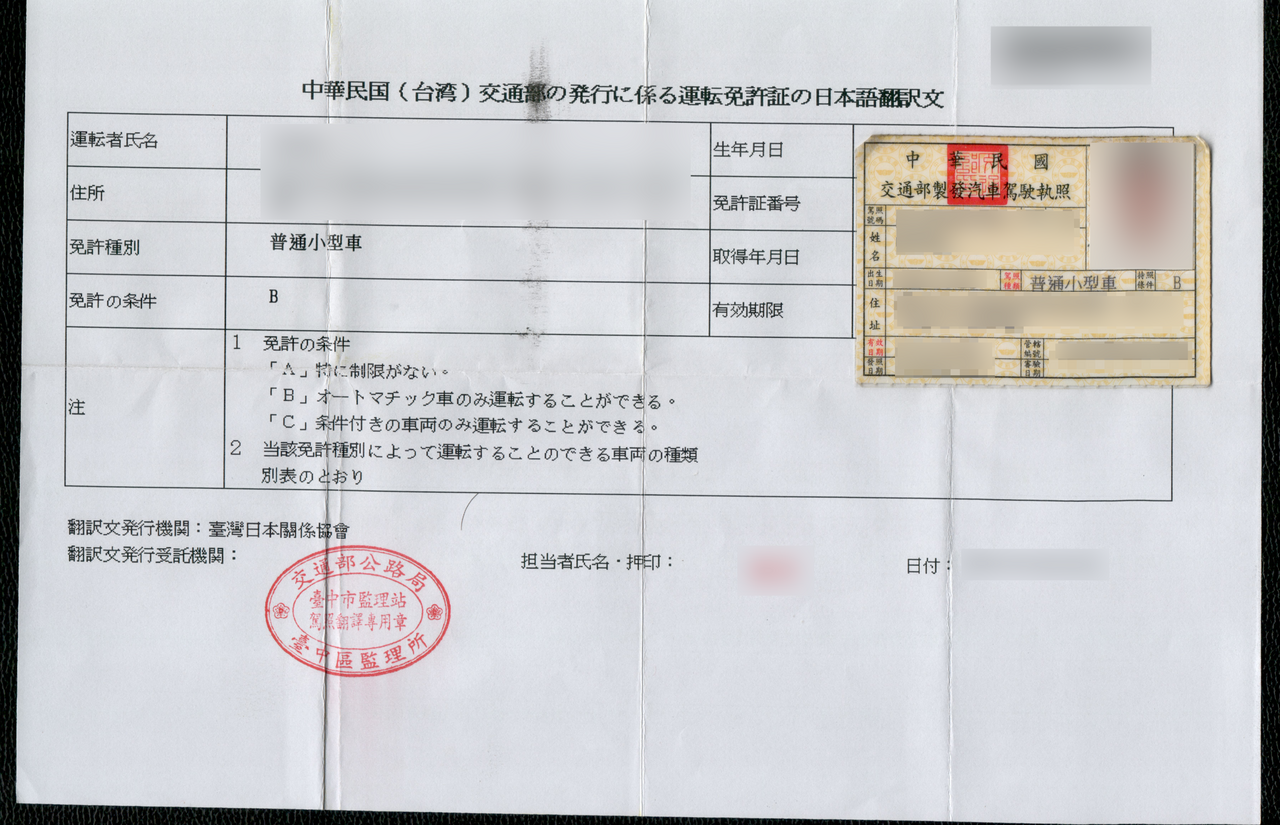
The translation is a document that puts the details on your Taiwanese license (name, date of birth, license class and conditions) into Japanese. As the sample photo shows, it is titled “中華民国(台湾)交通部の発行に係る運転免許証の日本語翻訳文,” names the Taiwan-Japan Relations Association as the issuing body, and carries the stamp of the Motor Vehicles Office that handled the request.
When you receive it, check on the spot that your name, address and license class match your license. A mismatch could cause trouble if you are checked in Japan or at the rental counter.
Who can make a translation that is valid in Japan
Not just anyone’s translation will do. According to the National Police Agency, for Taiwanese licenses only translations made by the following bodies are valid. A translation you make yourself or one from an ordinary translation company cannot be used.
| In Taiwan | The Taiwan-Japan Relations Association (when you apply at a Motor Vehicles Office in Taiwan, it is issued as this association’s translation) |
|---|---|
| In Japan | JAF (Japan Automobile Federation) and other designated organizations in Japan |
| Not valid | Translations you make yourself, or ones made by a foreign sworn translator or translation company |
Check the “conditions” on your license too
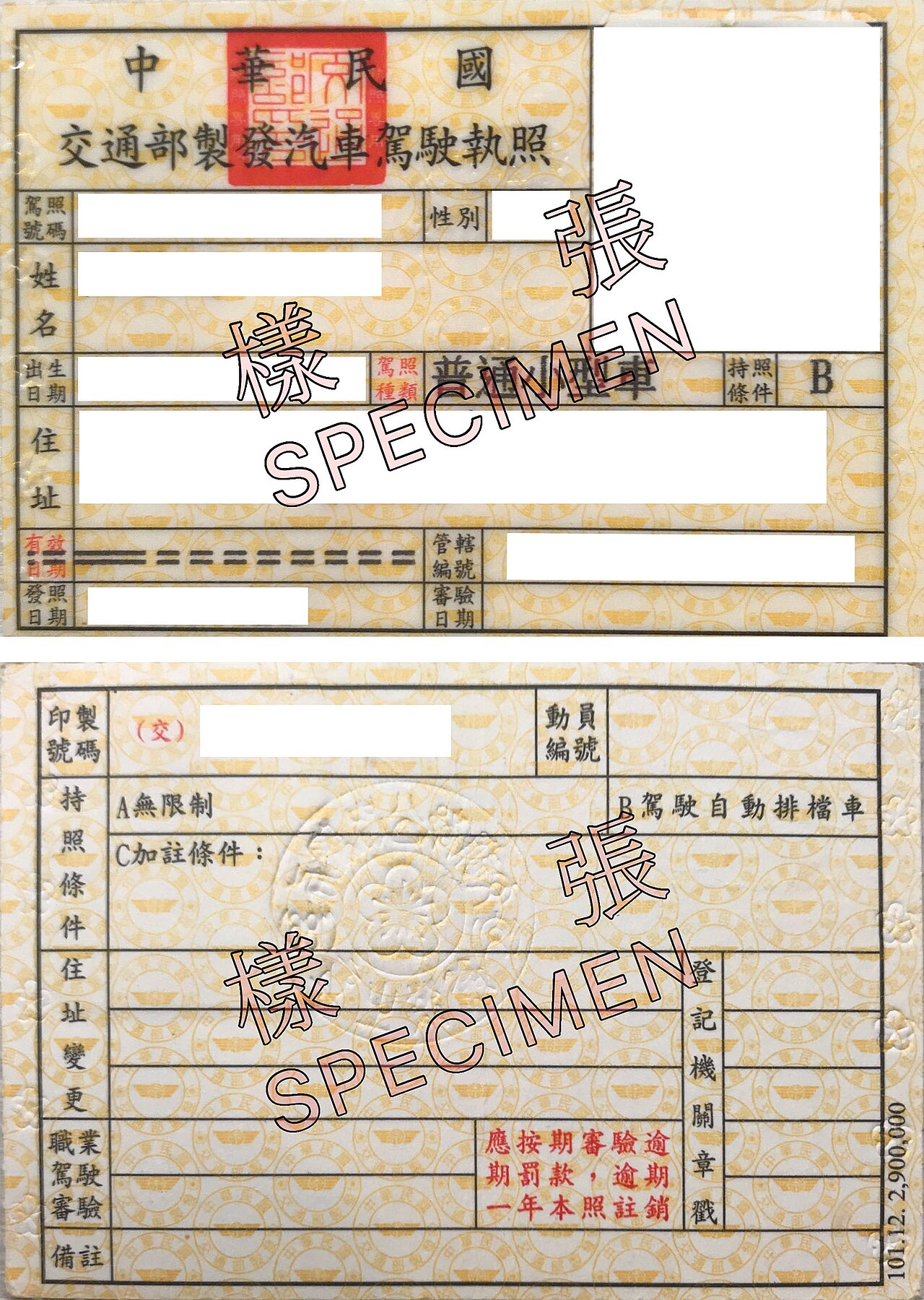
The back of a Taiwanese license has a conditions field (持照條件): A means no restriction, B means automatic transmission vehicles only, and C means conditions are noted. The same conditions are translated into the Japanese document, so it is worth checking yours. If you would like a manual-transmission car, check your conditions before booking, and feel free to ask UMUI Rent a Car if you are unsure.
How to apply for the translation in Taiwan (before you leave)
Apply at a Motor Vehicles Office counter (same-day pickup)
The easiest way is to go to the counter of a nearby Motor Vehicles Office. According to the Directorate General of Highways, counter applications are “apply and collect on the spot,” so you can pick it up the same day. The Taipei Motor Vehicles Office also lists the processing time as about one hour.
| Where | The driver services counter at a Motor Vehicles Office or branch (監理所・監理站) |
|---|---|
| Fee | NT$100 |
| Time | Same day at the counter (the Taipei office lists a processing time of 1 hour) |
| What to bring | Your national ID card and your original license (details can differ by office, so check beforehand) |
| Applying by proxy | In some cases someone else can apply for you (the proxy also needs an ID card; check with the office) |
Opening hours and crowding vary by office. It can get busy just before departure, so we recommend applying as soon as your travel dates are set.
Apply online and receive it by mail
You can also apply online through the Directorate General of Highways’ Motor Vehicle Services website (監理服務網). Log in as a member, confirm your details on the “申辦日文譯本” page, and pay by credit card or bank account. The office then mails the translation to you.
| Fee | NT$100 plus NT$28 registered mail postage |
|---|---|
| Time | 7 to 12 working days (including mailing) |
| Conditions | Your license must be valid. You may also be required to have the address on your license match your registered household address. |
Mailing takes time, so apply online two to three weeks before departure. If you are short on time, apply at the counter instead.
Things to check before you apply
According to the Directorate General of Highways, an expired license cannot be used abroad. If yours has expired, renew it first and then apply for the translation. Ask your Motor Vehicles Office about the renewal procedure and fee.
Also, check that the name, address and other details on the translation match your license right when you receive it. If there is an error, you will need to have it corrected at the counter. Fees, required documents and hours can change, so check the latest information from the Directorate General of Highways (Motor Vehicle Services website) or your local office.
Can you get it after arriving in Japan? The Taipei Economic and Cultural Representative Office and JAF
JAF’s Japanese translation (applied for in Japan)
If you only arrange a translation after arriving in Japan, JAF is one option. JAF’s translation is applied for online from within Japan. The fee is 6,000 yen before tax (6,600 yen including tax), it takes 2 to 3 business days for a Taiwanese license, and you collect it by printing it at a convenience store in Japan (as of October 2026).
If you apply after landing, you cannot drive for several days. That is rarely practical on a short trip, so think of JAF as a last resort for when you could not prepare the translation in Taiwan before leaving.
The Taipei Economic and Cultural Representative Office and others
According to the National Police Agency, the Japan office of the authority that issued the license can also make a translation. For Taiwan, that means the Taipei Economic and Cultural Representative Office in Japan (and its branch offices). However, fees, required documents, opening days and hours, and processing time differ by office. If you are considering this route, contact the office beforehand.
We still recommend preparing it in Taiwan before you leave
At a Taiwanese Motor Vehicles Office it costs NT$100 and you can have it the same day. Considering the effort, time and fee of applying in Japan, doing it in Taiwan before departure is the easiest option for travelers. Putting your original license and the translation together with your passport before boarding helps you avoid leaving something behind.
On the day: what to bring and how pick-up works
Documents UMUI Rent a Car will check
The UMUI Rent a Car website (About International Driving Permits) states that if you drive with a foreign license, you need the documents below. Every driver needs their own set.
| Taiwanese license holders | Your Taiwanese license (original) plus the Japanese translation (日文譯本) |
|---|---|
| Please also bring | Your passport (to confirm your identity) |
We check the originals at the counter. Copies and photos cannot be accepted. To avoid losing them, keep your license and translation together in your carry-on bag.
The Naha Airport branch and what you can do in advance
The Naha Airport branch offers a free shuttle from the airport and is open 8:00 to 20:00, every day of the year. The booking site is available in Japanese, English, Korean and Traditional Chinese. When you book, confirm how many people will drive and check that each of them has their license and translation. Completing online check-in beforehand makes the counter procedure smoother.
Cars are returned at each branch. After returning at the Naha Airport branch, a free shuttle takes you to the airport.
When you cannot drive
Driving without meeting the conditions counts as unlicensed driving in Japan. The penalty is severe, up to 3 years of imprisonment without work or a fine of up to 500,000 yen, and in an accident you may not be covered by insurance or compensation. Check that none of the following applies to you before you leave.
- You have no Japanese translation (you only brought an International Driving Permit)
- You did not bring your original Taiwanese license (only a copy or a photo)
- Your license has expired
- Your translation was made by someone other than a designated body such as the Taiwan-Japan Relations Association
- More than one year has passed since you entered Japan
- You plan to hand the wheel to a companion who has no translation
Japanese traffic rules that differ from Taiwan
Get used to driving on the left, from the right-hand seat
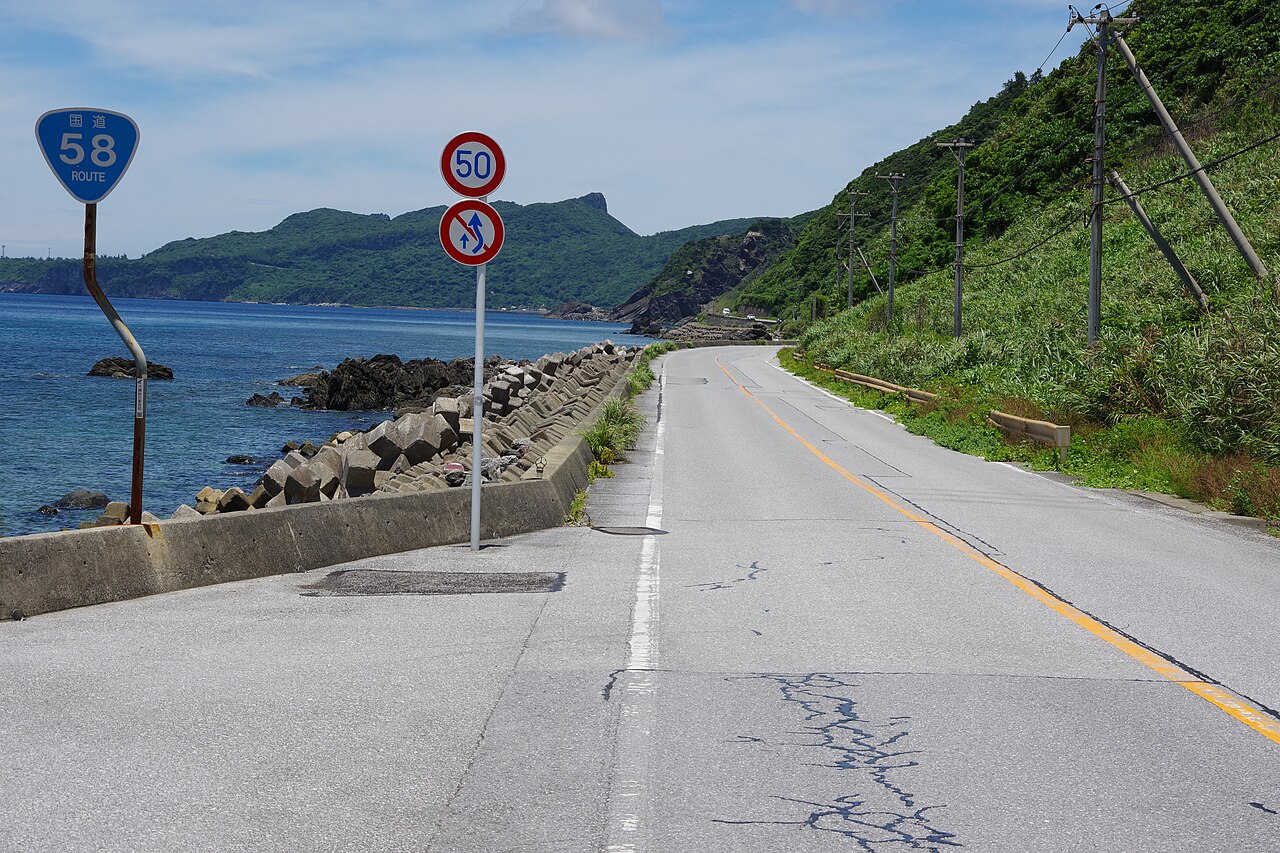
Taiwan drives on the right, but Japan drives on the left, and the driver’s seat is on the right. Once you are in the car, pull out slowly and carefully at first. Be especially careful when turning at intersections. Drifting into the oncoming lane on a right turn, or staying too far right on a left turn, are common mistakes. Remembering that “the driver’s seat is on the center-line side of the road” helps you judge your lane.
The turn-signal and wiper levers may be the opposite of the car you drive in Taiwan. Check the levers, lights and mirrors in the parking lot before setting off.
“Stop” signs, railroad crossings and crosswalks
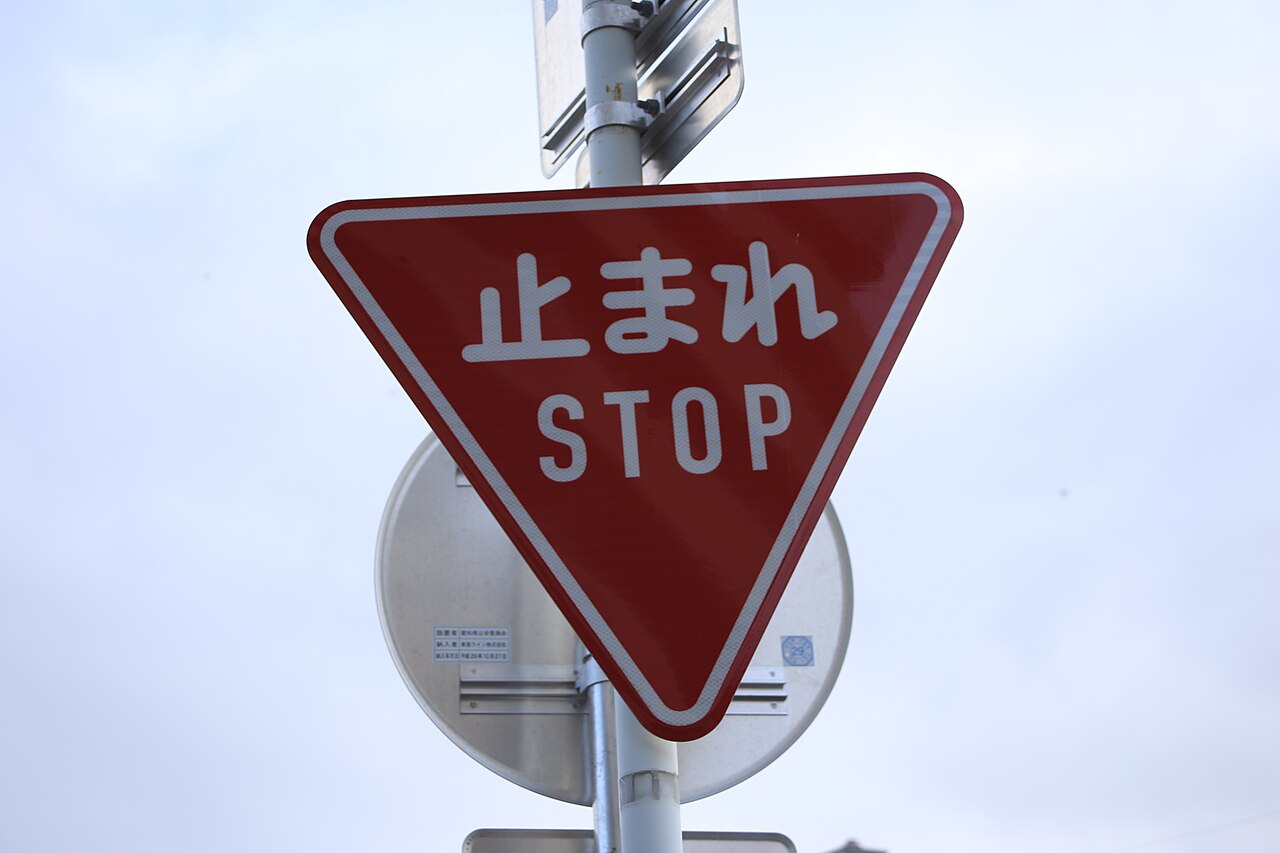
Japan’s “止まれ (stop)” sign is a red inverted triangle. When you see one, always stop before the stop line. You must also stop and check for safety before a railroad crossing. At a crosswalk without a signal, when a pedestrian is about to cross, cars must stop and give way.
Seat belts, phones and alcohol
In Japan, seat belts are required in every seat, including the front passenger seat and the back seat. A child seat is required when carrying a child under 6. Using a mobile phone while driving (calling or looking at the screen) is prohibited, so set up your navigation before you start.
Drunk driving is severely punished, and passengers and anyone who lent the car to a drinker can also be punished. On days you plan to drink, the safest choice is not to drive. Speed limits vary by road and are shown on signs, so keep an eye on the numbers.
Driving in central Naha
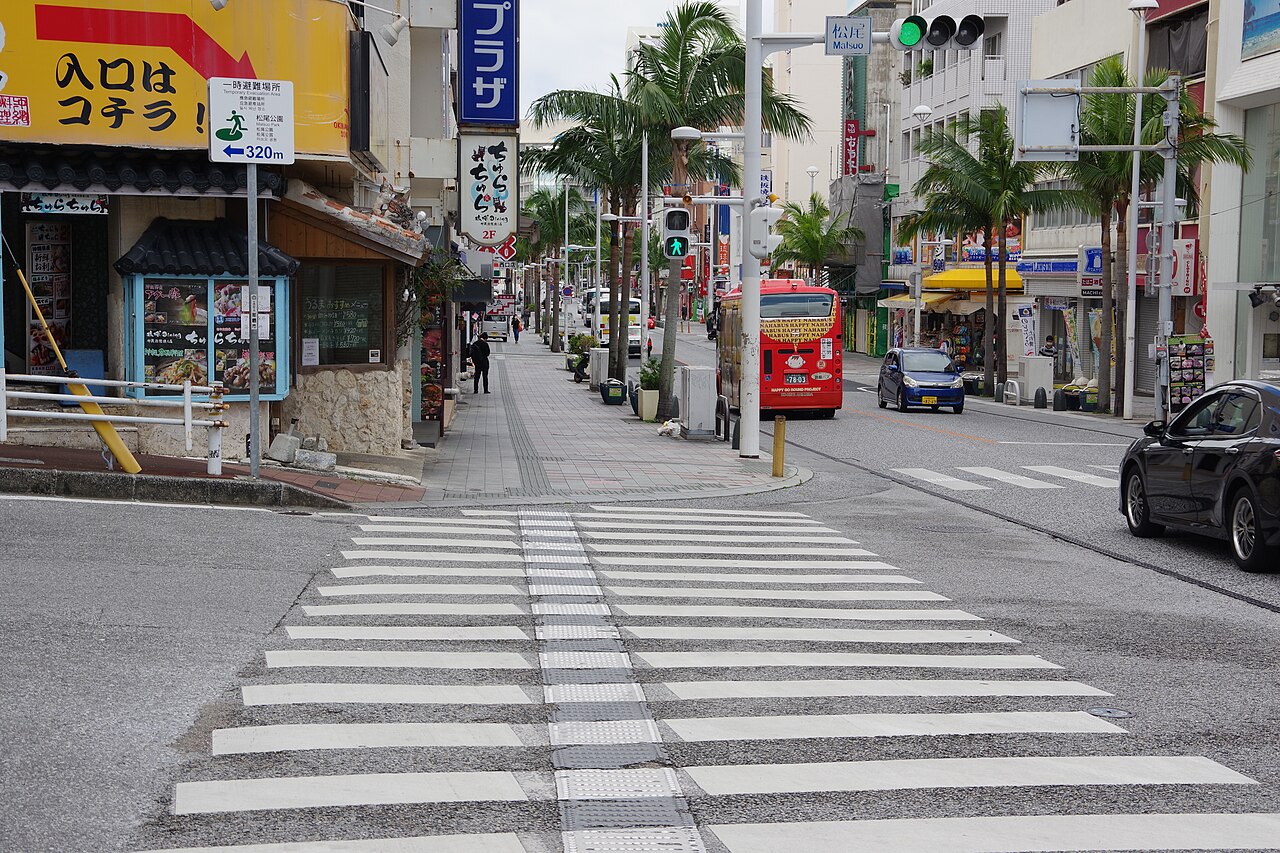
Central Naha has many pedestrians, local buses and tourists’ cars, and gets congested in the morning and evening. In busy areas like Kokusai Street, finding a parking space can take time, so it helps to look up parking for your destinations beforehand. If you are nervous about driving in Japan for the first time, try a route close to the airport first and then head to the north or south.
FAQ
Does the translation have an expiry date?
You may drive in Japan for one year from entry or until your license expires, whichever is shorter. The translation is used together with your license, so once the license expires the translation can no longer be used.
Only I will drive. Do my companions need to prepare too?
Only the people who will drive need to. If someone plans to share the driving, they also need their original license and a Japanese translation. UMUI Rent a Car checks the documents of every driver.
Can I reuse the translation?
The translation puts the details of your license into Japanese, so you can use it while the license is valid. However, if your address or license details change and no longer match the license, you may need to apply again. Please check with your Motor Vehicles Office.
Should I also bring an International Driving Permit?
A Taiwanese International Driving Permit cannot be used in Japan, so you do not need to get one for driving here. If you will also visit other countries, prepare according to the rules there.
Once your license and translation are ready, a trip to Okinawa becomes much freer. Coastal drives and the Churaumi Aquarium in the north are among the many places that are easiest to reach by car. If anything about the paperwork is unclear, feel free to contact UMUI Rent a Car, even before you book. A Traditional Chinese booking site is available too.
* The information in this article is as of October 2026. Systems and fees may change, so please check the latest information from Japan’s National Police Agency, JAF, the Directorate General of Highways (Motor Vehicle Services website) and your local Motor Vehicles Office.
Photo credits: Wikimedia Commons (Public domain / CC BY-SA 4.0). Photographers are credited in each photo caption.