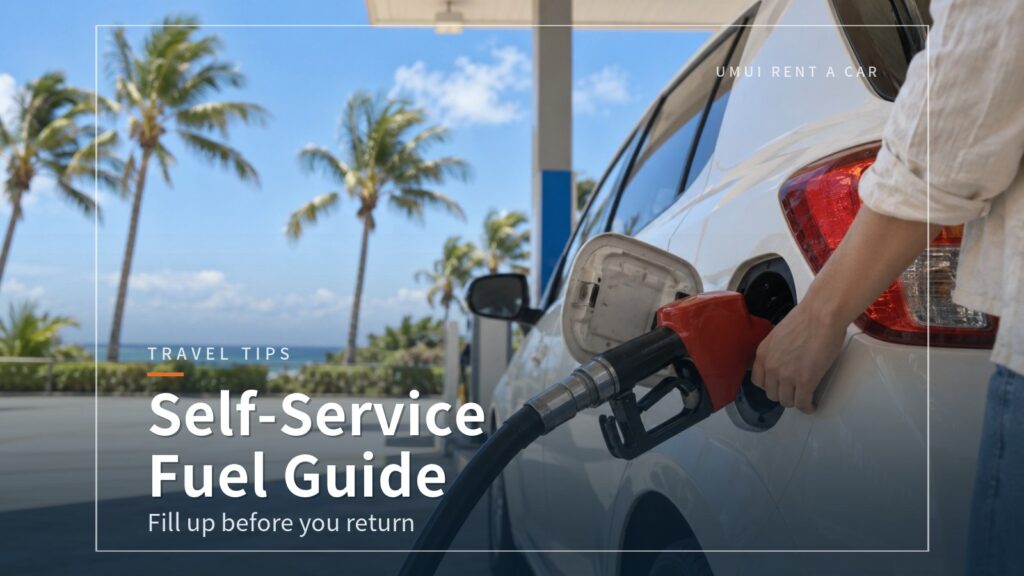
“Do I really have to pump the gas myself? And where do I get the receipt?” Visitors from overseas often ask us this, and so do Japanese travelers who don’t usually drive. Rental cars in Japan are normally returned with a full tank, so you will almost certainly stop at a gas station at the end of your trip.
This guide walks through how to use a self-service gas station in Japan, step by step: choosing how to pay, telling regular gasoline from other fuels, discharging static electricity, pumping, and getting your receipt. It also explains how to ask staff to fill the tank at a full-service station, the refueling rules for returning a car to UMUI Rent a Car, and what to watch for on drives in northern Okinawa, where gas stations are far apart. The steps are based on guidance from public bodies such as local fire departments.
Gas Station Basics in Japan
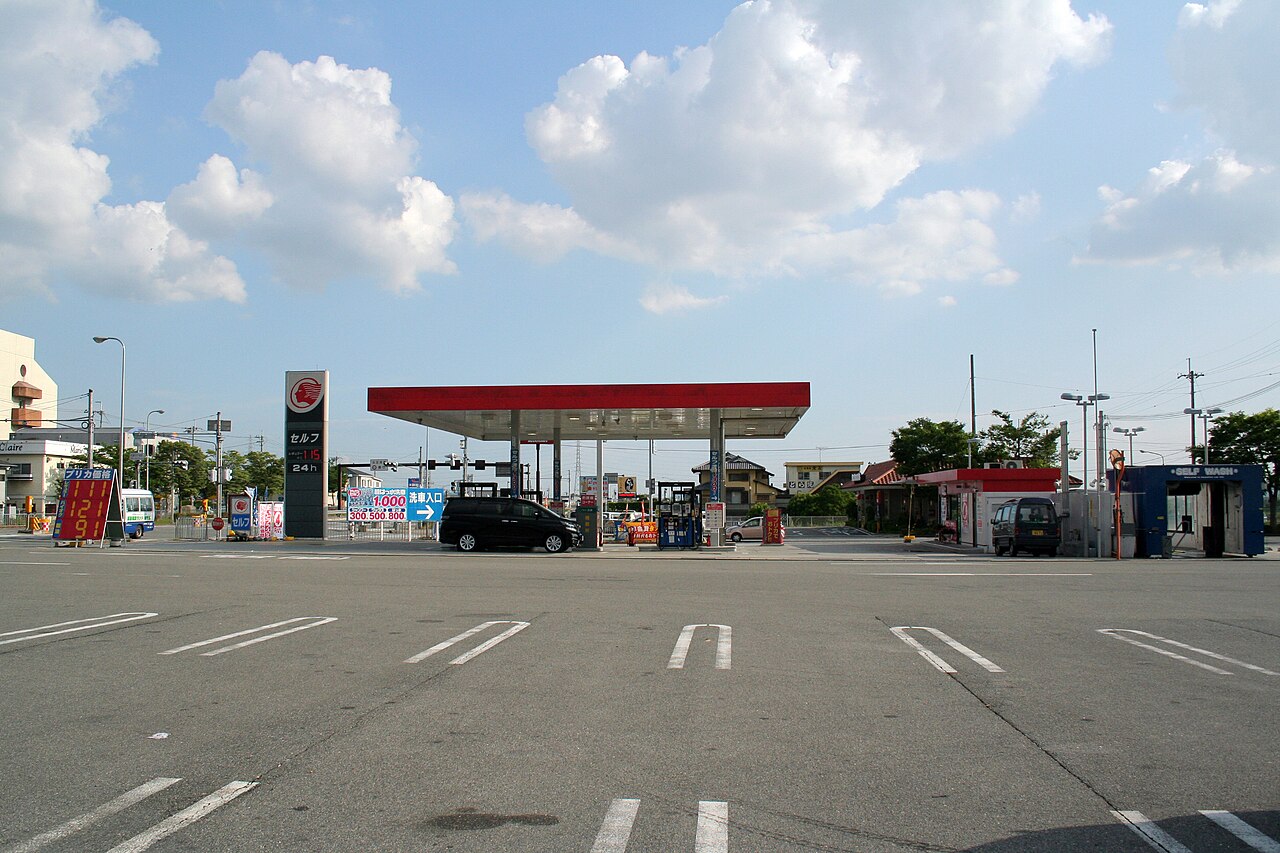
Two types: “self-service” and “full-service”
Gas stations in Japan come in two types: self-service stations, where you fill the tank yourself, and full-service (staffed) stations, where an attendant does it for you. A large sign reading “セルフ” (self) means it is self-service. At these stations you refuel your own car. Staff usually do not stand next to you the whole time; they watch from a booth or office near the pumps.
It can feel nerve-racking the first time, but the steps are fixed. If you follow the on-screen instructions, it takes only a few minutes.
Rental cars are returned with a full tank
In Japan, the usual rule is to return a rental car in the same condition you received it, which means returning it with a full tank of fuel. UMUI Rent a Car is no different: you fill up at a gas station near the return branch before bringing the car back. (See “Refueling Rules When Returning a Car to UMUI Rent a Car” below for details.)
Knowing the procedure in advance will keep you calm on your last day.
How to Use a Self-Service Station, from Arrival to Pumping
Parking and finding the fuel door
First, park so that your fuel door is on the pump side. In Japan, some cars have the fuel door on the right and others on the left. A small arrow next to the fuel gauge usually shows which side it is on.
The Hiroshima City Fire Department advises setting the parking brake, turning off the engine, and opening the fuel door with the lever inside the car, and closing the doors and windows when you get out. Turning off the engine while fueling is important because gasoline vapor can ignite. Smoking and open flames are also prohibited on the premises (guidance from the Yokohama City Fire Bureau).
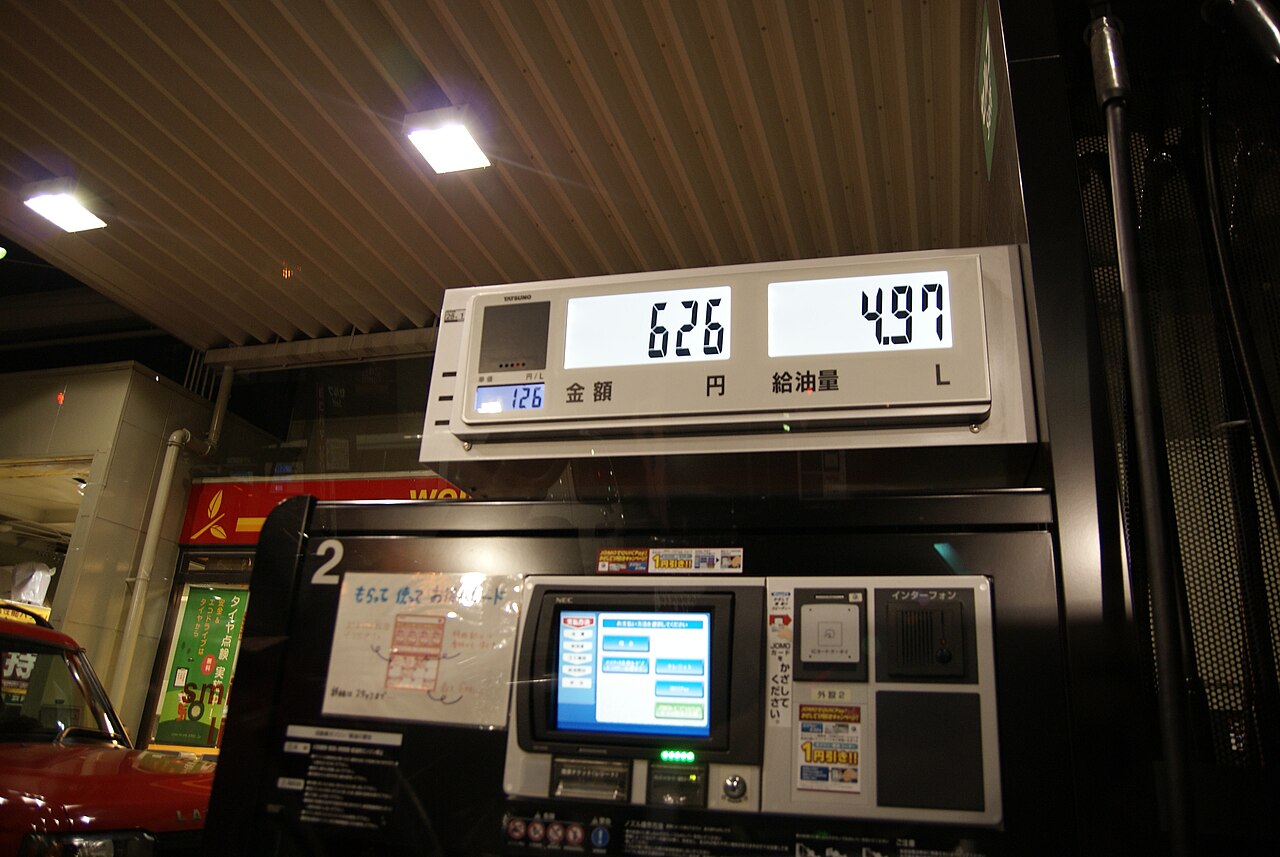
Choosing how to pay and which fuel at the pump
The pump has a touch screen. Follow the prompts to choose the payment method, the type of fuel, and the amount. Whether you pay before or after pumping may differ depending on the station and the machine. Read the instructions and cautions shown on the screen and the pump, and if anything is unclear, ask the staff through the intercom near the pump. The Hiroshima City Fire Department also notes that equipment is handled differently from place to place, and that you should ask the attendant through the intercom if you are unsure.
You choose cash, a credit card, or another method from the options on the screen. Available methods differ from station to station, so if you plan to use a card, check the signs or the screen first. To fill the tank completely, select the option for a full tank (the wording differs from machine to machine).
Discharge static electricity, then pump
The most important step at a self-service station is discharging static electricity. Before you open the fuel cap, touch the static-removal pad to release the static from your body. The Hiroshima City Fire Department advises touching a metal part of the car if there is no pad. Static builds up more easily in dry weather such as winter, so take extra care then (Yokohama City Fire Bureau).
Then pump in this order.
- Take out the nozzle for the fuel you chose (see the next section for the colors)
- Push the nozzle firmly all the way in, until it stops
- Squeeze the lever all the way to start fueling
- When it stops automatically, do not add any more fuel
- Put the nozzle back in its place and close the fuel cap
If fueling stops too early and you cannot add more, do not force it; ask the staff. Fueling should always be done by an adult, alone, and children should be kept away from the fuel door (Hiroshima City Fire Department). Many newer cars have a “capless” fuel door, which spills more easily. The Yokohama City Fire Bureau advises pushing the nozzle in firmly and starting slowly.
Always take your receipt
When you finish, follow the screen to get your receipt. UMUI Rent a Car asks to see it at return, so be sure to take the receipt and show it to the branch when you return the car.
Telling Regular from Other Fuels, and Avoiding Wrong Fuel
Regular gasoline has a red nozzle
Fuel nozzles and hoses at Japanese gas stations are color-coded by fuel type. The Hiroshima City Fire Department gives the following color scheme.
| Red | Regular gasoline |
|---|---|
| Yellow | High-octane gasoline |
| Green | Diesel (light oil) |
| Blue | Kerosene (from a separate dispenser; not a car fuel) |
The fuel required differs by vehicle and rental car. Do not rely on color alone; also check the text on the pump screen and labels. The layout and signs can differ from station to station.
Check which fuel your rental car uses
Always confirm the fuel type before you pump. The Hiroshima City Fire Department also advises checking your vehicle’s fuel type and specifying that fuel. Many cars have the fuel type written on the inside of the fuel door. If you cannot find it, the surest way is to ask our staff when you pick up the car: “What fuel does this car use?”
A hybrid car still runs on gasoline. An electric vehicle (EV) is charged rather than refueled.
Wrong fuel is not covered
Putting in the wrong type of fuel can damage the engine. The compensation page of UMUI Rent a Car states that wrong-fuel refueling is excluded from the insurance and compensation system. If you realize you have made a mistake, do not start the engine; contact the gas station staff and UMUI Rent a Car right away.
For details on how misfueling is handled, see the compensation page and the rental agreement on the UMUI Rent a Car website. If you are unsure, asking before you pump is always the safest choice.
How to Use a Full-Service Station
What to tell the attendant
At a full-service (staffed) station, an attendant will come to your car and speak to you once you stop. You do not have to say much.
- Fuel type: “Regular, full tank, please” (レギュラー、満タンでお願いします)
- By amount: “2,000 yen of regular, please” (レギュラーを2,000円分お願いします)
If you are unsure about your Japanese, saying “Regular, full tank, please” in English, or showing the words “レギュラー 満タン” on your phone screen, usually works. It also helps to open the fuel door with the lever inside the car beforehand. If asked what fuel the rental car uses, show them the label inside the fuel door.
You pay after fueling, either at the staff area or next to your car. Don’t forget to say “Receipt, please” and take it with you.
If you get stuck at a self-service station
Self-service stations also have an intercom near the pumps. Press the button and a staff member will check the situation and talk you through it. If you do not know what to do, the machine is not working, or fueling stops partway, use the intercom instead of trying to solve it yourself.
Refueling Rules When Returning a Car to UMUI Rent a Car
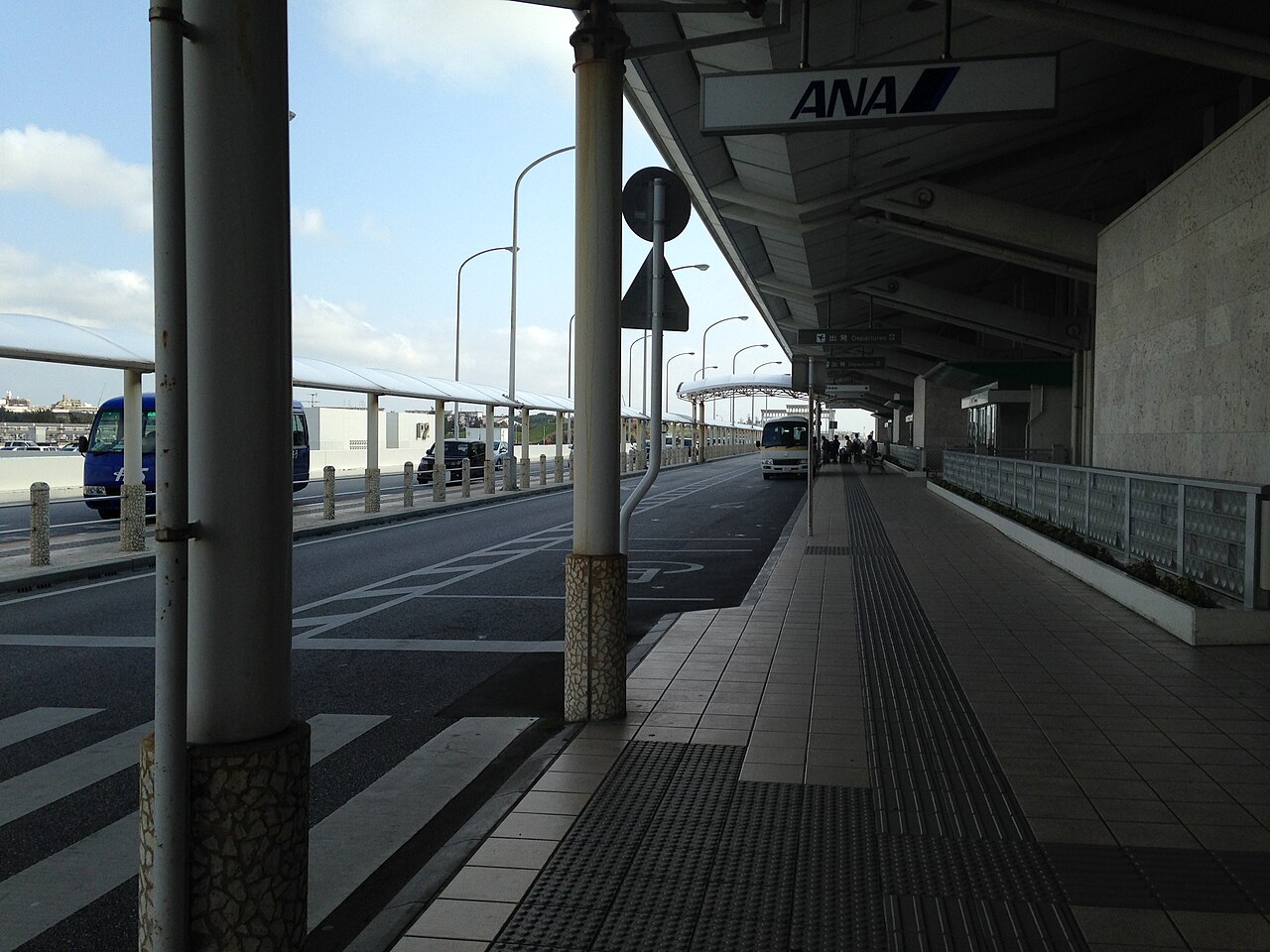
Fill up within 2 km of the return branch
The “How to Use” (flow) page of UMUI Rent a Car states the following about returning the car.
| Fuel | Fill the tank at a gas station within 2 km of the return branch before returning |
|---|---|
| Receipt | Show the refueling receipt to the branch |
| Return time | Return to the branch by your scheduled return time |
In short, the rule is: fill the tank at a station within 2 km of the return branch, and show the receipt to the branch. The branch you return to is either the Naha Airport branch or the Omoromachi branch. Check on a map app that the station you choose is not too far from the return branch.
If you cannot return it full
If you cannot return the car with a full tank for some reason, the fuel is settled by a separate distance-based calculation. The flow page states that in this case the charge will be higher than the actual refueling cost. The rental agreement also states that if the tank is not full, you pay a fuel charge calculated under the company’s separate rules.
To avoid the higher charge, include a stop at a gas station in your plans before returning the car.
Stations near the airport can get busy
Gas stations around Naha Airport can be crowded with rental cars heading back before their return times. The UMUI Naha Airport branch is open 8:00-20:00 and the Omoromachi branch 9:00-18:00. If you have a flight to catch, work backward from the time you plan to arrive at the return branch and leave extra time for refueling. We do not list specific stations or their hours here because they can change. Before you leave, it is a good idea to look for stations within 2 km of the return branch on a map app.
Planning Fuel Stops for Drives in Northern Okinawa
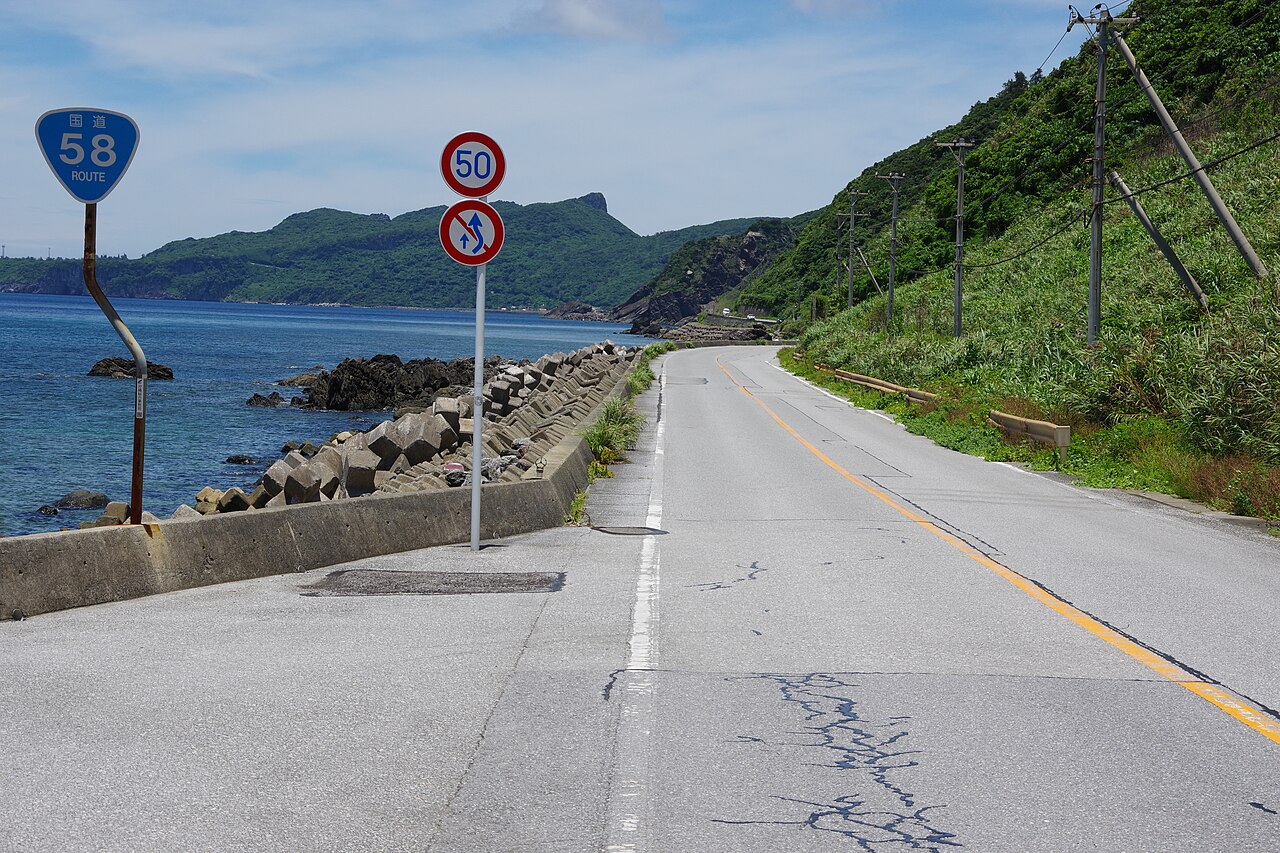
Gas stations are scarce away from the towns
When you drive in northern Okinawa, planning your refueling is important. As we explain in our 2-day northern Okinawa route with Churaumi Aquarium and Kouri Island, gas stations become scarce once you leave the towns. Nago has many stations and restaurants, so filling up there once, on the evening of day one or the morning of day two, gives you peace of mind.
Our Yanbaru day trip article, which covers the route toward Kunigami and Cape Hedo, likewise advises filling the tank in Nago before you head north, because stations are fewer north of Kunigami.
When to refuel
Don’t wait until the tank is nearly empty to look for a station. The basic approach is to fill the tank in Nago before heading north. A good habit is to top up at the next station you see once the gauge drops below half.
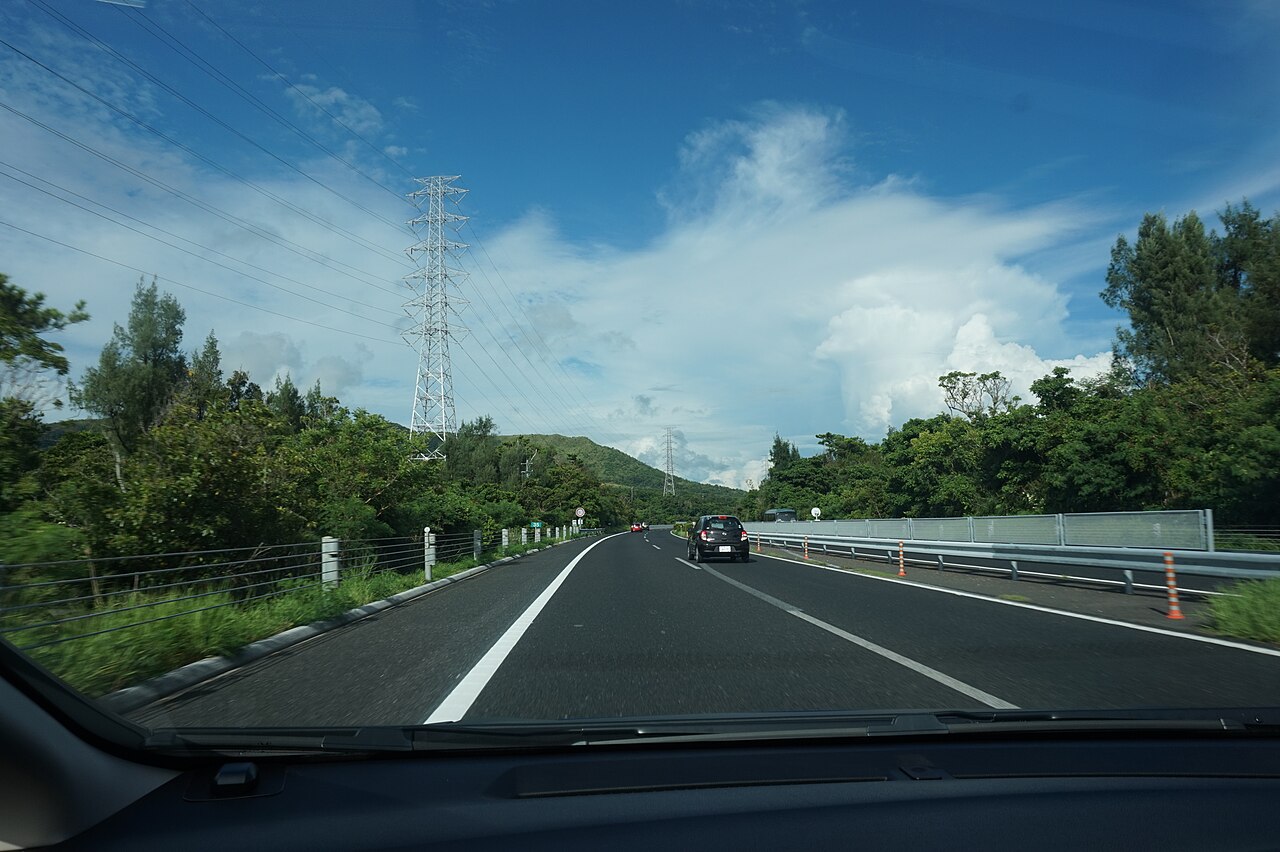
Some stations are closed at night, so finish refueling before dark.
On return day, plan backward from the clock
The drive from the north back to Naha takes around three hours depending on traffic, and refueling and breaks add to that. On the way back, fill up in Nago or along the road before you reach Naha, and you will not be rushed at the return counter. Overtime charges may apply if you pass your scheduled return time, so contact the branch in advance if your plans change.
FAQ
Can I pay by credit card or cash?
Payment methods differ by station and machine. Check the pump screen and the signs at the station. If unsure, the intercom is the surest way to ask.
I lost my receipt. What should I do?
UMUI Rent a Car asks to see the refueling receipt. If you have lost it, tell the staff honestly when you return the car and ask how to handle it.
How do I know when the tank is full?
The point where the nozzle stops automatically is the guide for a full tank. Adding more after it stops can cause spills, so please don’t.
Once you know how to refuel, you can finish your trip calmly. If you have any questions, ask the UMUI Rent a Car staff at pickup about your car’s fuel type and how to return it. The Naha Airport branch also offers a free shuttle to the airport, so after you refuel and return the car, getting back to the airport is easy.
* Information in this article is as of October 2026. The refueling steps are general ones based on guidance from the Hiroshima City Fire Department and the Yokohama City Fire Bureau, and may differ by station and machine. The return refueling rules are based on the UMUI Rent a Car website (How to Use, Compensation, and Rental Agreement pages). Please check the website for the latest details.
Photo credits: Wikimedia Commons (CC BY 2.0 / CC BY 3.0 / CC BY-SA 4.0). The photographer is credited in each photo’s caption.