“We want to explore Okinawa by rental car with our kids, but what do we do about child seats? And will a long drive wear them out?” If this is your first family trip to Japan, questions like these come up fast.
This guide covers Japan’s child seat rules and the main seat types, how child seats work with UMUI Rent-a-Car, how to pace your driving days, which roadside stations and expressway service areas make good rest stops, kid-friendly attractions, and the easily overlooked issue of heat inside a parked car. Everything is based on information we could confirm on official websites. Use it as a pre-trip checklist.
Child Seat Basics: The Law, Seat Types and Installation
Children Under 6 Must Use a Child Seat
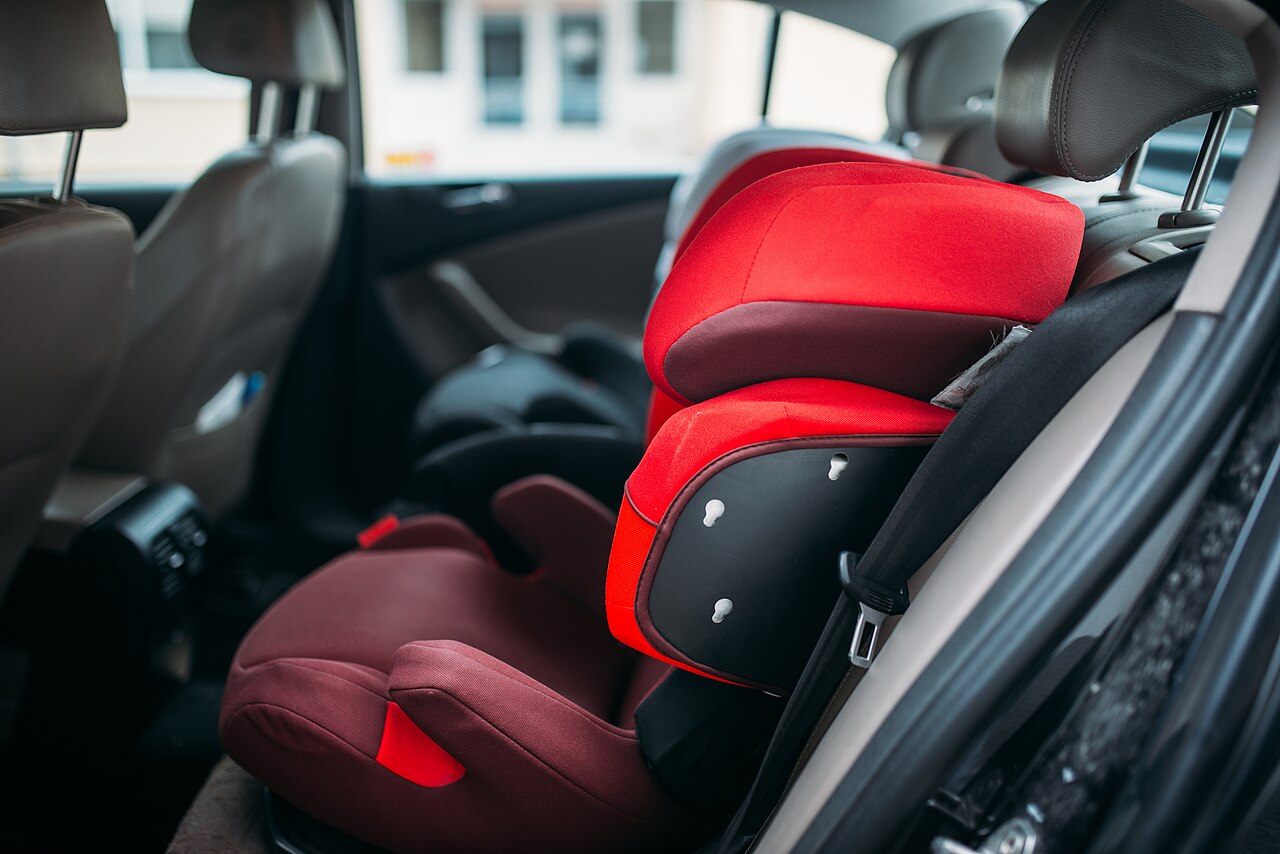
Under Article 71-3, Paragraph 3 of Japan’s Road Traffic Act, a driver must not drive with a child under 6 years old in the car unless the child is in a child seat or similar restraint. This applies to visitors and drivers of rental cars in exactly the same way. The only exceptions are limited cases set by law, such as when an illness makes using a seat medically unsuitable for the child.
A violation adds 1 penalty point to your license (there is no fine; source: Nagano Prefectural Police guidance page). But safety matters far more than the penalty. According to Japan’s National Police Agency, the fatality rate for children not using a child seat is about 5.3 times that of children who use one properly. A seat that is installed loosely, or a child who is not seated correctly, may also fail to give the protection it was designed to provide.
Turning 6 does not automatically mean the seat is no longer needed. The National Police Agency recommends a child seat even for children 6 and older if their build does not let them wear the seat belt properly.
| Legal basis | Road Traffic Act, Article 71-3, Paragraph 3 (child restraint requirement) |
|---|---|
| Who it applies to | Anyone driving with a child under 6 in the car |
| Penalty points | 1 point (no fine) |
| Age 6 and over | A child seat is recommended if the child cannot wear the seat belt properly because of their build |
Seat Types and Size Guidelines
Child seats fall into three broad types. The guidelines below come from Japan’s Ministry of Land, Infrastructure, Transport and Tourism. Weight, height and age are only rough guides, so choose according to how your child is actually growing.
| Infant seat | Up to 10 kg, up to 70 cm, around age 1 or under. For babies whose necks cannot yet support the head. Comes as a lie-flat bed type or a seat type. |
|---|---|
| Toddler seat | 9 to 18 kg, 65 to 100 cm, roughly ages 1 to 4. For young children who can sit up on their own. |
| Junior seat (booster) | Up to 150 cm, roughly ages 4 to 12. Raises the child so an adult seat belt fits correctly. |
The age, weight and height ranges overlap in places. If you are unsure, check your child’s current weight and height before booking, and match the seat to the range printed in its instruction manual.
Installation: The Back Seat Is the Rule
The Ministry advises installing child seats in the back seat whenever possible. In a car with a front passenger airbag, never install a rear-facing child seat in the front passenger seat; this is described as extremely dangerous.
Not every child seat fits every car. Installation differs by product, so read the manual carefully. After installing, check that the seat does not wobble and that the seat belt or buckle does not press against the child.
Using Child Seats with UMUI Rent-a-Car
Request the Seat as an Option When You Book
UMUI Rent-a-Car’s rental terms say that when you apply for a reservation, you state whether you need options such as child seats or a car navigation system, together with the vehicle class and rental period. In other words, if you need a child seat, tell us at the time of booking.
The seat types (infant, toddler, junior), the number available and the fee are not listed on the price page (u-mui.com/price/) or the rental flow page. Because we could not confirm these details, please check when you book. Telling us your child’s age, weight and height makes it easier to discuss a suitable seat.
| How to request | Tell us whether you need the option when booking (Rental Terms, Article 10) |
|---|---|
| Types, numbers, fees | Confirm at the time of booking |
| Booking | Website or in store (up to 1 hour before pick-up; book early for holidays) |
| Contact | 050-1783-5687 (8:00-20:00, open every day) |
The Renter Is Responsible for Installation: Key Points in the Rental Terms
Two provisions in the rental terms matter for families.
First, a rental contract cannot be concluded if a child under 6 will ride without a child seat (Article 11). In line with the law, children under 6 need a seat. Second, the renter is responsible for installing the child seat properly (Article 15). Staff may help with installation, but the responsibility for installing it correctly stays with the renter.
Before you drive off, check with your own eyes that the seat does not move and that your child is buckled in properly. If you are not used to the seat, ask the staff how to install it when you pick up the car.
Tips for Choosing a Vehicle Type
UMUI Rent-a-Car sets vehicle classes by car type. The Naha Airport branch offers classes from compact cars to compact minivans (Sienta, seats 7) and minivans (Noah, seats 8). Note that you cannot request a specific model (as stated on the price page).
The right class depends on the number of people, how much luggage you have and how many child seats you need to install. If you want to fit two seats side by side, or bring a stroller as well, choosing a roomier class keeps the cabin from feeling cramped. Ask when you book how many seats can be installed in each class.
Planning Your Driving Time with Kids
Rest About Every 2 Hours, and Sooner with Kids
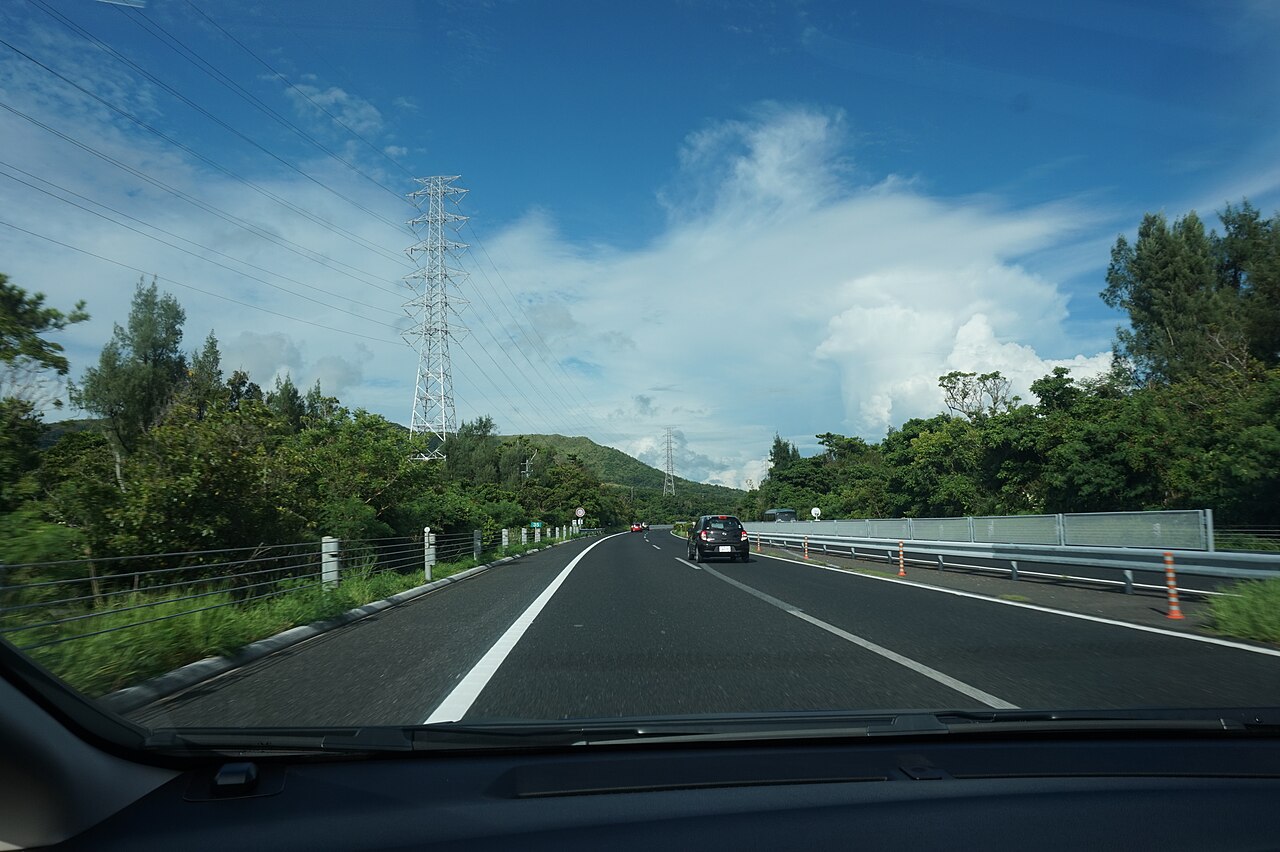
NEXCO, the expressway operator, suggests taking a break about once every 2 hours of driving, and resting sooner if you feel sleepy. That guideline is for adult drivers. With children, you also need to think about how long they can stay in their seats, in addition to how tired the driver gets.
Children’s moods and health vary from day to day, so there is no fixed number of hours. As a suggestion from this blog, treat “2 hours” as an upper limit, and plan with enough slack to stop when your child gets fussy or needs a restroom or a feeding. Adding break time to your estimated travel time in advance helps you avoid rushing.
Travel Times to Major Destinations
The driving times from Naha Airport listed on each facility’s official website are as follows. All assume no traffic; actual times depend on road conditions.
| DMM Kariyushi Aquarium | About 20 minutes by car from Naha Airport (official website) |
|---|---|
| Okinawa Zoo & Museum (Okinawa Kodomo no Kuni) | About 50 minutes from Naha Airport (about 10 minutes from Okinawa-Minami IC) (official website) |
| Okinawa Churaumi Aquarium | About 2 hours by car from Naha Airport via expressway (official website) |
The drive from Naha Airport to Churaumi Aquarium in the north takes about 2 hours each way. A round trip in one day means roughly 4 hours of driving, which is demanding with small children. If you want more breathing room for time and energy, you can split the trip over two days with an overnight stay.
Example Ways to Build Your Day
It depends on your children’s ages and personalities, but here are some ways to think about pacing.
Go easy on arrival day: After a flight, parents and kids are both tired. Visit just one nearby spot, such as DMM Kariyushi Aquarium, about 20 minutes from the airport, and then check in at your hotel. That keeps the first day light.
Limit long drives to one main stop a day: On the day you go to Churaumi Aquarium in the north, make the aquarium the centerpiece and keep other stops to short breaks. Spending a relaxed time inside the aquarium tends to satisfy kids more than squeezing in everything.
Leave slack for the return: Sleepy kids sometimes get fussy in the car in the evening, so start back early. Rental cars must be returned with a full tank, refueled at a gas station within 2 km of the return branch, so allow time for that too.
Roadside Stations and Service Areas for Rest Stops
Ije Service Area (Okinawa Expressway)
When you head north from the Naha side by expressway, Ije Service Area on the Okinawa Expressway is a convenient place to stop. It has restrooms and a shop, which makes it a good change of pace on a long expressway stretch. There are facilities on both the northbound and southbound sides.
Whether there is a nursing room or diaper-changing table, and the opening hours, may differ between the two directions. Please check the operator’s official information, and if you need these facilities, find out in advance where they are.
| Location | Okinawa Expressway (facilities on both the northbound and southbound sides) |
|---|---|
| Main facilities | Restrooms, shop, etc. (check official information for nursing rooms, diaper-changing tables and hours) |
| Cost | Expressway tolls apply separately |
Michi-no-Eki Kyoda (Yanbaru Bussan Center)
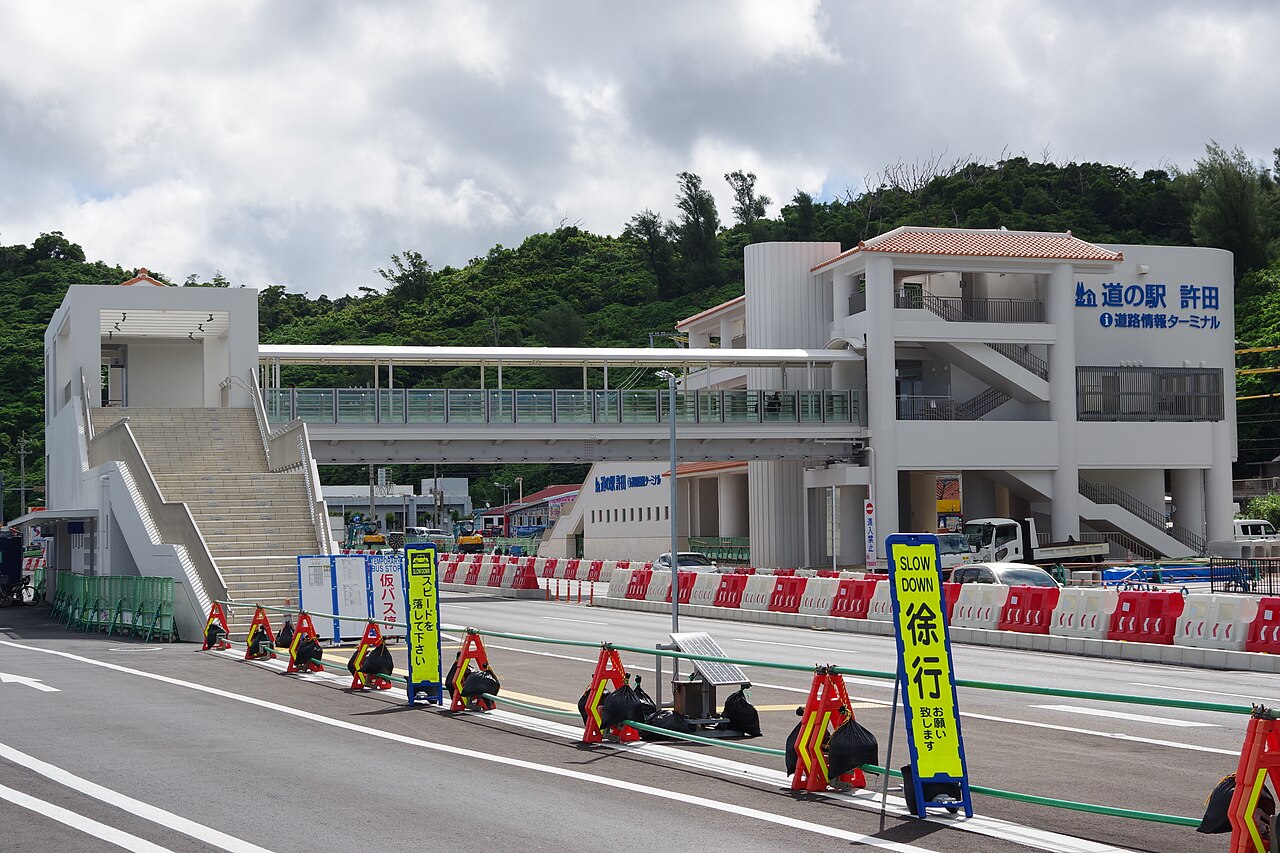
This roadside station sits just off Kyoda IC, the end of the Okinawa Expressway, and is the first natural rest stop on the way north. The official page of the national Michi-no-Eki association lists a baby bed, an accessible restroom, a tourist information desk, a restaurant, shops and an observation deck.
Getting out here to stretch, drink some water and use the restroom makes the last stretch to Churaumi Aquarium easier. Opening hours differ by section, so if you plan to buy a snack or shop, it is better to stop earlier in the day.
| Address | 沖縄県名護市許田17-1 |
|---|---|
| Hours | 8:30-19:00 (varies by section) |
| Closed | Not stated on the official page. Please check before you go |
| Parking | Yes (257 standard spaces including 6 accessible spaces, 9 large-vehicle spaces, per the official Michi-no-Eki page) |
| Baby facilities | Baby bed available |
| Phone | 0980-43-7260 |
| Access | About 3 minutes by car from Kyoda IC |
Tips for Good Rest Stops
At a rest stop, do more than visit the restroom: take your child out of the seat for a while so they can stretch. With an infant, change the diaper, feed the baby and prepare formula during the break to make the next stretch easier. It also helps to keep a water bottle, diapers, a change of clothes, snacks and wet wipes within easy reach before you set off.
Cars move in and out of roadside station and service area parking lots. Keep your eyes on your children and hold their hands as you walk.
Attractions Kids Will Enjoy
Okinawa Churaumi Aquarium
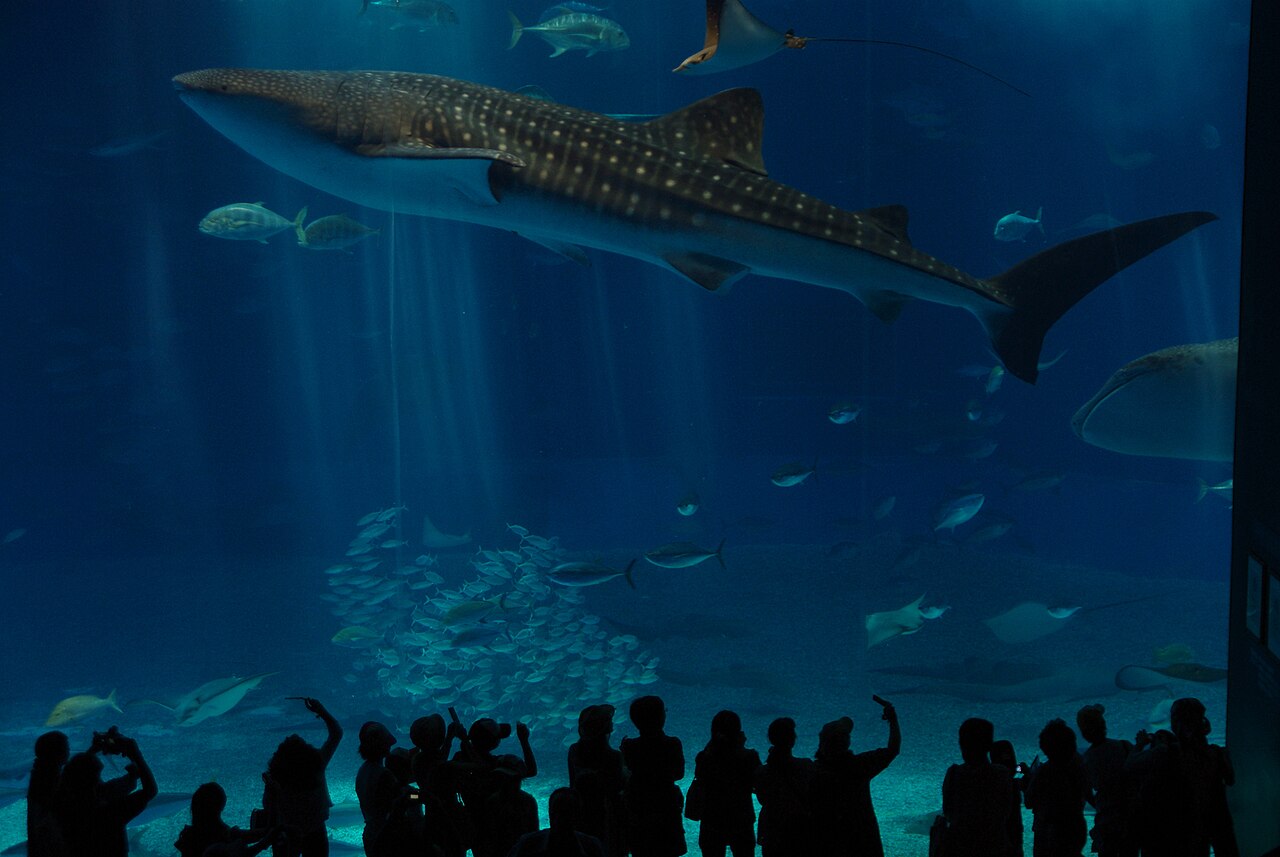
Okinawa Churaumi Aquarium in Ocean Expo Park, Motobu, is a classic stop on family trips to Okinawa. The “Kuroshio Sea” tank, where whale sharks swim, has a presence that even small children can appreciate.
The aquarium’s official site has a page for visitors with infants and toddlers. Strollers are lent out free of charge, in limited numbers and without reservations (pick-up points are the first floor of the North Gate parking structure P7, the main information center, the Tropical Dream Center and the South Gate security box). The aquarium has slopes, so you can move around with a stroller. There are two nursing rooms, at the aquarium entrance (3rd floor) and in front of the Churaumi Theater (2nd floor), with sofas and hot water dispensers. Powdered formula is not provided, so bring your own. Restrooms on each floor have diaper-changing tables (some restrooms do not).
Outside the aquarium, the park’s Kids Adventure Land (one of Japan’s largest net-play areas, right next to the P7 parking structure) is a good option for children who want to burn off energy. The outdoor Okichan Theater dolphin shows are announced as suspended from January 4 to 9, 2027. Show times and suspension dates can change, so check the official website.
| Address | 沖縄県国頭郡本部町石川424(海洋博公園内) |
|---|---|
| Hours | 8:30-18:30 (last entry 17:30). Extended hours during summer vacation and other periods |
| Closed | No closures planned until March 31, 2027 (except temporary closures for typhoons, etc.) |
| Admission | Adults 2,180 yen, high school students 1,440 yen, elementary and junior high students 710 yen, free for children under 6 |
| Baby facilities | Free stroller loan (limited number), 2 nursing rooms, diaper-changing tables |
| Parking | All Ocean Expo Park parking lots are free. The North Gate parking structure (P7) is closest to the aquarium |
| Access | About 2 hours by car from Naha Airport (via expressway) |
DMM Kariyushi Aquarium
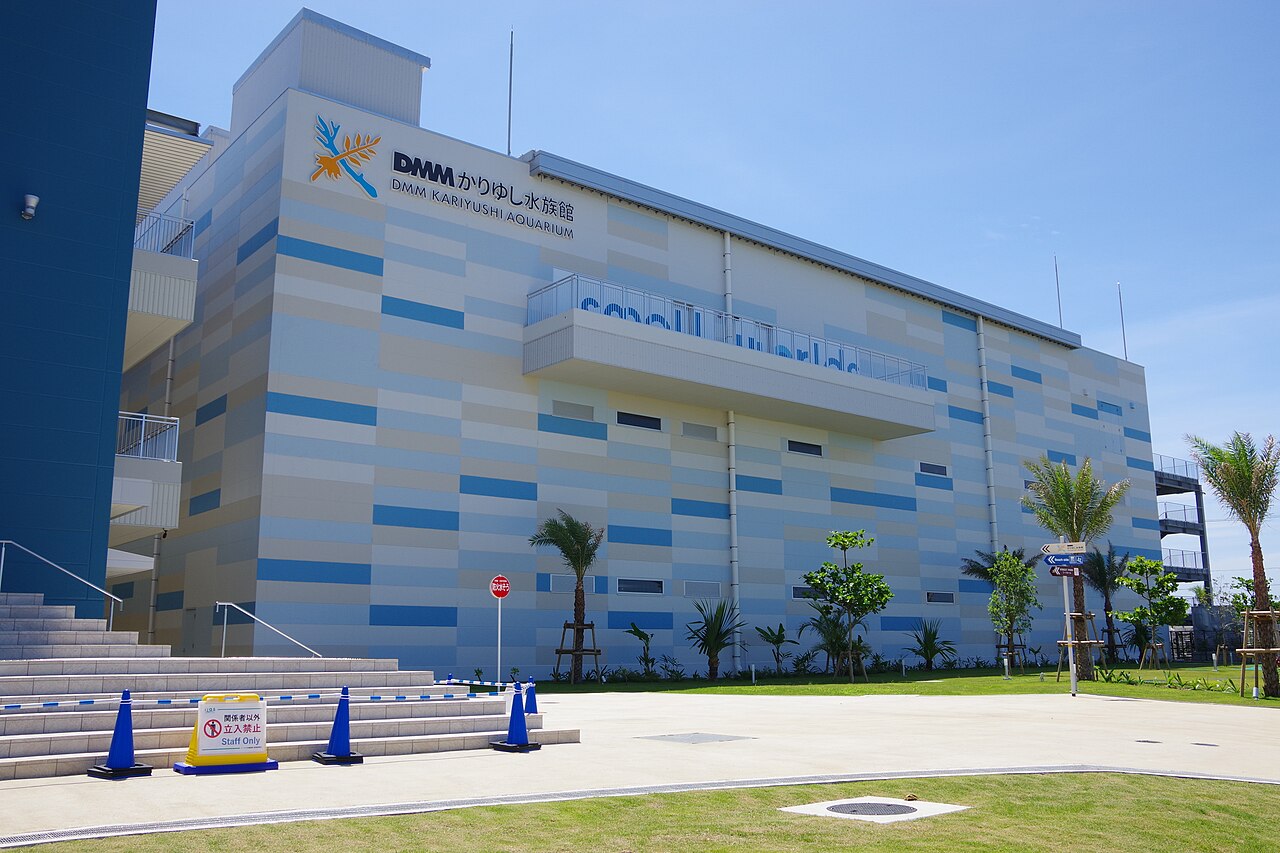
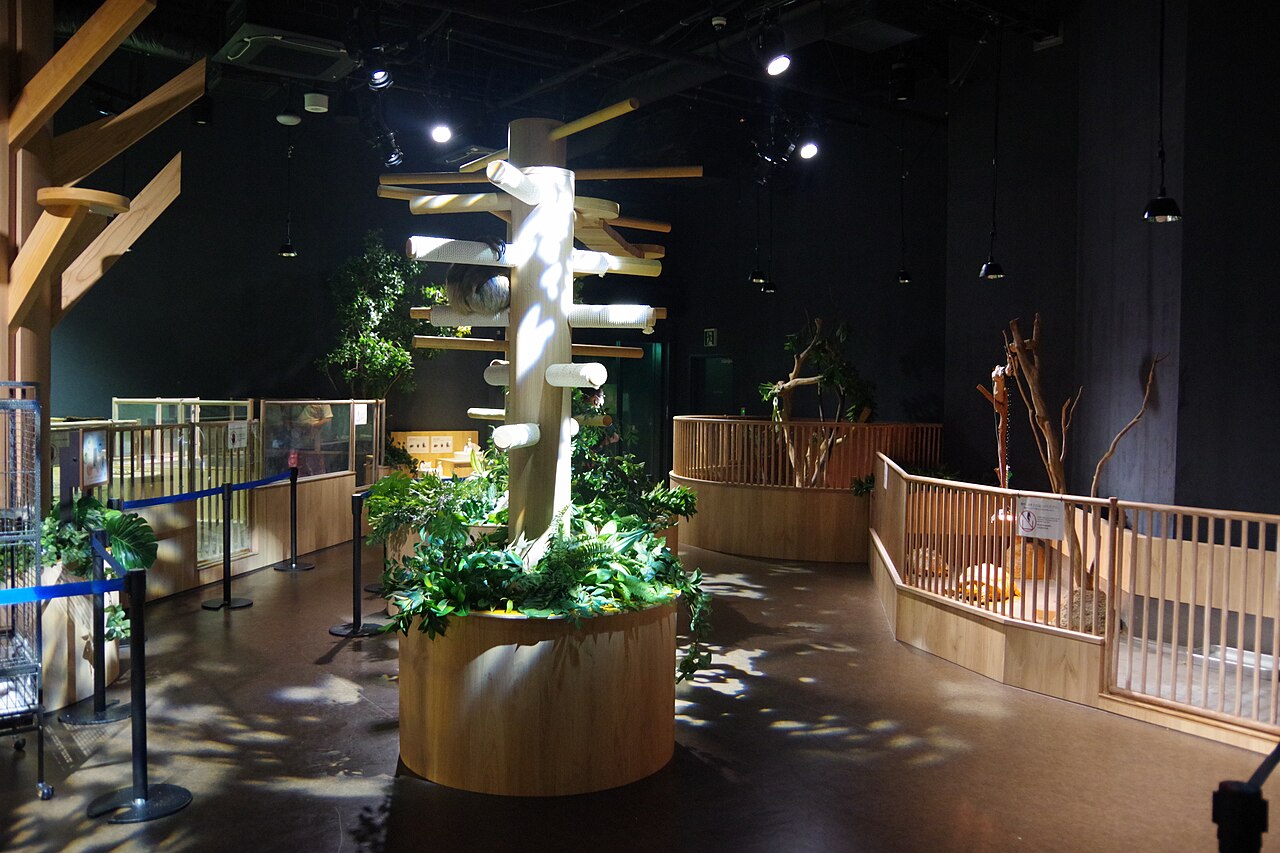
DMM Kariyushi Aquarium in Toyosaki, Tomigusuku, is only about 20 minutes by car from Naha Airport, so it is easy to fit in on your arrival or departure day. It is inside the Ias Okinawa Toyosaki shopping complex, so you can combine it with meals and shopping.
Admission has three price tiers depending on the season: “Value,” “Regular” and “Peak.” Ages 4 to 12 pay the child rate, and children 3 and under are free. You can check which rate applies on each day in the official operating calendar. Hours are normally 9:00-19:00 but vary by day, and the last entry is 60 minutes before closing.
| Address | 沖縄県豊見城市豊崎3-35 |
|---|---|
| Hours | Normally 9:00-19:00 (varies by day; last entry 60 minutes before closing) |
| Closed | Please check the operating calendar on the official website |
| Admission | Adults (18+) 3,100-3,500 yen, ages 13-17 2,500-2,900 yen, ages 4-12 2,000-2,400 yen, ages 3 and under free (3 price tiers by season) |
| Parking | About 3,000 spaces, free (inside Ias Okinawa Toyosaki) |
| Access | About 20 minutes by car from Naha Airport |
Okinawa Zoo & Museum (Okinawa Kodomo no Kuni)
Okinawa Kodomo no Kuni in Okinawa City combines a zoo (Animal Zone) with the Wonder Museum (Park Zone), which has many hands-on science exhibits. You can see animals found only in the Ryukyu Arc, and activity programs are also offered.
Admission is 1,000 yen for ages 16 and over, and free for ages 15 and under. Strollers can be rented for 500 yen, and there is a nursing room (both per the official website). Hours differ on weekdays and on weekends and holidays: 9:30-17:30 on weekdays (last entry 16:30) and 9:30-21:00 on weekends and holidays (last entry 20:00). The park is closed every Tuesday; if Tuesday is a public holiday, it opens and closes the following weekday instead. It closes temporarily when a typhoon puts the main island inside the storm zone, so check the official website just before you go during typhoon season.
| Address | 沖縄県沖縄市胡屋5-7-1 |
|---|---|
| Hours | Weekdays 9:30-17:30 (last entry 16:30) / Weekends and holidays 9:30-21:00 (last entry 20:00). May change during special events |
| Closed | Every Tuesday (the following weekday if Tuesday is a holiday), year-end and New Year holidays (Dec 30-Jan 1) |
| Admission | Ages 16 and over 1,000 yen, ages 15 and under free |
| Baby facilities | Stroller rental 500 yen (limited number), nursing room |
| Parking | 700 spaces (check the official website for fees) |
| Access | About 50 minutes from Naha Airport, about 10 minutes from Okinawa-Minami IC |
Beating the Heat and Preventing Children Being Left in the Car
Never Leave a Child Alone in the Car, Even Briefly
The sun in Okinawa is strong, and the temperature inside a parked car can climb quickly even if you only step out to take a photo or use a restroom. In a JAF (Japan Automobile Federation) user test, with an outside temperature of 23 to 24 degrees C, the interior reached 37.5 degrees C in a kei wagon and 43.5 degrees C in a large SUV after one hour. JAF repeatedly urges people never to leave a child alone in a car, even for a short time.
In a JAF survey (December 2022 to January 2023, households with children aged 12 or under), more than half of respondents said they had left a child in the car, and the most common reason was “because I could finish shopping and come back quickly.” The thought “just for a minute” or “they’re asleep” is the biggest trap. Even if your child falls asleep, wake them and take them with you.
Heat Control Before and During the Drive
JAF recommends ventilating by opening the windows and dehumidifying regularly with the air conditioner, because high humidity raises the risk of heatstroke at the same temperature. Starting the engine and the air conditioner before you get in, and letting the hot air out of the cabin before seating your child, is one approach.
After the car has been parked in the sun, the child seat’s buckle and seat surface can be hot. Touch them with your hand to check the temperature before you seat your child. Small children do not yet regulate their body temperature well, so it is also important to give them fluids often.
Building Habits to Prevent Leaving a Child Behind
Children can be left behind through simple forgetfulness. As a suggestion from this blog, we recommend these habits: when you get out, the driver opens the rear doors and confirms every child has gotten out; keep your child’s belongings (bag, hat, etc.) in a place you can see, such as next to the driver’s seat; and when there are several adults, decide who is taking the children out before you leave the car.
When you take children out in a parking lot, watch for other cars coming and going, and check around you when you open the door.
Frequently Asked Questions About Driving with Kids
Is a Child Seat No Longer Needed Once a Child Turns 6?
The legal requirement applies to children under 6. However, the National Police Agency recommends a child seat even for children 6 and older if their build does not let them wear the seat belt properly. Junior seats are generally meant for children up to about 150 cm and roughly ages 4 to 12, so decide based on your child’s height.
Are There Cases Where a Child Seat Is Not Required?
The Road Traffic Act provides exceptions for unavoidable reasons set by government ordinance, such as when a medical condition makes using a seat unsuitable for the child. However, under UMUI Rent-a-Car’s rental terms, a rental contract cannot be concluded if a child under 6 will ride without a child seat. If you have special circumstances, please consult the store before booking.
Can We Go to the Store with Kids Right After Landing?
UMUI Rent-a-Car’s Naha Airport branch is served by a free shuttle bus from Naha Airport. It is open from 8:00 to 20:00 every day of the year. If you have a lot of luggage with kids, it is a good idea to call (050-1783-5687) before you arrive to ask about the shuttle pick-up point and similar details.
Driving in Okinawa gives children lots of “first-time scenery.” With a child seat arranged, a relaxed schedule, frequent breaks and attention to heat inside the car, the whole family can enjoy the trip. When you book with UMUI Rent-a-Car, you can tell us whether you need options such as child seats. Please ask about types and fees when you book, and choose the car that suits your child.
* Opening hours, prices and other information in this article are as of October 2026. They may change, so please check each facility’s official website before you go. Travel times assume no traffic. Information about laws and size guidelines for child seats is general; always follow the seat’s instruction manual when using it.
Photo credits: Wikimedia Commons (CC BY 2.0 / CC BY-SA 2.0 / CC BY-SA 4.0). Photographers are credited in each photo’s caption.