Want to go diving, or try an introductory dive, in Okinawa? How should a rental car fit in? Is it fine to dive the day before, or on the day of, your flight home? And should you rely on the dive shop’s shuttle, or drive yourself? On a diving trip, timing and gear logistics matter even more than on an ordinary sightseeing trip.
This article walks through, in order: how long to wait before flying after diving (as stated in official guidelines such as DAN’s), how to build an itinerary with no diving on your last day, when to use a shop shuttle and when to drive, access and parking using Cape Maeda as an example, how to keep a car clean when you have wet gear, and how to judge the weather. We cannot make medical judgments such as decompression sickness. We only quote the figures stated in official sources, and in practice you should follow the instructions of your dive shop and your doctor.
Plan a Diving Trip Backward from Your Flight Time
Decide your return flight first, not your dive day
The hardest thing to move in a diving itinerary is the departure time of your flight home. Build an itinerary with no diving on your last day: it is the safest and most relaxed way to plan. If you fix your dive day first, you may only realize later that there is not enough time before your flight.
For how to decide your car return time on the last day, see our article “Your Last Day in Okinawa: Rental Car Return Time and How to Spend It”. Here, we add one more condition to that: how many hours to leave after your last dive.
Example: a 4-day, 3-night trip
For a 4-day, 3-night trip, for example, you could plan it like this. This is just one way to think about the schedule; follow your shop’s instructions for the number and timing of dives.
- Day 1: Pick up your rental car after arriving and head to your hotel. Save your energy
- Days 2 and 3: Diving (an introductory dive can be a single day). If you dive two days in a row, note that the waiting time before flying becomes longer
- Day 4 (last day): No diving. Souvenirs, a meal, sightseeing in the city, then return the car and head to the airport
If you only want to try one introductory dive, the middle of your trip is a good choice. If you squeeze in “just a quick dive” on the morning of your last day, the time before your flight quickly runs short, as the next section shows.
When a rental car helps, and when it does not
If a dive shop picks you up from your hotel or from central Naha, you can choose not to use a car on dive days. On the other hand, if you stay outside the shop’s pickup area, or want to sightsee and eat out the day after diving, a rental car makes getting around easier. We look at how to choose in Section 3.
How Long to Wait After Diving Before You Fly
Official guidelines from DAN (Divers Alert Network)
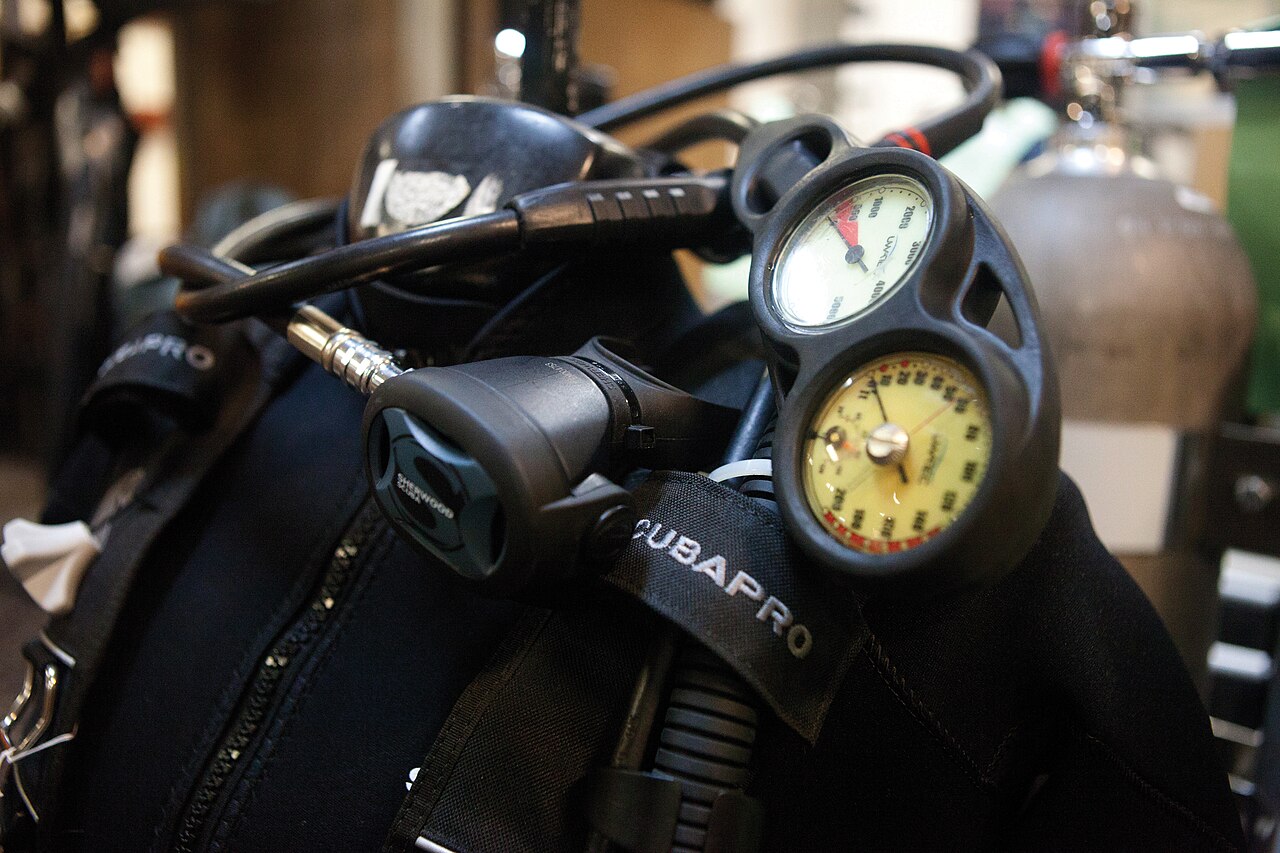
Flying after diving is said to raise the risk of decompression sickness, because the air pressure inside the cabin is lower than on the ground. DAN’s official website publishes provisional guidelines for recreational diving, agreed at a workshop in 2002.
In summary, the website states the following (for air dives within no-decompression limits, for divers without symptoms of decompression sickness, flying at cabin altitudes of 2,000 to 8,000 feet).
- After a single no-decompression dive: wait at least 12 hours
- After multiple dives in a day or multiple days of diving: wait at least 18 hours
- After dives requiring decompression stops: a surface interval substantially longer than 18 hours appears prudent
The same DAN page also says that these recommendations reduce the risk of decompression sickness but do not guarantee it will be avoided, and that waiting longer than recommended reduces the risk further. Source: DAN, “Flying After Diving”.
PADI’s “24 hours” approach
The official PADI blog introduces the DAN guidelines above and says that, as a general recommendation, you should leave a 24-hour surface interval before flying after any type of diving. This is longer than DAN’s figures, and is described as an extra margin of safety. The blog also says to wait longer if the no-fly time shown on your dive computer is longer. Source: PADI Blog, “7 Things You Should Never Do Immediately After Diving”.
The numbers are a guide. In the end, follow your shop and your doctor
As the official guidelines themselves say that waiting longer lowers the risk, the times quoted here are only a guide. For introductory dives in particular, some shops have their own rules. For the actual time, always follow the instructions of your shop and your doctor. Medical conditions, your physical condition, alcohol and dive depth can change the answer, and this article cannot judge those.
Airlines may also have different guidance on boarding after diving. It is safest to check the official website or reservation desk of your airline beforehand.
Time calculation examples
These examples simply add the official guideline figures (12 and 18 hours) and PADI’s approach (24 hours) to the time you finish diving. They do not indicate whether you can actually fly.
| Last dive ends 10:00 | 12 hours later = 22:00 same day / 18 hours later = 4:00 next day / 24 hours later = 10:00 next day |
|---|---|
| Last dive ends 15:00 | 12 hours later = 3:00 next day / 18 hours later = 9:00 next day / 24 hours later = 15:00 next day |
As the table shows, even after a single dive, diving in the morning and taking a flight that same night is a tight plan. If you dive several times or on consecutive days, there is even less room. That is why an itinerary with no diving on the last day is realistic. For how to use your time at the airport on the last day, see our last-day article mentioned above.
Dive Shop Shuttle or Your Own Car?
Benefits of using the shop’s shuttle
Some dive shops offer pickup from your hotel or a meeting point (availability, area and fees differ by shop). With a shuttle you do not have to drive, so you do not have to take the wheel when you are tired after diving. You also avoid hunting for parking at an unfamiliar seaside lot, and in the shop’s vehicle you can load wet gear and sand as they are.
Fatigue and drowsiness are the enemies of safe driving. If you are worried about driving home after diving, using a shuttle is one option.
Benefits of your own car (a rental car)
With your own car you have more freedom over the meeting time, and you can stop somewhere else after diving. It also suits cases where you stay outside the shop’s pickup area, or where only some of your group dive and the others want to do something else. If your companions are not diving, they can sightsee or relax at a café nearby while they wait.
If you go by your own car, check with the shop in advance whether parking is available at the meeting point, how much it costs, and what time you will be back. Some shops have their own parking, while others direct you to a nearby coin parking lot.
Mixing the two
You can also use the shop’s shuttle only on dive days and the rental car on non-diving days. In that case, you can shorten the rental period to match your non-diving days. You can check rates on our price page. In any case, always confirm “when and where to meet” with the shop after your booking is confirmed.
Access and Parking for Main Dive Spots
Cape Maeda (Onna Village): what we could confirm from official information

Cape Maeda in Onna Village is a popular spot for diving and snorkeling. The official Cape Maeda website lists parking hours of 7:00 to 19:00 (as of October 2026) and also carries a notice that parking hours are subject to change. Plan your return time with a margin.
The official guide lists prohibited acts including “bathing with water from plastic tanks or washing or monopolizing equipment (boards, etc.) in the facility and parking lot” and “resting in the parking lot with parasols, beach chairs, etc.” Washing gear and rinsing off with water are prohibited in the parking lot, so wash your equipment elsewhere, such as at the shop or your accommodation.
The official site also states that anyone snorkeling must wear a life jacket or buoyancy device. You can check the official site at Cape Maeda. Details on parking fees, showers and rules are in our article “Snorkeling Spots in Okinawa by Car: How to Get There and Stay Safe”, so we do not repeat them here.
| Address | 沖縄県国頭郡恩納村字真栄田469-1 |
|---|---|
| Management office | 8:30 to 17:30 (official site) |
| Parking | Hours 7:00 to 19:00 (official site; a notice of changes has been posted. For fees, see the article above or the official site) |
| Access | About 1 hour by car from Naha Airport (official site) |
Sunabe (Chatan Town): no official parking information found
The Sunabe and Miyagi coast area in Chatan Town is also known as a dive spot. However, in this research we could not find an official parking guide from Chatan Town or any other authority. For that reason, we do not write about where you can park, the hours or the fees here.
If you plan to go, be sure to ask the shop you use where you should park. There are restaurants and other businesses nearby, so avoid parking on the street in places not indicated, and follow local signs and notices.
Going to other dive spots
Okinawa has dive spots in many other places too. Once you have decided where to go, check the following three points in advance with the shop or the facility’s official guide.
- Meeting place and time, and whether parking is available and how much it costs
- The route if you are driving, and the times when traffic tends to be heavy (Route 58 and others can be crowded on weekends and holidays)
- Whether there are showers, changing rooms, and a place to wash gear
Keeping Your Car Clean When You Have Wet Wetsuits and Gear
Preparing before you get in
After you come out of the sea, first rinse off the sand and salt with a shower or similar, and dry your body and swimwear well before getting into the car. The basic rule is do not sit on the seat while still wet. Even small preparations help, such as laying a large bath towel on the seat and bringing a change of clothes.
Drain the water from wetsuits, masks, fins and other gear, then put them in a waterproof bag or a large plastic bag and place them in the trunk. Keeping them in the luggage space rather than at the foot of a seat helps keep water and sand off the seats and floor mats. If you rented gear, you can also return it to the shop and have them wash it.
Where sand and water tend to get in
The places that get dirty easily are the floor mats, door pockets, the door sills (step area) and around child seats. Before getting in, brush the sand off your sandals, feet and leisure sheet. On the way back from the sea, laying a leisure sheet or newspaper in the luggage space makes cleaning up easier.
The compensation page and NOC
UMUI Rent-a-Car’s compensation page states that the base rate already includes car insurance, deductible coverage and NOC coverage. The same page also states that if an accident, theft, breakdown, soiling or similar occurs during your rental and the vehicle needs repair or cleaning, you will be asked to pay a Non-Operation Charge (NOC) as compensation for the days the car is out of service. The amounts are 20,000 yen if the car is returned under its own power, and 50,000 yen (plus towing fee) if it cannot be driven.
The page alone does not tell us what kinds of dirt are covered. If you are unsure, it is safest to ask the shop before you rent. We also explain the idea behind NOC in our article “Rental Car Coverage and NOC Explained”.
Judging the Weather and Sea Conditions
Check three times: the night before, in the morning, and on arrival
Diving is strongly affected by weather and waves. Check messages from the shop and official sea condition information three times: the night before, the morning of, and after you arrive. As a guide, always check conditions twice, before leaving and after arriving on site. The official Cape Maeda website has a “Today’s Sea Conditions” page with a live view and information on whether swimming is allowed.
In the end, the shop decides whether you can dive. Do not push yourself because you came all this way; follow the shop’s decision.
Build in a spare day in case of cancellation
Dives are sometimes canceled because of bad weather. For that reason, it is safest to include one spare day in your itinerary. With a spare day, you can move your dive if it is canceled, and you do not need to squeeze in a dive on your last day. Policies on canceled introductory dives (rescheduling, cancellation fees and so on) differ by shop, so check when you book.
When a typhoon approaches
When a typhoon approaches, not only may dives be canceled, flights may also be canceled. UMUI Rent-a-Car’s typhoon policy page explains what we do during a typhoon. If you travel in typhoon season, it is safest to check it in advance, together with your dive plans.
Rental Car FAQ for Diving Trips
Do I need to wait before flying even after an introductory dive?
An introductory dive is still a dive. DAN’s guideline gives at least 12 hours after a single no-decompression dive, and we could not confirm any separate figure for introductory dives. Some shops also have their own rules, so ask at booking, “What time can I fly?”
Is the same waiting time needed after snorkeling?
DAN’s guideline applies to dives using air (scuba). We could not confirm how it applies to snorkeling alone. If you are concerned, consult your shop or doctor. For snorkeling destinations, see our snorkeling article.
Is it okay to drive on a dive day?
Fatigue and drowsiness can make driving worrying. Use the dive shop’s shuttle, or plan your day so that you can head back at a comfortable time. If you feel sleepy, take a break in a safe place. If you are not feeling well, not pushing yourself comes first.
On a diving trip, your satisfaction depends not only on what happens underwater but also on how well you plan the travel and schedule. Skip diving on your last day and leave plenty of time for returning the car and getting to the airport; that alone makes the end of your trip much calmer. UMUI Rent-a-Car offers a free shuttle from Naha Airport to our shop. Please consider us for getting around before and after diving, and for sightseeing on your non-diving days.
* Business hours, fees and other information in this article are as of October 2026. They may change, and facilities may close or suspend operations depending on the weather, so please check each facility’s or organization’s official website before you go. Travel times are estimates without traffic. The times for flying after diving are introduced from the official statements of DAN and PADI and are not medical judgments. Follow the instructions of your dive shop, doctor and airline for what is actually allowed.
Photo credits: Wikimedia Commons (CC BY-SA 3.0 / CC BY-SA 4.0 / Public domain). The photographer is credited in each photo’s caption. Featured image: Longdongdiver / CC BY-SA 4.0